•  
Int'l panel inspects Aomori archaeological site

Int'l panel inspects Aomori archaeological site

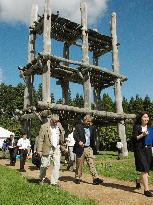
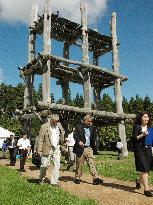
AOMORI, Japan - An inspector (center R) from the International Council on Monuments and Sites visits the Sannai-Maruyama archaeological site in the city of Aomori, northeastern Japan, on Sept. 23, 2011, to assess Japan's recommendation that it be listed as a UNESCO World Heritage site.

  •  
Japan picks 5 more candidate World Cultural Heritage sites

Japan picks 5 more candidate World Cultural Heritage sites

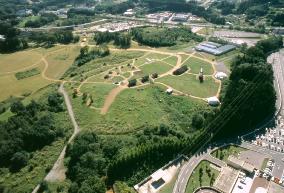
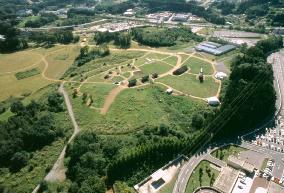
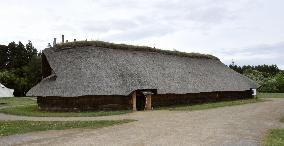
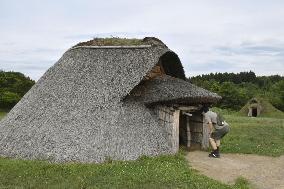
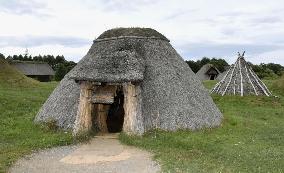
TOKYO, Japan - This undated photo shows the Sannai Maruyama settlement site in Aomori Prefecture, one of a group of prehistoric Jomon monuments in Hokkaido and the northern Tohoku region. The Japanese government said Sept. 26 that it has picked the group and four other places as candidates for cultural heritage status on UNESCO's list of World Heritage Sites.

  •  
Fire for Winter Asian Games taken

Fire for Winter Asian Games taken

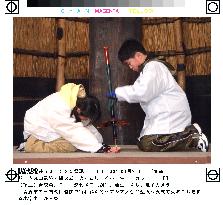
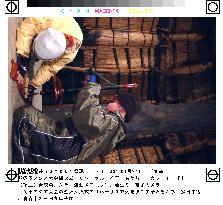
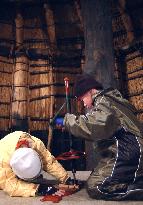
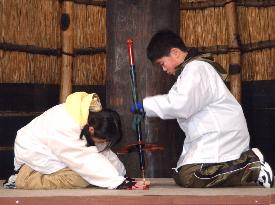
AOMORI, Japan - Two elementary schoolchildren work to start a fire through ancient technique to light torches for the Winter Asian Games in Aomori at the Sannai Maruyama Jomon period excavation site on Jan. 25. The eight-day sports event will open in a ceremony on Feb. 1.

  •  
Winter Asian Games torches lit in ceremony

Winter Asian Games torches lit in ceremony

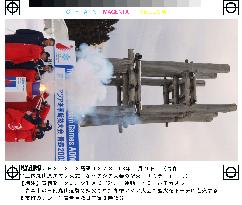
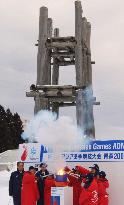
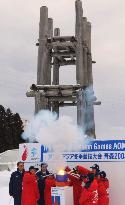
AOMORI, Japan - Representatives of the torch relay for the Feb. 1-8 Winter Asian Games in Aomori light torches in a ceremony held at the Sannai Maruyama Jomon period excavation site on Jan. 25.

  •  
Aomori residents prepare for Winter Asian Games

Aomori residents prepare for Winter Asian Games

AOMORI, Japan - Two elementary schoolchildren try to start a fire by ancient technique, to light a torch for the Winter Asian Games in Aomori in a rehearsal at the Sannai Maruyama Jomon period excavation site on Jan. 24. The opening ceremony for eight-day event will take place on Feb. 1.

  •  
FRANCE-PARIS-BEIJING WINTER OLYMPICS-PROGRAM

FRANCE-PARIS-BEIJING WINTER OLYMPICS-PROGRAM

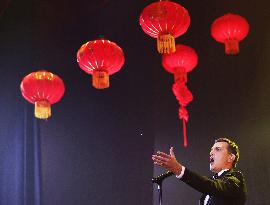
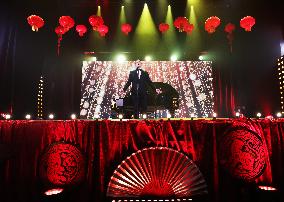
(220205) -- PARIS, Feb. 5, 2022 (Xinhua) -- Italian tenor Luca Sannai performs "O Sole Mio" during the recording of the "Peace, Friendship, Love" concert at Theater du Gymnase Marie Bell in Paris, France, Jan. 26, 2022. On the first day of the Year of the Tiger, a special program dedicated to the Beijing Winter Olympic Games and Paris 2024 Olympic Games was broadcast on France's TV5 Monde on Feb. 1, 2022. Performed by some 100 Chinese and foreign artists, the programs of the 110-minute concert "Peace, Friendship, Love" were recorded separately in China and France. (Xinhua/Gao Jing)

  •  
FRANCE-PARIS-BEIJING WINTER OLYMPICS-PROGRAM

FRANCE-PARIS-BEIJING WINTER OLYMPICS-PROGRAM

(220205) -- PARIS, Feb. 5, 2022 (Xinhua) -- Italian tenor Luca Sannai performs "O Sole Mio" during the recording of the "Peace, Friendship, Love" concert at Theater du Gymnase Marie Bell in Paris, France, Jan. 26, 2022. On the first day of the Year of the Tiger, a special program dedicated to the Beijing Winter Olympic Games and Paris 2024 Olympic Games was broadcast on France's TV5 Monde on Feb. 1, 2022. Performed by some 100 Chinese and foreign artists, the programs of the 110-minute concert "Peace, Friendship, Love" were recorded separately in China and France. (Xinhua/Gao Jing)

  •  
Winter Asian Games torches lit in ceremony

Winter Asian Games torches lit in ceremony

AOMORI, Japan - Representatives of the torch relay for the Feb. 1-8 Winter Asian Games in Aomori light torches in a ceremony held at the Sannai Maruyama Jomon period excavation site on Jan. 25.

  •  
Aomori residents prepare for Winter Asian Games

Aomori residents prepare for Winter Asian Games

AOMORI, Japan - Two elementary schoolchildren try to start a fire by ancient technique, to light a torch for the Winter Asian Games in Aomori in a rehearsal at the Sannai Maruyama Jomon period excavation site on Jan. 24. The opening ceremony for eight-day event will take place on Feb. 1. (Kyodo)

  •  
U.S. envoy Kennedy visits Aomori

U.S. envoy Kennedy visits Aomori

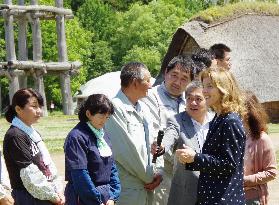
U.S. Ambassador to Japan Caroline Kennedy (far R) talks to workers excavating the Sannai-Maruyama site dating back to approximately 5,500 to 4,000 years ago, in the city of Aomori, northeastern Japan, on June 10, 2015. The envoy was visiting Aomori Prefecture for the first time after assuming her post. (Kyodo) ==Kyodo

  •  
Japan picks 5 more candidate World Cultural Heritage sites

Japan picks 5 more candidate World Cultural Heritage sites

TOKYO, Japan - This undated photo shows the Sannai Maruyama settlement site in Aomori Prefecture, one of a group of prehistoric Jomon monuments in Hokkaido and the northern Tohoku region. The Japanese government said Sept. 26 that it has picked the group and four other places as candidates for cultural heritage status on UNESCO's list of World Heritage Sites. (Kyodo)

  •  
Shinkyo Bridge,the Daiyagawa River

Shinkyo Bridge,the Daiyagawa River

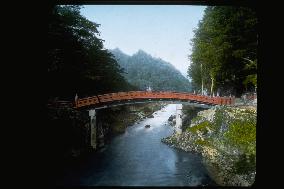
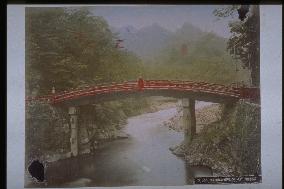
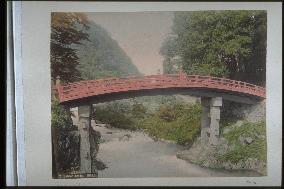
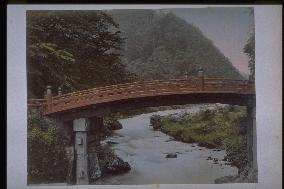
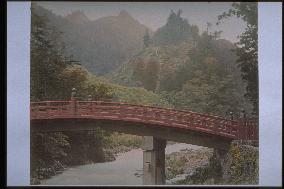
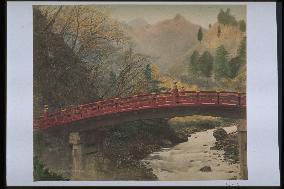
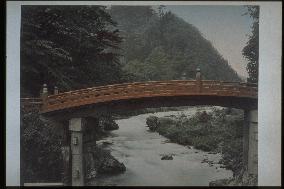
Shinkyo Bridge spans Daiya River at the entrance to Nikko-Sannai. The bridge is also called Jabashi (Snake Bridge), referring to the legend that the priest Shodoshonin, when founding Nikko, crossed the river by walking over two big snakes released by Shinja-Daio. The bridge in this photograph was washed away by a flood in 1902. Poles holding power lines are visible.==Date:1904, Place:Nikko, Photo:unknown, (Credit:Nagasaki University Library/Kyodo News Images) [Cabinet Number98‐9‐0]

  •  
Shinkyo Bridge,the Daiyagawa River

Shinkyo Bridge,the Daiyagawa River

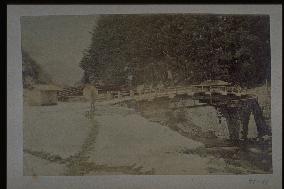
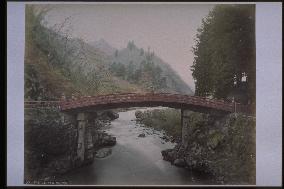
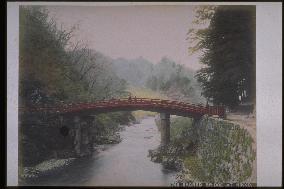
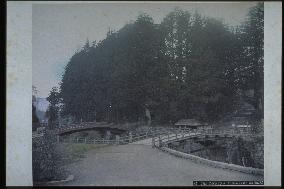
Two bridges span Daiya River, Shinkyo (red in colour) on the left and Karibashi on the right. These bridges at the entrance to Nikko-Sannai were destroyed by a flood in 1902. The remnants of snow are visible on the ground.==Date:unknown, Place:Nikko, Photo:unknown, (Credit:Nagasaki University Library/Kyodo News Images) [Cabinet Number91‐11‐0]

  •  
The Nitenmon Gate,Taiyuin Shrine,Nikko

The Nitenmon Gate,Taiyuin Shrine,Nikko

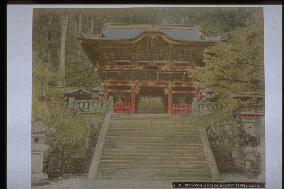
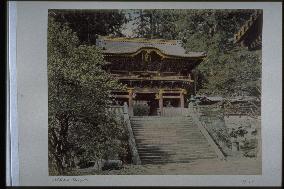
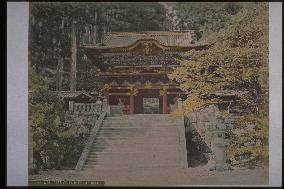
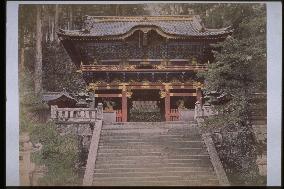
Nitenmon is located beyond Niomon in the precincts of Taiyuin, the mausoleum of third shogun Tokugawa Iemitsu. A plaque inscribed with the word Taiyuin by Emperor Gomizunoo is affixed to the upper part of the gate. Two of the four celestial guardians, Jikokuten and Komokuten, are enshrined at the front part of the gate while the other two, Fujin and Raijin, were placed on the back . This is the largest gate at Nikko-Sannai.==Date:unknown, Place:Nikko, Photo:unknown, (Credit:Nagasaki University Library/Kyodo News Images) [Cabinet Number88‐21‐0]

  •  
Shinkyo Bridge,the Daiyagawa River

Shinkyo Bridge,the Daiyagawa River

Shinkyo Bridge spans Daiya River at the entrance to Nikko-Sannai. The bridge is also called Jabashi (Snake Bridge), referring to the legend that the priest Shodoshonin, when founding Nikko, crossed the river by walking over two big snakes released by Shinja-Daio. The bridge in this photograph was washed away by a flood in 1902. Poles holding power lines are visible.==Date:unknown, Place:Nikko, Photo:unknown, (Credit:Nagasaki University Library/Kyodo News Images) [Cabinet Number88‐18‐0]

  •  
An inn in Nikko

An inn in Nikko

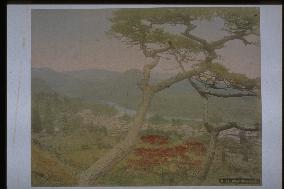
Higashi-machi (Hatsuishi-machi, Miyuki-machi, Inari-machi, Ishiya-machi) is viewed from the summit of the mountain to the south of Nikko-machi. The woods to the left centre is the Sannai area, where there are shrines and temples, such as Toshogu. The small mountain in the centre is Toyama. The Daiya and Inari Rivers meet at the foot of the mountain.==Date:unknown, Place:Nikko, Photo:unknown, (Credit:Nagasaki University Library/Kyodo News Images) [Cabinet Number88‐19‐0]

  •  
A view from Nikko Kanaya Hotel

A view from Nikko Kanaya Hotel

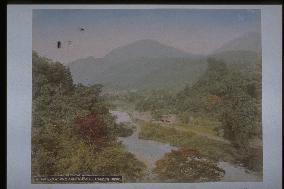
The Nishi-machi area is seen from the garden of Nikko Kanaya Hotel. Daiya River is seen below. The foliage to the right is the Sannai area, site of Nikko Toshogu. The village in the centre is Nishi-machi, formerly home to the Tamozawa Imperial Villa and Nikko Hotel. Mt. Nantai is visible in the background.==Date:unknown, Place:Nikko, Photo:unknown, (Credit:Nagasaki University Library/Kyodo News Images) [Cabinet Number88‐13‐0]

  •  
The Nitenmon Gate,Taiyuin Shrine,Nikko

The Nitenmon Gate,Taiyuin Shrine,Nikko

Nitenmon is located beyond Niomon in the precincts of Taiyuin, the mausoleum of third shogun Tokugawa Iemitsu. A plaque inscribed with the word Taiyuin by Emperor Gomizunoo is affixed to the upper part of the gate. Two of the four celestial guardians, Jikokuten and Komokuten, are enshrined at the front part of the gate while the other two, Fujin and Raijin, were placed on the back . This is the largest gate at Nikko-Sannai.==Date:unknown, Place:Nikko, Photo:unknown, (Credit:Nagasaki University Library/Kyodo News Images) [Cabinet Number87‐22‐0]

  •  
Shinkyo Bridge,the Daiyagawa River

Shinkyo Bridge,the Daiyagawa River

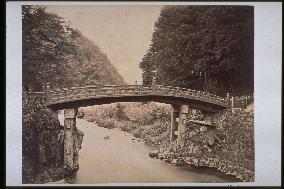
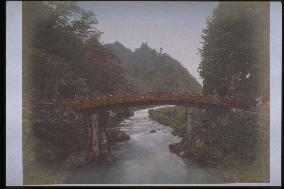
Shinkyo Bridge spans Daiya River at the entrance to Nikko-Sannai. The bridge is also called Jabashi (Snake Bridge), referring to the legend that the priest Shodoshonin, when founding Nikko, crossed the river by walking over two big snakes released by Shinja-Daio. The bridge in this photograph was washed away by a flood in 1902.==Date:unknown, Place:Nikko, Photo:unknown, (Credit:Nagasaki University Library/Kyodo News Images) [Cabinet Number87‐16‐0]

  •  
Shinkyo Bridge,the Daiyagawa River

Shinkyo Bridge,the Daiyagawa River

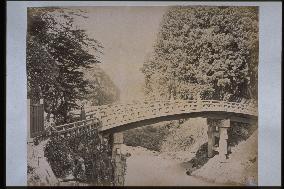
Shinkyo Bridge spans Daiya River at the entrance to Nikko-Sannai. The bridge is also called Jabashi (Snake Bridge), referring to the legend that the priest Shodoshonin, when founding Nikko, crossed the river by walking over two big snakes released by Shinja-Daio. The bridge in this photograph was washed away by a flood in 1902.==Date:unknown, Place:Nikko, Photo:A. Farsari, (Credit:Nagasaki University Library/Kyodo News Images) [Cabinet Number82‐33‐0]

  •  
Shinkyo Bridge,the Daiyagawa River

Shinkyo Bridge,the Daiyagawa River

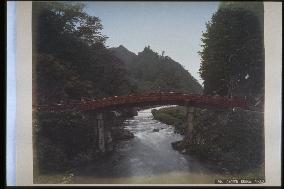
Shinkyo Bridge spans Daiya River at the entrance to Nikko-Sannai. The bridge is also called Jabashi (Snake Bridge), referring to the legend that the priest Shodoshonin, when founding Nikko, crossed the river by walking over two big snakes released by Shinja-Daio. The bridge in this photograph was washed away by a flood in 1902.==Date:unknown, Place:Nikko, Photo:A. Farsari, (Credit:Nagasaki University Library/Kyodo News Images) [Cabinet Number81‐31‐0]

  •  
The Nitenmon Gate,Taiyuin Shrine,Nikko

The Nitenmon Gate,Taiyuin Shrine,Nikko

Nitenmon is located beyond Niomon in the precincts of Taiyuin, the mausoleum of third shogun Tokugawa Iemitsu. A plaque inscribed with the word Taiyuin by Emperor Gomizunoo is affixed to the upper part of the gate. Two of the four celestial guardians, Jikokuten and Komokuten, are enshrined at the front part of the gate while the other two, Fujin and Raijin, were placed on the back . This is the largest gate at Nikko-Sannai.==Date:unknown, Place:Nikko, Photo:Tamamura Kozaburo, (Credit:Nagasaki University Library/Kyodo News Images) [Cabinet Number80‐47‐0]

  •  
Shinkyo Bridge,the Daiyagawa River

Shinkyo Bridge,the Daiyagawa River

Shinkyo Bridge spans Daiya River at the entrance to Nikko-Sannai. The bridge is also called Jabashi (Snake Bridge), referring to the legend that the priest Shodoshonin, when founding Nikko, crossed the river by walking over two big snakes released by Shinja-Daio. The bridge in this photograph was washed away by a flood in 1902.==Date:unknown, Place:Nikko, Photo:unknown, (Credit:Nagasaki University Library/Kyodo News Images) [Cabinet Number80‐36‐0]

  •  
Hatsuishi-yado,Nikko

Hatsuishi-yado,Nikko

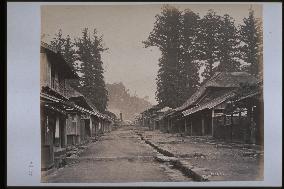
Hatsuishi is the last post town on the Nikko Highway. After Hatsuishi, the road leads to Shinkyo (Divine Bridge) and crosses Daiya River. Shinkyo is the entrance to the Sannai area and Toshogu. The highway is leveled and waterways can be seen on the right and left as well as in the centre. Many parts of Hatsuishi were destroyed in the fire of 1904.==Date:unknown, Place:Nikko, Photo:R. Stillfried, (Credit:Nagasaki University Library/Kyodo News Images) [Cabinet Number78‐35‐0]

  •  
Shinkyo Bridge,the Daiyagawa River

Shinkyo Bridge,the Daiyagawa River

Shinkyo Bridge spans Daiya River at the entrance to Nikko-Sannai. The bridge is also called Jabashi (Snake Bridge), referring to the legend that the priest Shodoshonin, when founding Nikko, crossed the river by walking over two big snakes released by Shinja-Daio. The bridge in this photograph was washed away by a flood in 1902.==Date:unknown, Place:Nikko, Photo:R. Stillfried, (Credit:Nagasaki University Library/Kyodo News Images) [Cabinet Number77‐11‐0]

  •  
Shinkyo Bridge,the Daiyagawa River

Shinkyo Bridge,the Daiyagawa River

Shinkyo Bridge spans Daiya River at the entrance to Nikko-Sannai. The bridge is also called Jabashi (Snake Bridge), referring to the legend that the priest Shodoshonin, when founding Nikko, crossed the river by walking over two big snakes released by Shinja-Daio. The bridge in this photograph was washed away by a flood in 1902.==Date:unknown, Place:Nikko, Photo:Ogawa Kazumasa, (Credit:Nagasaki University Library/Kyodo News Images) [Cabinet Number67‐34‐0]

  •  
A row of Japanese cedar trees along the Nikko Road

A row of Japanese cedar trees along the Nikko Road

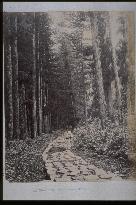
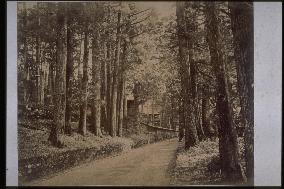
This is the mountain road to Takino'o Shinto Shrine following the course of Inari River from Kaizando, on the northeast side at Sannai area of Nikko. The road seems well groomed, not just the stone center, but the edges as well. There are many historical sites along the road, among them the tomb of Shodo Shonin, the founder of Mt. Nikko and Kitano Shinto Shrine.==Date:unknown, Place:Imaichi, Photo:Ogawa Kazumasa, (Credit:Nagasaki University Library/Kyodo News Images) [Cabinet Number67‐32‐0]

  •  
A view of a village in the mountains

A view of a village in the mountains

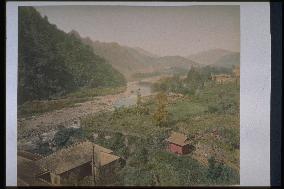
The Nishimachi area is viewed from the main approach, Nagasaka, of Nikko-Sannai. The town of Nishimachi and the Daiya River are visible to the right. The field with weeds in the centre, called Iwasakihara, was the property of Iwasaki Yanosuke Iwasaki, president of Mitsubishi Co. Temples such as Shosonin once stood here.==Date:unknown, Place:Nikko, Photo:Usui Shuzaburo?, (Credit:Nagasaki University Library/Kyodo News Images) [Cabinet Number65‐25‐0]

  •  
Shinkyo Bridge,the Daiyagawa River

Shinkyo Bridge,the Daiyagawa River

Shinkyo Bridge spans Daiya River at the entrance to Nikko-Sannai. The bridge is also called Jabashi (Snake Bridge), referring to the legend that the priest Shodoshonin, when founding Nikko, crossed the river by walking over two big snakes released by Shinja-Daio. The bridge in this photograph was washed away by a flood in 1902.==Date:unknown, Place:Nikko, Photo:Usui Shuzaburo?, (Credit:Nagasaki University Library/Kyodo News Images) [Cabinet Number65‐2‐0]

  •  
The Nitenmon Gate,Taiyuin Shrine,Nikko

The Nitenmon Gate,Taiyuin Shrine,Nikko

Nitenmon is located beyond Niomon in the precincts of Taiyuin, the mausoleum of third shogun Tokugawa Iemitsu. A plaque inscribed with the word Taiyuin by Emperor Gomizunoo is affixed to the upper part of the gate. Two of the four celestial guardians, Jikokuten and Komokuten, are enshrined at the front part of the gate while the other two, Fujin and Raijin, were placed on the back . This is the largest gate at Nikko-Sannai.==Date:unknown, Place:Nikko, Photo:unknown, (Credit:Nagasaki University Library/Kyodo News Images) [Cabinet Number61‐22‐0]

  •  
Shinkyo Bridge,the Daiyagawa River

Shinkyo Bridge,the Daiyagawa River

Shinkyo Bridge spans Daiya River at the entrance to Nikko-Sannai. The bridge is also called Jabashi (Snake Bridge), referring to the legend that the priest Shodoshonin, when founding Nikko, crossed the river by walking over two big snakes released by Shinja-Daio. The bridge in this photograph was washed away by a flood in 1902.==Date:unknown, Place:Nikko, Photo:unknown, (Credit:Nagasaki University Library/Kyodo News Images) [Cabinet Number61‐20‐0]

  •  
Shinkyo Bridge,the Daiyagawa River

Shinkyo Bridge,the Daiyagawa River

Shinkyo Bridge spans Daiya River at the entrance to Nikko-Sannai. The bridge is also called Jabashi (Snake Bridge), referring to the legend that the priest Shodoshonin, when founding Nikko, crossed the river by walking over two big snakes released by Shinja-Daio. The bridge in this photograph was washed away by a flood in 1902.==Date:unknown, Place:Nikko, Photo:unknown, (Credit:Nagasaki University Library/Kyodo News Images) [Cabinet Number54‐28‐0]

  •  
A row of Japanese cedar trees along the Nikko Road

A row of Japanese cedar trees along the Nikko Road

This is a scene, not of the Nikko Highway, but of Kamishinmichi, which leads from Toshogu Shinto Shrine at Nikko-Sannai to Futarayama Shinto Shrine. This was taken facing in the direction of Toshogu. The buildings visible over the trees are the Honji-do and Kyozo.==Date:unknown, Place:Imaichi, Photo:unknown, (Credit:Nagasaki University Library/Kyodo News Images) [Cabinet Number54‐16‐2]

  •  
Shinkyo Bridge,the Daiyagawa River

Shinkyo Bridge,the Daiyagawa River

Shinkyo Bridge spans Daiya River at the entrance to Nikko-Sannai. The bridge is also called Jabashi (Snake Bridge), referring to the legend that the priest Shodoshonin, when founding Nikko, crossed the river by walking over two big snakes released by Shinja-Daio. The bridge in this photograph was washed away by a flood in 1902.==Date:unknown, Place:Nikko, Photo:unknown, (Credit:Nagasaki University Library/Kyodo News Images) [Cabinet Number54‐9‐2]

  •  
Shinkyo Bridge,the Daiyagawa River

Shinkyo Bridge,the Daiyagawa River

Two bridges span Daiya River, Shinkyo (red in colour) on the left and Karibashi on the right. These bridges at the entrance to Nikko-Sannai were destroyed by a flood in 1902. The house on the other side of the river is a shop selling local specialties.==Date:unknown, Place:Nikko, Photo:unknown, (Credit:Nagasaki University Library/Kyodo News Images) [Cabinet Number54‐8‐0]

  •  
The approach to Toshogu Shrine,Nikko

The approach to Toshogu Shrine,Nikko

This is the entrance to the Sannai area encompassing Nikko Toshogu Shrine and Sanrinoji Temple. Shinkyo Bridge and Nikko Bridge are located to the left. Daiya River is visible in the background to the left. Nagasaka Slope is in the centre. The shrine on the right is Jinjaodo. Stones cut for construction are visible on the left.==Date:unknown, Place:Nikko, Photo:unknown, (Credit:Nagasaki University Library/Kyodo News Images) [Cabinet Number54‐6‐0]

  •  
Shinkyo Bridge,the Daiyagawa River

Shinkyo Bridge,the Daiyagawa River

Shinkyo Bridge spans Daiya River at the entrance to Nikko-Sannai. The bridge is also called Jabashi (Snake Bridge), referring to the legend that the priest Shodoshonin, when founding Nikko, crossed the river by walking over two big snakes released by Shinja-Daio. The bridge in this photograph was washed away by a flood in 1902.==Date:unknown, Place:Nikko, Photo:unknown, (Credit:Nagasaki University Library/Kyodo News Images) [Cabinet Number54‐4‐0]

  •  
Priests of Futarasan Shrine

Priests of Futarasan Shrine

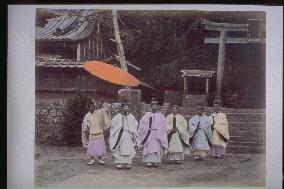
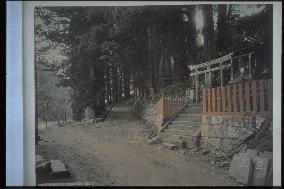
The photograph is entitled Shinto Priests at Futarasan Shinto Shrine, but the scene does not correspond to present-day Futarasan Shinto Shrine, Motomiya Shinto Shrine, or Takino'o Shinto Shrine in Nikko-Sannai by Lake Chuzenji. However, the torii gate and stairs to the right may be those at the entrance to Okumiya, within the precincts of Chugushi at Futarasan Shinto Shrine.==Date:unknown, Place:Nikko, Photo:unknown, (Credit:Nagasaki University Library/Kyodo News Images) [Cabinet Number47‐43‐0]

  •  
Fire for Winter Asian Games taken

Fire for Winter Asian Games taken

AOMORI, Japan - Two elementary schoolchildren work to start a fire through ancient technique to light torches for the Winter Asian Games in Aomori at the Sannai Maruyama Jomon period excavation site on Jan. 25. The eight-day sports event will open in a ceremony on Feb. 1. (Kyodo)

  •  
Winter Asian Games torches lit in ceremony

Winter Asian Games torches lit in ceremony

AOMORI, Japan - Representatives of the torch relay for the Feb. 1-8 Winter Asian Games in Aomori light torches in a ceremony held at the Sannai Maruyama Jomon period excavation site on Jan. 25.

  •  
Int'l panel inspects Aomori archaeological site

Int'l panel inspects Aomori archaeological site

AOMORI, Japan - An inspector (center R) from the International Council on Monuments and Sites visits the Sannai-Maruyama archaeological site in the city of Aomori, northeastern Japan, on Sept. 23, 2011, to assess Japan's recommendation that it be listed as a UNESCO World Heritage site. (Kyodo)

  •  
Jomon Era villages in Japan likely to be added to World Heritage list

Jomon Era villages in Japan likely to be added to World Heritage list

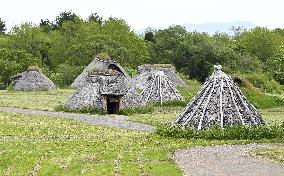
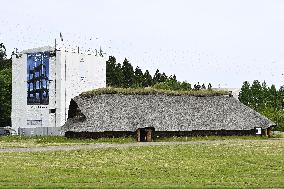
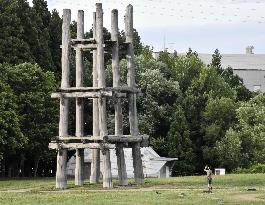
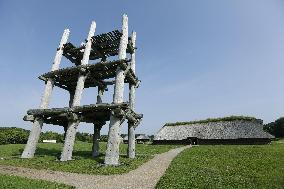
Photo taken May 27, 2021, shows the Sannai Maruyama archeological site, dating back around 5,900 years to Japan's Jomon Era, in the northeastern Japan city of Aomori. A UNESCO advisory panel recommended May 26 that 17 Jomon-Era ruins across Hokkaido, Aomori, Iwate and Akita prefectures, including the Sannai Maruyama site, be added to the World Cultural Heritage list.

  •  
Jomon Era villages in Japan likely to be added to World Heritage list

Jomon Era villages in Japan likely to be added to World Heritage list

Photo taken May 27, 2021, shows the Sannai Maruyama archeological site, dating back around 5,900 years to Japan's Jomon Era, in the northeastern Japan city of Aomori. A UNESCO advisory panel recommended May 26 that 17 Jomon-Era ruins across Hokkaido, Aomori, Iwate and Akita prefectures, including the Sannai Maruyama site, be added to the World Cultural Heritage list.

  •  
Jomon Era villages in Japan likely to be added to World Heritage list

Jomon Era villages in Japan likely to be added to World Heritage list

Photo taken May 27, 2021, shows the Sannai Maruyama archeological site, dating back around 5,900 years to Japan's Jomon Era, in the northeastern Japan city of Aomori. A UNESCO advisory panel recommended May 26 that 17 Jomon-Era ruins across Hokkaido, Aomori, Iwate and Akita prefectures, including the Sannai Maruyama site, be added to the World Cultural Heritage list.

  •  
Japan's World Heritage candidate sites

Japan's World Heritage candidate sites

Photo taken July 30, 2019, shows the Sannai-Maruyama site in the northern Japan city of Aomori, one of 17 archaeological locations dating back to the ancient Jomon Era that the Japanese government has picked as a potential candidate site for UNESCO World Cultural Heritage designation in 2021. (Kyodo) ==Kyodo

  •  
Japan's World Heritage candidate sites

Japan's World Heritage candidate sites

Photo taken July 30, 2019, shows the Sannai-Maruyama site in the northern Japan city of Aomori, one of 17 archaeological locations dating back to the ancient Jomon Era that the Japanese government has picked as a potential candidate site for UNESCO World Cultural Heritage designation in 2021. (Kyodo) ==Kyodo

  •  
Japan's World Heritage candidate sites

Japan's World Heritage candidate sites

Photo taken July 30, 2019, shows the Sannai-Maruyama site in the northern Japan city of Aomori, one of 17 archaeological locations dating back to the ancient Jomon Era that the Japanese government has picked as a potential candidate site for UNESCO World Cultural Heritage designation in 2021. (Kyodo) ==Kyodo

  •  
Japan's World Heritage candidate sites

Japan's World Heritage candidate sites

Photo taken July 30, 2019, shows the Sannai-Maruyama site in the northern Japan city of Aomori, one of 17 archaeological locations dating back to the ancient Jomon Era that the Japanese government has picked as a potential candidate site for UNESCO World Cultural Heritage designation in 2021. (Kyodo) ==Kyodo

  •  
Ancient ruins in northeastern Japan

Ancient ruins in northeastern Japan

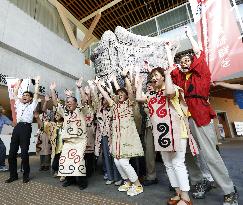
Tourist guides for the Sannai-Maruyama archaeological site in the northeastern Japanese city of Aomori celebrate on July 19, 2018 after a central government panel picked the Jomon Era archaeological sites in northern Japan as a potential candidate for UNESCO World Cultural Heritage designation in 2020. (Kyodo) ==Kyodo

  •  
Ancient ruins in northeastern Japan

Ancient ruins in northeastern Japan

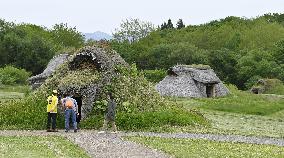
Photo taken on July 19, 2018, shows reconstructed buildings at the Sannai-Maruyama site, a Jomon Era archaeological site in the northeastern Japan city of Aomori. (Kyodo) ==Kyodo

  • Main
  • Top
  • Editorial
  • Creative
  • About Us
  • About ILG
  • Terms of use
  • Company
  • BEHIND
  • Price List
  • Single Plan
  • Monthly Plan
  • Services
  • Shooting
  • Rights Clearance
  • Support
  • FAQ
  • How To Buy
  • Contact Us
  • Become a Partner

© KYODO NEWS IMAGES INC

All Rights Reserved.

  • Editorial
  • Olympics
  • News
  • Sports
  • Japan
  • Tech
  • Royal
  • Disaster
  • NorthKorea
  • Old Japan
  • SNS
  • Creative
  • Food
  • Japan
  • Landscape
  • Animal
  • Popular
  • #Ukraine
  • #Russia
  • #coronavirus
  • #N. Korea
  • #China
  • #Thailand
  • #Ukraine
  • #Russia
  • #coronavirus
  • #N. Korea
  • #China
  • #Thailand
  • Food
  • Japan
  • Landscape
  • Animal
  • Olympics
  • News
  • Sports
  • Japan
  • Tech
  • Royal
  • Disaster
  • NorthKorea
  • Old Japan
  • SNS