•  
Going down the Hozu River

Going down the Hozu River

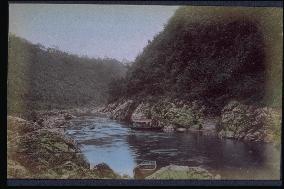
A yakata boat descending Hozu River is seen from the northern bank. The Kyoto Railway Company tracks and a tunnel are visible on the right. People took the approximately 16km boat ride from Hozu Town in Kameoka to Togetsu Bridge in Arashiyama. The river boats that carried lumber and goods from Tanba Kameoka to Kyoto were converted to leisure boats at the end of the Meiji Period when the Kyoto Railway was established. This photograph was taken sometime after August 1899, when the line between Kyoto and Sonobe opened.==Date:1904, Place:Kyoto, Photo:unknown, (Credit:Nagasaki University Library/Kyodo News Images) [Cabinet Number98‐11‐0]

  •  
Fishing in the Hozu River

Fishing in the Hozu River

A man is fishing at Hozu Gorge, wearing a hand towel on his head and holding a long fishing rod over the rapids. People took the approximately 16km boat ride from Hozu Town in Kameoka to Togetsu Bridge in Arashiyama. The river boats that carried lumber and goods from Tanba Kameoka to Kyoto were converted to leisure boats at the end of the Meiji Period when the Kyoto Railway was established.==Date:1904, Place:Kyoto, Photo:unknown, (Credit:Nagasaki University Library/Kyodo News Images) [Cabinet Number98‐10‐0]

  •  
Going down the Hozu River

Going down the Hozu River

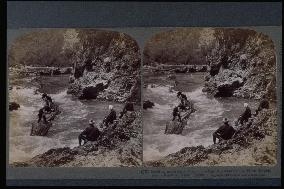
A raft shooting rapids is seen from the northern shore of the Hozu River. Boatmen are sitting on the rocks observing the scene. People took the approximately 16km boat ride from Hozu Town in Kameoka to Togetsu Bridge in Arashiyama. The river boats that carried lumber and goods from Tanba Kameoka to Kyoto were converted to leisure boats at the end of the Meiji Period when the Kyoto Railway was established. This may have been taken by the British photographer H. G. Ponting.==Date:1904, Place:Kyoto, Photo:Underwood, (Credit:Nagasaki University Library/Kyodo News Images) [Cabinet Number97‐26‐0]

  •  
The Togetsukyo Bridge,Arashiyama

The Togetsukyo Bridge,Arashiyama

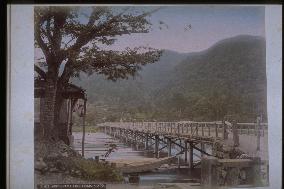
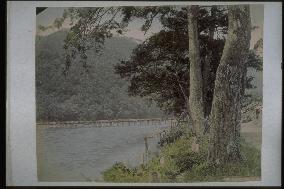
Togetsu Bridge at Arashiyama is viewed from the northern end, facing south. Horinji Temple is visible on the hillside. A sign at the northern end of the bridge informs people that cows and horses are not allowed to cross the bridge. A teahouse with hanging lanterns stands under a cherry tree. A maruko boat is docked nearby. The bridge was destroyed by a flood in 1892. The stone bridge to the right, Kinmonkyo, was later moved to Kurumazaki Shrine. Taken by Tamamura Kozaburo.==Date:unknown, Place:Kyoto, Photo:unknown, (Credit:Nagasaki University Library/Kyodo News Images) [Cabinet Number88‐6‐0]

  •  
The three teahouses at Arashiyama

The three teahouses at Arashiyama

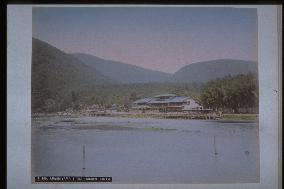
The building in the centre is the Sangenjaya Hata-tei teahouse located at the north end of Togetsu Bridge in Arashiyama. The building consisted of a three-story central portion and two-story wings to the east and west. Roofed terraces were built on both sides to provide scenic views of Arashiyama from the bank of Hozu River.==Date:unknown, Place:Kyoto, Photo:unknown, (Credit:Nagasaki University Library/Kyodo News Images) [Cabinet Number88‐9‐0]

  •  
The Togetsukyo Bridge,Arashiyama

The Togetsukyo Bridge,Arashiyama

Distant view of Togetsu Bridge at Arashiyama, taken facing west from the northern shore of Katsura River. A promenade was built beside the pine trees. A small house, possibly a teahouse, is visible. People are standing on the bridge. Togetsu Bridge was destroyed by a flood in 1892.==Date:unknown, Place:Kyoto, Photo:unknown, (Credit:Nagasaki University Library/Kyodo News Images) [Cabinet Number87‐39‐0]

  •  
The Togetsukyo Bridge,Arashiyama

The Togetsukyo Bridge,Arashiyama

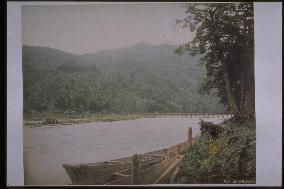
Distant view of Togetsu Bridge at Arashiyama, taken facing west from the northern shore of Katsura River. Three maruko boats are docked nearby, and pine trees are visible in the foreground. Houses are visible on the other side of the river. Togetsu Bridge was destroyed by a flood in 1892.==Date:unknown, Place:Kyoto, Photo:A. Farsari, (Credit:Nagasaki University Library/Kyodo News Images) [Cabinet Number82‐16‐0]

  •  
Going down the Hozu River,Arashiyama

Going down the Hozu River,Arashiyama

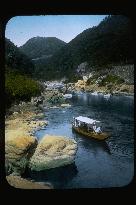
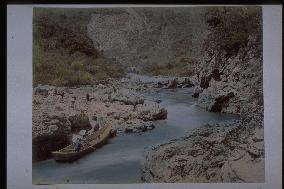
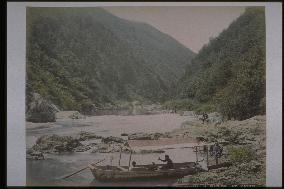
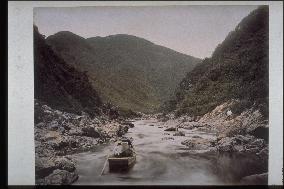
A small boat docked by the rocky riverbank is seen from the southern shore. The bare surface of the hillside shows that many trees had been felled. People took the approximately 16km boat ride from Hozu Town in Kameoka to Togetsu Bridge in Arashiyama. The river boats that carried lumber and goods from Tanba Kameoka to Kyoto were converted to leisure boats at the end of the Meiji Period when the Kyoto Railway was established.==Date:unknown, Place:Kyoto, Photo:A. Farsari, (Credit:Nagasaki University Library/Kyodo News Images) [Cabinet Number81‐25‐0]

  •  
The Hozu River

The Hozu River

A yakata boat is docked at Hozu River Gorge. The people on the boat are enjoying drinking sake. Boatmen are resting on the bow of the boat and on the rock. People took the approximately 16km boat ride from Hozu Town in Kameoka to Togetsu Bridge in Arashiyama. The river boats that carried lumber and goods from Tanba Kameoka to Kyoto were converted to leisure boats at the end of the Meiji Period when the Kyoto Railway was established.==Date:unknown, Place:Kyoto, Photo:Tamamura Kozaburo, (Credit:Nagasaki University Library/Kyodo News Images) [Cabinet Number80‐9‐0]

  •  
The Hozu River

The Hozu River

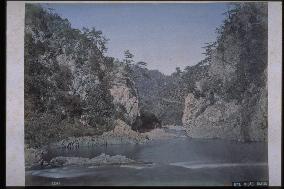
Kiyotaki River is viewed from a boat going down Hozu River. Hozu Gorge, also called Arashi Gorge, is a 13km stretch from around Hozu Bridge in Kameoka to Togetsu Bridge in Arashiyama. This is a scenic point where rapids and unusual rock formations can be enjoyed. Tributaries such as Kiyotaki River flow into the V-shaped gorge at an altitude of 400 meters between Mt. Atago and Oisaka.==Date:unknown, Place:Kyoto, Photo:Tamamura Kozaburo, (Credit:Nagasaki University Library/Kyodo News Images) [Cabinet Number79‐15‐0]

  •  
Going down the Hozu River

Going down the Hozu River

A yakata boat negotiates the Hozu River rapids. This was taken from a rock on the south side of the river. People took the approximately 16km boat ride from Hozu Town in Kameoka to Togetsu Bridge in Arashiyama. The river boats that carried lumber and goods from Tanba Kameoka to Kyoto were converted to leisure boats at the end of the Meiji Period when the Kyoto Railway was established.==Date:unknown, Place:Kyoto, Photo:unknown, (Credit:Nagasaki University Library/Kyodo News Images) [Cabinet Number59‐15‐0]

  •  
Going down the Hozu River

Going down the Hozu River

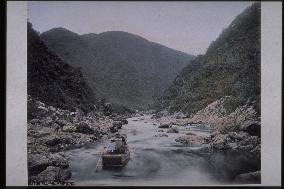
A small boat descends Hozu River, passing another boat going upstream. The boat carrying a rickshaw is leading the boat behind it. People took the approximately 16km boat ride from Hozu Town in Kameoka to Togetsu Bridge in Arashiyama. The river boats that carried lumber and goods from Tanba Kameoka to Kyoto were converted to leisure boats at the end of the Meiji Period when the Kyoto Railway was established.==Date:unknown, Place:Kyoto, Photo:unknown, (Credit:Nagasaki University Library/Kyodo News Images) [Cabinet Number52‐30‐0]

  •  
Going down the Hozu River

Going down the Hozu River

A yakata boat descending Hozu River is seen from the south bank. The men wearing silk hats and sitting on chairs are having a good time. People took the approximately 16km boat ride from Hozu Town in Kameoka to Togetsu Bridge in Arashiyama. The river boats that carried lumber and goods from Tanba Kameoka to Kyoto were converted to leisure boats at the end of the Meiji Period when the Kyoto Railway was established.==Date:unknown, Place:Kyoto, Photo:unknown, (Credit:Nagasaki University Library/Kyodo News Images) [Cabinet Number52‐29‐0]

  •  
The Hozu River

The Hozu River

Kiyotaki River is viewed from a boat going down Hozu River. Hozu Gorge, also called Arashi Gorge, is a 13km stretch from around Hozu Bridge in Kameoka to Togetsu Bridge in Arashiyama. This is a scenic point where rapids and unusual rock formations can be enjoyed. Tributaries such as Kiyotaki River flow into the V-shaped gorge at an altitude of 400 meters between Mt. Atago and Oisaka.==Date:unknown, Place:Kyoto, Photo:unknown, (Credit:Nagasaki University Library/Kyodo News Images) [Cabinet Number52‐30‐2]

  •  
Going down the Hozu River

Going down the Hozu River

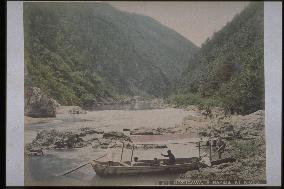
A yakata boat shooting the rapids of Hozu River is seen from the south bank. A small boat is docked in the foreground. People took the approximately 16km boat ride from Hozu Town in Kameoka to Togetsu Bridge in Arashiyama. The river boats that carried lumber and goods from Tanba Kameoka to Kyoto were converted to leisure boats at the end of the Meiji Period when the Kyoto Railway was established. Taken by Tamamura Kozaburo.==Date:unknown, Place:Kyoto, Photo:unknown, (Credit:Nagasaki University Library/Kyodo News Images) [Cabinet Number52‐5‐0]

  •  
Going down the Hozu River

Going down the Hozu River

A yakata boat is docked at Hozu River Gorge. The people on the boat are enjoying drinking sake. Boatmen are resting on the bow of the boat and on the rock. People took the approximately 16km boat ride from Hozu Town in Kameoka to Togetsu Bridge in Arashiyama. The river boats that carried lumber and goods from Tanba Kameoka to Kyoto were converted to leisure boats at the end of the Meiji Period when the Kyoto Railway was established.==Date:unknown, Place:Kyoto, Photo:unknown, (Credit:Nagasaki University Library/Kyodo News Images) [Cabinet Number52‐3‐0]

  •  
Going down the Hozu River

Going down the Hozu River

A yakata boat shooting the rapids of Hozu River is seen from the south bank. A small boat is docked in the foreground. People took the approximately 16km boat ride from Hozu Town in Kameoka to Togetsu Bridge in Arashiyama. The river boats that carried lumber and goods from Tanba Kameoka to Kyoto were converted to leisure boats at the end of the Meiji Period when the Kyoto Railway was established. Taken by Tamamura Kozaburo.==Date:unknown, Place:Kyoto, Photo:Tamamura Kozaburo, (Credit:Nagasaki University Library/Kyodo News Images) [Cabinet Number48‐120‐0]

  •  
Arashiyama

Arashiyama

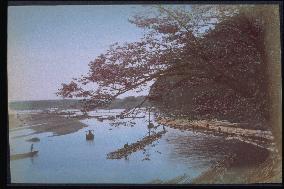
The cherry trees in full bloom at Arashiyama are viewed from the southern bank of Hozu River, facing east. The rafts used to shoot the rapids of Hozu Gorge are gathered on the southern bank at Arashiyama, where the flow becomes gentle. Togetsu Bridge is visible in the distance to the left.==Date:unknown, Place:Kyoto, Photo:Tamamura Kozaburo, (Credit:Nagasaki University Library/Kyodo News Images) [Cabinet Number48‐119‐0]

  •  
The Togetsukyo Bridge,Arashiyama

The Togetsukyo Bridge,Arashiyama

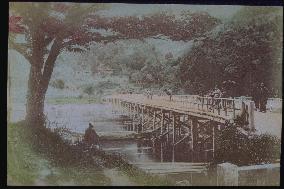
Togetsu Bridge at Arashiyama is viewed from the northern end, facing south. Horinji Temple is visible on the hillside. Kimono-clad women look toward the camera from the bridge. A man is fishing under the cherry tree. The bridge was destroyed by a flood in 1892. The stone bridge in the foreground is Kinmonkyo, which was later moved to Kurumazaki Shrine. Taken by Tamamura Kozaburo.==Date:unknown, Place:Kyoto, Photo:Tamamura Kozaburo, (Credit:Nagasaki University Library/Kyodo News Images) [Cabinet Number48‐113‐0]

  •  
Arashiyama

Arashiyama

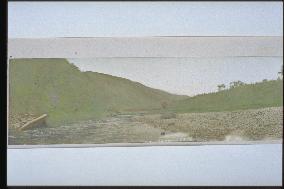
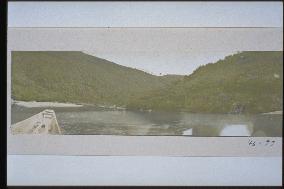
The Hozu River, looking upstream from a boat. The low hills in the distance suggest that this is a view of Kameoka Basin. Hozu Gorge, also called Arashi Gorge, stretches about 13km from Hozu Bridge in Kameoka to Togetsu Bridge in Arashiyama. This is a scenic point where rapids and unusual rock formations can be enjoyed. Tributaries such as Kiyotaki River flow into the V-shaped gorge at an altitude of 400m between Mt. Atago and Oisaka.==Date:unknown, Place:Kyoto, Photo:unknown, (Credit:Nagasaki University Library/Kyodo News Images) [Cabinet Number46‐110‐0]

  •  
Hozu River

Hozu River

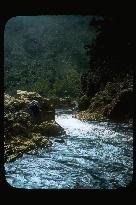
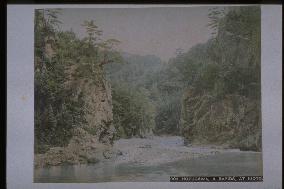
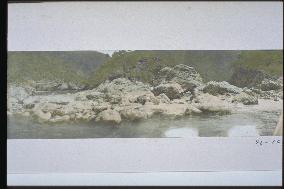
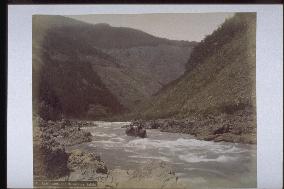
Interesting rock formations line the Hozu River, seen from a boat. There's a fisherman on a rock to the left. Hozu Gorge, also called Arashi Gorge, is a 13km stretch from around Hozu Bridge in Kameoka to Togetsu Bridge in Arashiyama. This is a scenic point where rapids and unusual rock formations can be enjoyed. Tributaries such as Kiyotaki River flow into the V-shaped gorge at an altitude of 400 meters between Mt. Atago and Oisaka.==Date:unknown, Place:Kyoto, Photo:unknown, (Credit:Nagasaki University Library/Kyodo News Images) [Cabinet Number46‐108‐0]

  •  
Hozu River

Hozu River

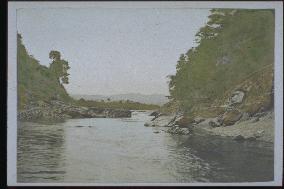
View looking downstream from a boat on Hozu River. The large riverbank on the left indicates that this is near Uketa Shrine. Hozu Gorge, also called Arashi Gorge, is a 13km stretch from around Hozu Bridge in Kameoka to Togetsu Bridge at Arashiyama. This is a scenic point where rapids and unusual rock formations can be enjoyed. Tributaries such as Kiyotaki River flow into the V-shaped gorge at an altitude of 400 meters between Mt. Atago and Oisaka.==Date:unknown, Place:Kyoto, Photo:unknown, (Credit:Nagasaki University Library/Kyodo News Images) [Cabinet Number46‐106‐0]

  •  
Hozu River

Hozu River

View looking downstream from a boat on Hozu River. The river turns sharply to the left at this spot, indicating that it is near Uketa Shrine. Hozu Gorge, also called Arashi Gorge, is a 13km stretch from around Hozu Bridge in Kameoka to Togetsu Bridge at Arashiyama. This is a scenic point where rapids and unusual rock formations can be enjoyed. Tributaries such as Kiyotaki River flow into the V-shaped gorge at an altitude of 400 meters. River.==Date:unknown, Place:Kyoto, Photo:unknown, (Credit:Nagasaki University Library/Kyodo News Images) [Cabinet Number46‐105‐0]

  •  
Hozu River

Hozu River

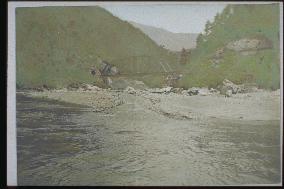
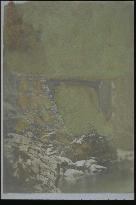
The iron bridge of Kyoto Railway Company is seen from a boat going down Hozu River. Hozu Gorge, also called Arashi Gorge, is a 13km stretch from around Hozu Bridge in Kameoka to Togetsu Bridge in Arashiyama. This is a scenic point where rapids and unusual rock formations can be enjoyed. Tributaries such as Kiyotaki River flow into the V-shaped gorge at an altitude of 400 meters. This photograph was taken sometime after August 1899, when the Kyoto Railway Company line between Saga and Sonobe opened.==Date:unknown, Place:Kyoto, Photo:unknown, (Credit:Nagasaki University Library/Kyodo News Images) [Cabinet Number46‐107‐0]

  •  
Hozu River

Hozu River

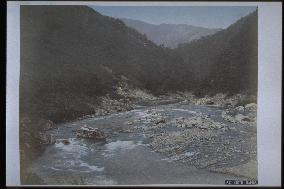
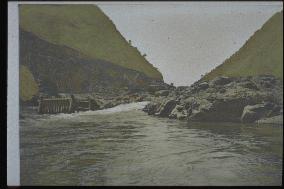
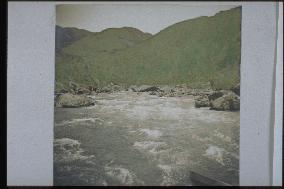
View of the rapids from a boat going down Hozu River. Stones are piled on the bottom of the river to break the current and allow boats to pass. Hozu Gorge, also called Arashi Gorge, is a 13km stretch from around Hozu Bridge in Kameoka to around Togetsu Bridge at Arashiyama. This is a scenic point where rapids and unusual rock formations can be enjoyed. Tributaries such as Kiyotaki River flow into the V-shaped gorge at an altitude of 400 meters.==Date:unknown, Place:Kyoto, Photo:unknown, (Credit:Nagasaki University Library/Kyodo News Images) [Cabinet Number46‐100‐0]

  •  
Hozu River

Hozu River

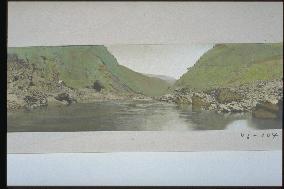
View looking downstream from a boat on Hozu River. The river flows straight at this spot, indicating that it is a little downstream from Uketa Shrine. Hozu Gorge, also called Arashi Gorge, is a 13km stretch from around Hozu Bridge in Kameoka to Togetsu Bridge at Arashiyama. This is a scenic point where rapids and unusual rock formations can be enjoyed. Tributaries such as Kiyotaki River flow into the V-shaped gorge at an altitude of 400 meters.==Date:unknown, Place:Kyoto, Photo:unknown, (Credit:Nagasaki University Library/Kyodo News Images) [Cabinet Number46‐104‐0]

  •  
Hozu River

Hozu River

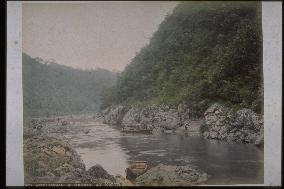
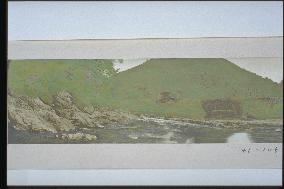
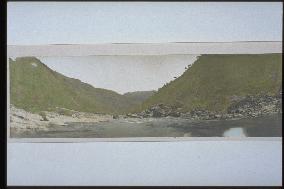
View from a boat going down Hozu River. Boulders lie along the southern shore. Hozu Gorge, also called Arashi Gorge, is a 13km stretch from Hozu Bridge in Kameoka to Togetsu Bridge at Arashiyama. This is a scenic point with rapids and unusual rock formations. Tributaries such as Kiyotaki River flow into the V-shaped gorge at an altitude of 400 meters.==Date:unknown, Place:Kyoto, Photo:unknown, (Credit:Nagasaki University Library/Kyodo News Images) [Cabinet Number46‐98‐0]

  •  
Hozu River

Hozu River

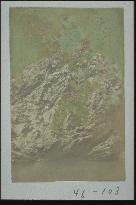
Rock formations seen from a boat going down Hozu River. Greenery and small flowers grow between the rocks. Huge boulders lie along both sides of the river. Hozu Gorge, also called Arashi Gorge, is a 13km stretch from around Hozu Bridge in Kameoka to Togetsu Bridge at Arashiyama. This is a scenic point where rapids and unusual rock formations can be enjoyed. Tributaries such as Kiyotaki River flow into the V-shaped gorge at an altitude of 400 meters.==Date:unknown, Place:Kyoto, Photo:unknown, (Credit:Nagasaki University Library/Kyodo News Images) [Cabinet Number46‐103‐0]

  •  
Hozu River

Hozu River

Rock formations seen from a boat going down Hozu River. Greenery and small flowers grow between the rocks. Huge boulders lie along both sides of the river. Hozu Gorge, also called Arashi Gorge, is a 13km stretch from around Hozu Bridge in Kameoka to Togetsu Bridge at Arashiyama. This is a scenic point where rapids and unusual rock formations can be enjoyed. Tributaries such as Kiyotaki River flow into the V-shaped gorge at an altitude of 400 meters.==Date:unknown, Place:Kyoto, Photo:unknown, (Credit:Nagasaki University Library/Kyodo News Images) [Cabinet Number46‐102‐0]

  •  
Hozu River

Hozu River

View of the rapids from a boat going down Hozu River. Huge boulders lie along both sides of the river. Hozu Gorge, also called Arashi Gorge, is a 13km stretch from around Hozu Bridge in Kameoka to Togetsu Bridge at Arashiyama. This is a scenic point where rapids and unusual rock formations can be enjoyed. Tributaries such as Kiyotaki River flow into the V-shaped gorge at an altitude of 400 meters.==Date:unknown, Place:Kyoto, Photo:unknown, (Credit:Nagasaki University Library/Kyodo News Images) [Cabinet Number46‐99‐0]

  •  
Hozu River

Hozu River

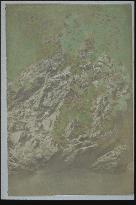
Rock formations seen from a boat going down Hozu River. Hozu Gorge, also called Arashi Gorge, is a 13km stretch from around Hozu Bridge in Kameoka to Togetsu Bridge at Arashiyama. This is a scenic point where rapids and unusual rock formations can be enjoyed. Tributaries such as Kiyotaki River flow into the V-shaped gorge at an altitude of 400 meters. The upper part of the photograph is unclear because of poor tinting work.==Date:unknown, Place:Kyoto, Photo:unknown, (Credit:Nagasaki University Library/Kyodo News Images) [Cabinet Number46‐101‐0]

  •  
Hozu River

Hozu River

Hozu River Gorge is viewed from a boat going downstream. The gentle flow and width of the river suggest that this photograph was taken in the Kameoka Basin area. People took the approximately 16km boat ride from Hozu Town in Kameoka to Togetsu Bridge in Arashiyama. The river boats that carried lumber and goods from Tanba Kameoka to Kyoto were converted to leisure boats at the end of the Meiji Period when the Kyoto Railway was established.==Date:unknown, Place:Kyoto, Photo:unknown, (Credit:Nagasaki University Library/Kyodo News Images) [Cabinet Number46‐97‐0]

  •  
Going down the Hozu River,Arashiyama

Going down the Hozu River,Arashiyama

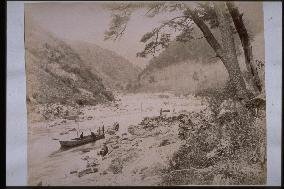
A small boat docked by the rocky bank of Hozu River is seen from the south bank. The bare surface of the hillside shows that many trees were being cut. People took the approximately 16km boat ride from Hozu Town in Kameoka to Togetsu Bridge in Arashiyama. The river boats that carried lumber and goods from Tanba Kameoka to Kyoto were converted to leisure boats at the end of the Meiji Period when the Kyoto Railway was established.==Date:unknown, Place:Kyoto, Photo:unknown, (Credit:Nagasaki University Library/Kyodo News Images) [Cabinet Number42‐23‐0]

  •  
Hozu River

Hozu River

Hozugawa kudari (going downstream on the river Hozu) is a 16 km downstream course from Nishizume to the Togetsu Bridge. Originally this route was used to transport lumber from Tanba in the form of rafts but was frought with difficulty due to the rapids and exposed rocks. Sumikura Ryoi made transportation by shallow boats possible in 1606 by removing the greater rocks.From the end of the Meiji to the Taisho era, the Hozugawa downstream course was popularized for tourism, and former workers on the lumber rafts became boatmen. In the photo, the boatman is wearing a sedge hat and holding the helm at the rear of the boat.==Date:unknown, Place:Kyoto, Photo:Kusakabe Kinbei, (Credit:Nagasaki University Library/Kyodo News Images) [Cabinet Number1‐38‐0]

  •  
Suspension of travel promotion campaign across Japan

Suspension of travel promotion campaign across Japan

Photo taken from a Kyodo News helicopter on Dec. 28, 2020, shows few people walking on Kyoto's Togetsu Bridge amid the coronavirus pandemic. The Japanese government the same day expanded a suspension of its travel promotion program for the virus-hit domestic tourism industry across the country through Jan. 11 in response to a recent notable increase in infections.

  •  
Suspension of travel promotion campaign across Japan

Suspension of travel promotion campaign across Japan

Photo taken from a Kyodo News helicopter on Dec. 28, 2020, shows few people walking on Kyoto's Togetsu Bridge amid the coronavirus pandemic. The Japanese government the same day expanded a suspension of its travel promotion program for the virus-hit domestic tourism industry across the country through Jan. 11 in response to a recent notable increase in infections.

  •  
New coronavirus

New coronavirus

Few people are seen at Kyoto's Togetsu Bridge on May 21, 2020, as a coronavirus state of emergency is set to be lifted in the western Japan city later in the day. (Kyodo) ==Kyodo

  • Main
  • Top
  • Editorial
  • Creative
  • About Us
  • About ILG
  • Terms of use
  • Company
  • BEHIND
  • Price List
  • Single Plan
  • Monthly Plan
  • Services
  • Shooting
  • Rights Clearance
  • Support
  • FAQ
  • How To Buy
  • Contact Us
  • Become a Partner

© KYODO NEWS IMAGES INC

All Rights Reserved.

  • Editorial
  • Olympics
  • News
  • Sports
  • Japan
  • Tech
  • Royal
  • Disaster
  • NorthKorea
  • Old Japan
  • SNS
  • Creative
  • Food
  • Japan
  • Landscape
  • Animal
  • Popular
  • #Ukraine
  • #China
  • #coronavirus
  • #N. Korea
  • #Thailand
  • #Russia
  • #Ukraine
  • #China
  • #coronavirus
  • #N. Korea
  • #Thailand
  • #Russia
  • Food
  • Japan
  • Landscape
  • Animal
  • Olympics
  • News
  • Sports
  • Japan
  • Tech
  • Royal
  • Disaster
  • NorthKorea
  • Old Japan
  • SNS