•  
Gate of Nikko Toshogu shrine

Gate of Nikko Toshogu shrine

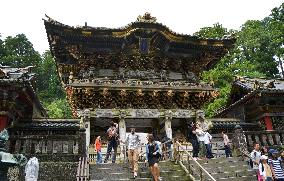
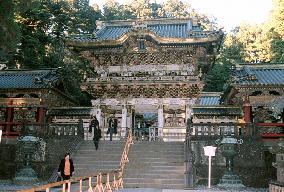
UTSUNOMIYA, Japan - Photo taken Sept. 24, 2012, shows the Yomeimon gate of Nikko Toshogu shrine in Nikko, Tochigi Prefecture. The famed gate will undergo a six-year restoration starting in the spring of 2013.

  •  
1st Michelin 'Green Guide' for Japan to debut Mon.

1st Michelin 'Green Guide' for Japan to debut Mon.

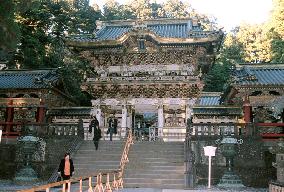
TOKYO, Japan - This file photo shows the Yomeimon gate of Nikko Toshogu Shrine in Nikko, Tochigi Prefecture, north of Tokyo, which is listed as one of 56 three-star destinations worth a trip in the first Michelin ''Green Guide'' for Japan.

  •  
2 shrines, temple in Nikko added to World Heritage List

2 shrines, temple in Nikko added to World Heritage List

NIKKO, Japan - File photo shows the Yomeimon Gate of Toshogu Shrine in Nikko, Tochigi Prefecture, which was added to the World Heritage List on Dec. 1 along with Futarasan Shrine and Rinnoji Temple in the same prefecture.

  •  
Tokyo Olympic torch relay

Tokyo Olympic torch relay

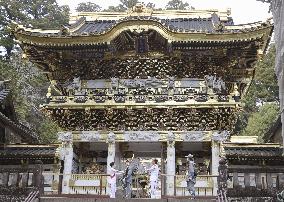
The Tokyo Olympic flame is passed from torch to torch in front of the Yomeimon gate of the Nikko Toshogu shrine in Nikko in Tochigi Prefecture, eastern Japan, as part of its relay on March 29, 2021. (Pool photo)

  •  
Shrine tied to feudal ruler shows 3D image in new treasure house

Shrine tied to feudal ruler shows 3D image in new treasure house

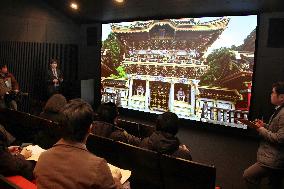
Reporters watch a three-dimensional image of the Yomeimon gate, a national treasure, at a theater of a new treasure house at the Toshogu shrine in Nikko, Tochigi Prefecture, eastern Japan, on March 5, 2015. The Shinto shrine, dedicated to feudal ruler Tokugawa Ieyasu who founded the 1603-1867 Tokugawa shogunate, built the treasure house as part of a project to commemorate the 400th anniversary of his death. (Kyodo) ==Kyodo

  •  
1st Michelin 'Green Guide' for Japan to debut Mon.

1st Michelin 'Green Guide' for Japan to debut Mon.

TOKYO, Japan - This file photo shows the Yomeimon gate of Nikko Toshogu Shrine in Nikko, Tochigi Prefecture, north of Tokyo, which is listed as one of 56 three-star destinations worth a trip in the first Michelin ''Green Guide'' for Japan. (Kyodo)

  •  
The Yomeimon Gate,Toshogu Shrine,Nikko

The Yomeimon Gate,Toshogu Shrine,Nikko

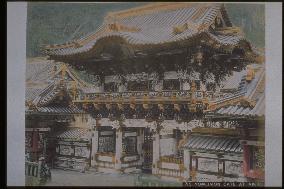
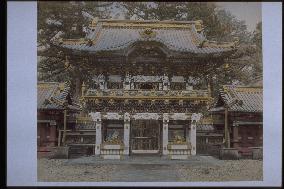
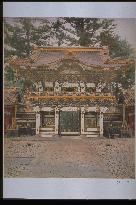
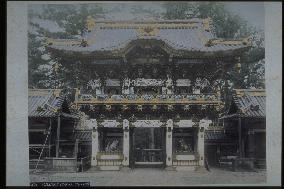
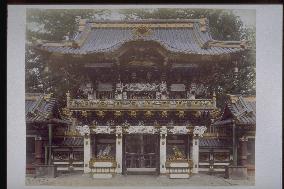
Yomeimon the famous gate at Nikko Toshogu, is shown from the front. The carvings on the gate total 508 in number. It is also called Higurashimon (Evening Falling Gate) because visitors can stand looking at it all day long and still not tire of its beauty. It is 11.1m tall, 7m wide, and 4.4m deep.==Date:unknown, Place:Nikko, Photo:unknown, (Credit:Nagasaki University Library/Kyodo News Images) [Cabinet Number98‐29‐0]

  •  
The Yomeimon Gate,Toshogu Shrine,Nikko

The Yomeimon Gate,Toshogu Shrine,Nikko

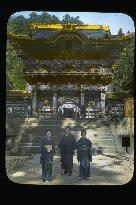
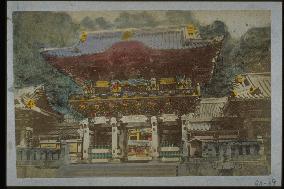
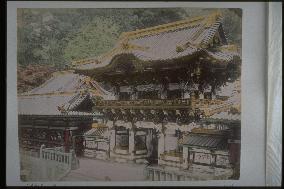
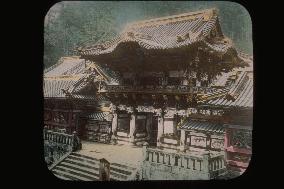
This is the front of Yomeimon. The symbol of Nikko Toshogu, this gate displays craftsmanship and decorative techniques representative of the early Edo Period. The carvings on the gate total 508 in number and include people, animals (real and imaginary), flowers, birds, and patterns. The roof of Shinyosha is visible on the left.==Date:1904, Place:Nikko, Photo:unknown, (Credit:Nagasaki University Library/Kyodo News Images) [Cabinet Number98‐15‐0]

  •  
The Yomeimon Gate,Toshogu Shrine,Nikko

The Yomeimon Gate,Toshogu Shrine,Nikko

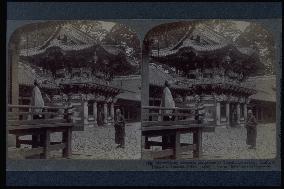
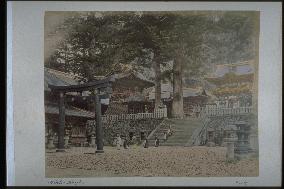
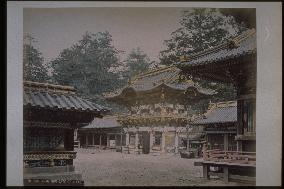
Yomeimon Gate is visible in the centre, viewed from in front of the main hall of Nikko Toshogu. A yaotome (young woman who performs sacred dances) is seen at the Kaguraden. The English caption says Yakushido, but only the roof of that building is visible to the far right.==Date:1904, Place:Nikko, Photo:Underwood, (Credit:Nagasaki University Library/Kyodo News Images) [Cabinet Number97‐60‐0]

  •  
The Yomeimon Gate,Toshogu Shrine,Nikko

The Yomeimon Gate,Toshogu Shrine,Nikko

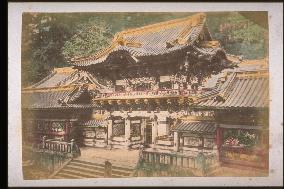
This is the front side of Yomeimon Gate. The symbol of Nikko Toshogu, this gate displays a collection of the craftsmanship and decorative techniques representative of the beginning of the Edo Period. The carvings on the gate total 508 and include people, animals -real and imaginary-, flowers, birds, patterns, and so on. Because the viewers will not get tired of admiring the beauty of the gate until twilight, it is also called the Higurashimon (the Evening Gate).==Date:unknown, Place:Nikko, Photo:unknown, (Credit:Nagasaki University Library/Kyodo News Images) [Cabinet Number96‐107‐0]

  •  
The Yomeimon Gate,Toshogu Shrine,Nikko

The Yomeimon Gate,Toshogu Shrine,Nikko

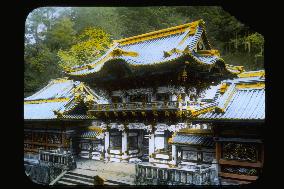
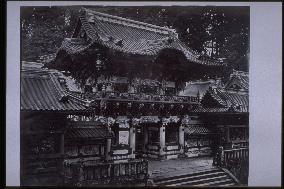
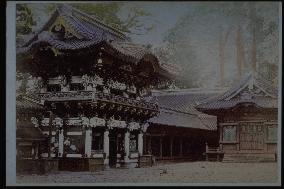
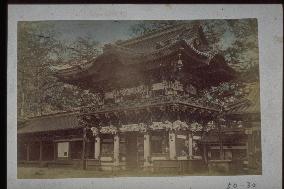
The back of Yomei Gate is seen from the Kitoden (shrine office) area. The symbol of Nikko Toshogu, Yomeimon features craftsmanship and decorative artistic techniques characteristic of the early Edo Period. There are 508 carvings on the gate. It is also called Higurashimon (Evening Falling Gate) because visitors can stand looking at it all day long and still not tire of its beauty.==Date:unknown, Place:Nikko, Photo:unknown, (Credit:Nagasaki University Library/Kyodo News Images) [Cabinet Number96‐98‐0]

  •  
The Yomeimon Gate,Toshogu Shrine,Nikko

The Yomeimon Gate,Toshogu Shrine,Nikko

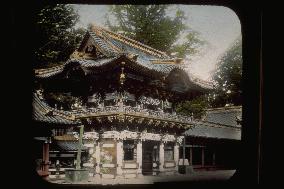
This is the rear side of Yomeimon. The symbol of Nikko Toshogu, this gate displays craftsmanship and decorative techniques representative of the early Edo Period. The carvings on the gate total 508 in number and include people, animals (real and imaginary), flowers, birds, and patterns. It is also called Higurashimon (Evening Falling Gate) because visitors can stand looking at it all day long and still not tire of its beauty. The building on the right is Shinyosha. The building on far left is Kaguraden.==Date:unknown, Place:Nikko, Photo:unknown, (Credit:Nagasaki University Library/Kyodo News Images) [Cabinet Number92‐12‐0]

  •  
The Yomeimon Gate,Toshogu Shrine,Nikko

The Yomeimon Gate,Toshogu Shrine,Nikko

This is the front side of Yomeimon Gate. The symbol of Nikko Toshogu, this gate displays a collection of the craftsmanship and decorative techniques representative of the beginning of the Edo Period. The carvings on the gate total 508 and include people, animals -real and imaginary-, flowers, birds, patterns, and so on. Because the viewers will not get tired of admiring the beauty of the gate until twilight, it is also called the Higurashimon (the Evening Gate).==Date:unknown, Place:Nikko, Photo:unknown, (Credit:Nagasaki University Library/Kyodo News Images) [Cabinet Number90‐39‐0]

  •  
The Yomeimon Gate,Toshogu Shrine,Nikko

The Yomeimon Gate,Toshogu Shrine,Nikko

This is the front of Yomeimon. The symbol of Nikko Toshogu, this gate displays craftsmanship and decorative techniques representative of the early Edo Period. The carvings on the gate total 508 in number and include people, animals (real and imaginary), flowers, birds, and patterns. It is also called Higurashimon (Evening Falling Gate) because visitors can stand looking at it all day long and still not tire of its beauty. The roof of Shinyosha can be seen on the far left.==Date:unknown, Place:Nikko, Photo:unknown, (Credit:Nagasaki University Library/Kyodo News Images) [Cabinet Number88‐11‐0]

  •  
The Suibansha (sacred fountain),Toshogu Shrine,Nikko

The Suibansha (sacred fountain),Toshogu Shrine,Nikko

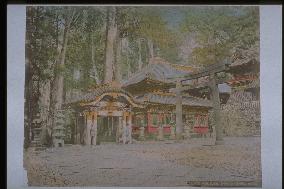
The white building in the centre is the Omizuya, which has a granite water basin donated by the Nabeshima Clan in 1618. To the right is the Rinzo (Kyozo) where sutras are stored. The Chinese-style bronze gate, Karagane Torii, which was built by Tokugawa Iemitsu, stands in the right foreground. This is the first bronze gate in Japan. Visitors pass through the gate, ascend the stone steps and arrive in front of Yomeimon.==Date:unknown, Place:Nikko, Photo:unknown, (Credit:Nagasaki University Library/Kyodo News Images) [Cabinet Number88‐10‐0]

  •  
The Yomeimon Gate seen from the second gate,Toshogu Shrine,Nikko

The Yomeimon Gate seen from the second gate,Toshogu Shrine,Nikko

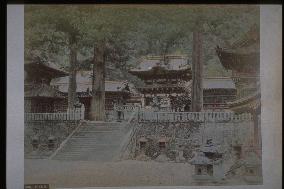
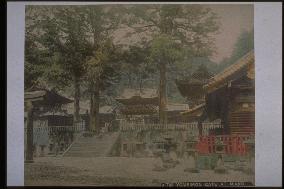
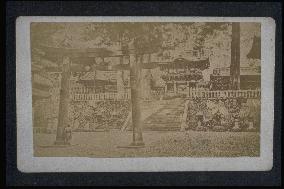
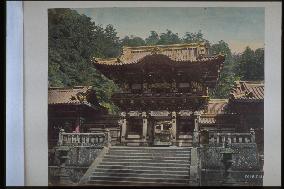
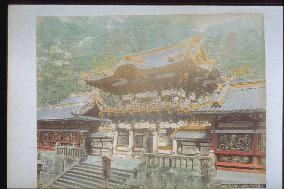
Karagane Torii is on the left. The Rinzo, a building to store Buddhist sutras, stands to the left behind the gate. The building to the right is the Drum Tower. The small structure to the right was used to store hanging lanterns. The building on the far right is the most famous structure at Nikko Toshogu, the Yomei Gate. The main shrine is behind the gate. Shinto priests are depicted going up the stairs.==Date:unknown, Place:Nikko, Photo:unknown, (Credit:Nagasaki University Library/Kyodo News Images) [Cabinet Number87‐18‐0]

  •  
The Yomeimon Gate,Toshogu Shrine,Nikko

The Yomeimon Gate,Toshogu Shrine,Nikko

This is the front of Yomeimon. The symbol of Nikko Toshogu, this gate displays craftsmanship and decorative techniques representative of the early Edo Period. The carvings on the gate total 508 in number and include people, animals (real and imaginary), flowers, birds, and patterns. It is also called Higurashimon (Evening Falling Gate) because visitors can stand looking at it all day long and still not tire of its beauty. The roof of Shinyosha can be seen on the far left.==Date:unknown, Place:Nikko, Photo:unknown, (Credit:Nagasaki University Library/Kyodo News Images) [Cabinet Number87‐19‐0]

  •  
Carvings at the cliosters of the Yomeimon Gate,Toshogu Shrine,Nikko

Carvings at the cliosters of the Yomeimon Gate,Toshogu Shrine,Nikko

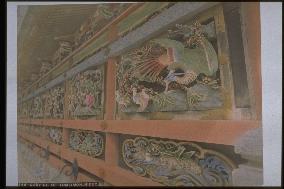
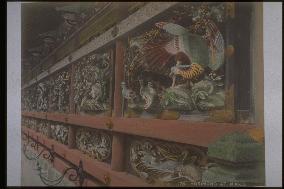
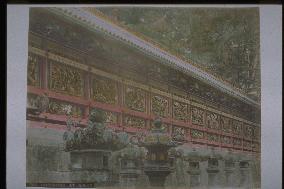
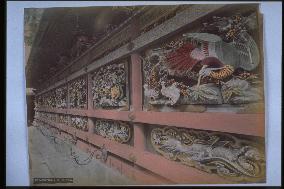
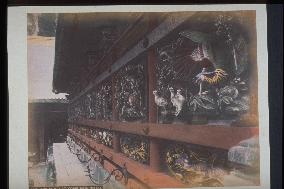
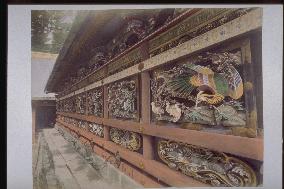
This is the south side of the 220m corridor that stretches east to west from the sodebei wall of Yomeimon at Nikko Toshogu. The south side is decorated with 25 different carvings. A candlestick is attached to each carving to light the corridor.==Date:unknown, Place:Nikko, Photo:unknown, (Credit:Nagasaki University Library/Kyodo News Images) [Cabinet Number86‐6‐0]

  •  
The Yomeimon Gate,Toshogu Shrine,Nikko

The Yomeimon Gate,Toshogu Shrine,Nikko

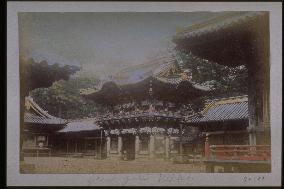
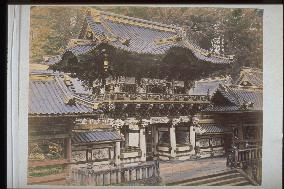
Yomeimon, the most famous building at Nikko Toshogu, is visible in the centre. The main shrine of Toshogu is situated inside the gate. The Drum Tower is on the left, and a hanging lantern is visible on the right. The Bell Tower stands in juxtaposition on the other side of the gate. Part of Kamijinko is visible on the left.==Date:unknown, Place:Nikko, Photo:unknown, (Credit:Nagasaki University Library/Kyodo News Images) [Cabinet Number85‐1‐0]

  •  
The Yomeimon Gate,Toshogu Shrine,Nikko (seen from behind)

The Yomeimon Gate,Toshogu Shrine,Nikko (seen from behind)

This is the rear of Yomeimon. The symbol of Nikko Toshogu, this gate displays craftsmanship and decorative techniques representative of the early Edo Period. The carvings on the gate total 508 in number and include people, animals (real and imaginary), flowers, birds, and patterns. It is also called Higurashimon (Evening Falling Gate) because visitors can stand looking at it all day long and still not tire of its beauty.==Date:unknown, Place:Nikko, Photo:A. Farsari, (Credit:Nagasaki University Library/Kyodo News Images) [Cabinet Number82‐37‐0]

  •  
The Yomeimon Gate,Toshogu Shrine,Nikko

The Yomeimon Gate,Toshogu Shrine,Nikko

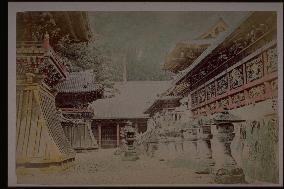
This is the front side of Yomeimon Gate. The symbol of Nikko Toshogu, this gate displays a collection of the craftsmanship and decorative techniques representative of the beginning of the Edo Period. The carvings on the gate total 508 and include people, animals -real and imaginary-, flowers, birds, patterns, and so on. Because the viewers will not get tired of admiring the beauty of the gate until twilight, it is also called the Higurashimon (the Evening Gate).==Date:unknown, Place:Nikko, Photo:Tamamura Kozaburo, (Credit:Nagasaki University Library/Kyodo News Images) [Cabinet Number80‐43‐0]

  •  
The Dutch Lantern,Toshogu Shrine,Nikko

The Dutch Lantern,Toshogu Shrine,Nikko

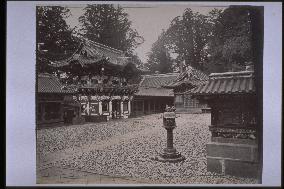
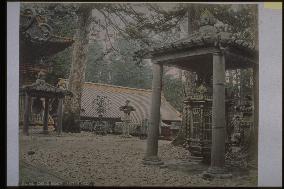
This photograph contains the octagonal revolving lantern given to Japan by the Dutch Republic. It is visible on the right, in front of the Yomeimon Gate of the Nikko Toshogu Shinto Shrine. A lotus lantern is standing in the centre back. The building on the left is the Bell Tower. The Korean Bell, which should be hanging in the roofed structure supported by the four pillars, is not visible here. The roof of Kamijinko is visible behind.==Date:unknown, Place:Nikko, Photo:Tamamura Kozaburo, (Credit:Nagasaki University Library/Kyodo News Images) [Cabinet Number80‐41‐0]

  •  
Carvings at the cliosters of the Yomeimon Gate,Toshogu Shrine,Nikko

Carvings at the cliosters of the Yomeimon Gate,Toshogu Shrine,Nikko

This is the south side of the 220m corridor that stretches east to west from the sodebei wall of Yomeimon at Nikko Toshogu. The south side is decorated with 25 different carvings. A candlestick is attached to each carving to light the corridor.==Date:unknown, Place:Nikko, Photo:Tamamura Kozaburo, (Credit:Nagasaki University Library/Kyodo News Images) [Cabinet Number80‐42‐0]

  •  
The Yomeimon Gate,Toshogu Shrine,Nikko

The Yomeimon Gate,Toshogu Shrine,Nikko

Yomeimon, the most famous building at Nikko Toshogu, is visible in the centre. The main shrine of Toshogu is situated inside the gate. The Drum Tower is on the left, and a hanging lantern is visible on the right. The Bell Tower stands in juxtaposition on the other side of the gate. Part of Kamijinko is visible on the left.==Date:unknown, Place:Nikko, Photo:unknown, (Credit:Nagasaki University Library/Kyodo News Images) [Cabinet Number80‐39‐0]

  •  
Carvings at the cliosters of the Yomeimon Gate,Toshogu Shrine,Nikko

Carvings at the cliosters of the Yomeimon Gate,Toshogu Shrine,Nikko

This is the south side of the 220m corridor that stretches east to west from the sodebei wall of Yomeimon at Nikko Toshogu. The west and east corridors are decorated with opulent and delicate carvings. The buildings of Toshogu feature about 5,000 different carvings of 100 types of animal and plant. These corridors are one example.==Date:unknown, Place:Nikko, Photo:unknown, (Credit:Nagasaki University Library/Kyodo News Images) [Cabinet Number79‐22‐0]

  •  
The Yomeimon Gate,Toshogu Shrine,Nikko

The Yomeimon Gate,Toshogu Shrine,Nikko

This is the rear of Yomeimon. The symbol of Nikko Toshogu, this gate displays craftsmanship and decorative techniques representative of the early Edo Period. The carvings on the gate total 508 in number and include people, animals (real and imaginary), flowers, birds, and patterns. It is also called Higurashimon (Evening Falling Gate) because visitors can stand looking at it all day long and still not tire of its beauty.==Date:unknown, Place:Nikko, Photo:R. Stillfried, (Credit:Nagasaki University Library/Kyodo News Images) [Cabinet Number77‐5‐0]

  •  
The Yomeimon Gate seen from the second gate,Toshogu Shrine,Nikko

The Yomeimon Gate seen from the second gate,Toshogu Shrine,Nikko

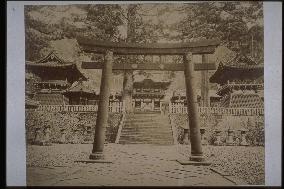
The six meter-tall Karagane Torii is in the right foreground. The first bronze torii gate in Japan, it was built by third shogun Tokugawa Iemitsu. The Todaihoya, where hanging lanterns are stored, is visible through the gate. At the top of the stairs stands Yomei Gate, the most famous structure at Nikko Toshogu. The main shrine is inside the gate.==Date:unknown, Place:Nikko, Photo:unknown, (Credit:Nagasaki University Library/Kyodo News Images) [Cabinet Number71‐8‐0]

  •  
The Yomeimon Gate,Toshogu Shrine,Nikko

The Yomeimon Gate,Toshogu Shrine,Nikko

This is the rear side of Yomeimon. The symbol of Nikko Toshogu, this gate displays craftsmanship and decorative techniques representative of the early Edo Period. The carvings on the gate total 508 in number and include people, animals (real and imaginary), flowers, birds, and patterns. It is also called Higurashimon (Evening Falling Gate) because visitors can stand looking at it all day long and still not tire of its beauty. The building on the right is Shinyosha.==Date:unknown, Place:Nikko, Photo:unknown, (Credit:Nagasaki University Library/Kyodo News Images) [Cabinet Number69‐40‐0]

  •  
The Yomeimon Gate,Toshogu Shrine,Nikko

The Yomeimon Gate,Toshogu Shrine,Nikko

This is the rear of Yomeimon. The symbol of Nikko Toshogu, this gate displays craftsmanship and decorative techniques representative of the early Edo Period. The carvings on the gate total 508 in number and include people, animals (real and imaginary), flowers, birds, and patterns. It is also called Higurashimon (Evening Falling Gate) because visitors can stand looking at it all day long and still not tire of its beauty.==Date:unknown, Place:Nikko, Photo:Usui Shuzaburo?, (Credit:Nagasaki University Library/Kyodo News Images) [Cabinet Number65‐27‐0]

  •  
The Yomeimon Gate,Toshogu Shrine,Nikko

The Yomeimon Gate,Toshogu Shrine,Nikko

This is the rear side of Yomeimon. The symbol of Nikko Toshogu, this gate displays craftsmanship and decorative techniques representative of the early Edo Period. The carvings on the gate total 508 in number and include people, animals (real and imaginary), flowers, birds, and patterns. It is also called Higurashimon (Evening Falling Gate) because visitors can stand looking at it all day long and still not tire of its beauty. The building on the right is Shinyosha.==Date:unknown, Place:Nikko, Photo:unknown, (Credit:Nagasaki University Library/Kyodo News Images) [Cabinet Number59‐61‐2]

  •  
The Yomeimon Gate,Toshogu Shrine,Nikko

The Yomeimon Gate,Toshogu Shrine,Nikko

This is the front side of Yomeimon Gate. The symbol of Nikko Toshogu, this gate displays a collection of the craftsmanship and decorative techniques representative of the beginning of the Edo Period. The carvings on the gate total 508 and include people, animals -real and imaginary-, flowers, birds, patterns, and so on. Because the viewers will not get tired of admiring the beauty of the gate until twilight, it is also called the Higurashimon (the Evening Gate).==Date:unknown, Place:Nikko, Photo:unknown, (Credit:Nagasaki University Library/Kyodo News Images) [Cabinet Number54‐44‐0]

  •  
The Yomeimon Gate seen from the second gate,Toshogu Shrine,Nikko

The Yomeimon Gate seen from the second gate,Toshogu Shrine,Nikko

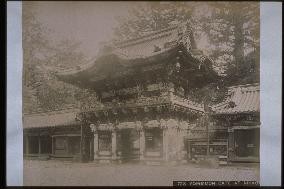
Yomei Gate is seen through Karagane Torii Gate from around Omizuya at Toshogu. The first bronze gate built in Japan, Karagane Torii was built by the third shogun Tokugawa Iemitsu. The building on the left is the Koro (Drum Tower). To the right is a building used to store hanging lanterns. The building on the right is the Bell Tower. Behind Yomei Gate is the main shrine of Nikko Toshogu.==Date:unknown, Place:Nikko, Photo:unknown, (Credit:Nagasaki University Library/Kyodo News Images) [Cabinet Number54‐41‐0]

  •  
The Yomeimon Gate,Toshogu Shrine,Nikko

The Yomeimon Gate,Toshogu Shrine,Nikko

This is the rear of Yomeimon. The symbol of Nikko Toshogu, this gate displays craftsmanship and decorative techniques representative of the early Edo Period. The carvings on the gate total 508 in number and include people, animals (real and imaginary), flowers, birds, and patterns. It is also called Higurashimon (Evening Falling Gate) because visitors can stand looking at it all day long and still not tire of its beauty.==Date:unknown, Place:Nikko, Photo:unknown, (Credit:Nagasaki University Library/Kyodo News Images) [Cabinet Number54‐39‐0]

  •  
The Yomeimon Gate,Toshogu Shrine,Nikko

The Yomeimon Gate,Toshogu Shrine,Nikko

This is the rear of Yomeimon. The symbol of Nikko Toshogu, this gate displays craftsmanship and decorative techniques representative of the early Edo Period. The carvings on the gate total 508 in number and include people, animals (real and imaginary), flowers, birds, and patterns. It is also called Higurashimon (Evening Falling Gate) because visitors can stand looking at it all day long and still not tire of its beauty.==Date:unknown, Place:Nikko, Photo:unknown, (Credit:Nagasaki University Library/Kyodo News Images) [Cabinet Number54‐32‐0]

  •  
The Yomeimon Gate,Toshogu Shrine,Nikko

The Yomeimon Gate,Toshogu Shrine,Nikko

This is the rear of Yomeimon. The symbol of Nikko Toshogu, this gate displays craftsmanship and decorative techniques representative of the early Edo Period. The carvings on the gate total 508 in number and include people, animals (real and imaginary), flowers, birds, and patterns. It is also called Higurashimon (Evening Falling Gate) because visitors can stand looking at it all day long and still not tire of its beauty.==Date:unknown, Place:Nikko, Photo:unknown, (Credit:Nagasaki University Library/Kyodo News Images) [Cabinet Number54‐30‐0]

  •  
The Yomeimon Gate,Toshogu Shrine,Nikko

The Yomeimon Gate,Toshogu Shrine,Nikko

This is the rear of Yomeimon. The symbol of Nikko Toshogu, this gate displays craftsmanship and decorative techniques representative of the early Edo Period. The carvings on the gate total 508 in number and include people, animals (real and imaginary), flowers, birds, and patterns. It is also called Higurashimon (Evening Falling Gate) because visitors can stand looking at it all day long and still not tire of its beauty.==Date:unknown, Place:Nikko, Photo:unknown, (Credit:Nagasaki University Library/Kyodo News Images) [Cabinet Number54‐15‐2]

  •  
The Yomeimon Gate,Toshogu Shrine,Nikko

The Yomeimon Gate,Toshogu Shrine,Nikko

This is the front of Yomeimon. The symbol of Nikko Toshogu, this gate displays craftsmanship and decorative techniques representative of the early Edo Period. The carvings on the gate total 508 in number and include people, animals (real and imaginary), flowers, birds, and patterns. It is also called Higurashimon (Evening Falling Gate) because visitors can stand looking at it all day long and still not tire of its beauty.==Date:unknown, Place:Nikko, Photo:unknown, (Credit:Nagasaki University Library/Kyodo News Images) [Cabinet Number54‐15‐0]

  •  
The Yomeimon Gate,Toshogu Shrine,Nikko

The Yomeimon Gate,Toshogu Shrine,Nikko

This is the rear of Yomeimon. The symbol of Nikko Toshogu, this gate displays craftsmanship and decorative techniques representative of the early Edo Period. The carvings on the gate total 508 in number and include people, animals (real and imaginary), flowers, birds, and patterns. It is also called Higurashimon (Evening Falling Gate) because visitors can stand looking at it all day long and still not tire of its beauty.==Date:unknown, Place:Nikko, Photo:unknown, (Credit:Nagasaki University Library/Kyodo News Images) [Cabinet Number54‐13‐2]

  •  
Carvings at the cliosters of the Yomeimon Gate,Toshogu Shrine,Nikko

Carvings at the cliosters of the Yomeimon Gate,Toshogu Shrine,Nikko

This is the south side of the 220m corridor that stretches east to west from the sodebei wall of Yomeimon at Nikko Toshogu. The south side is decorated with 25 different carvings. A candlestick is attached to each carving to light the corridor.==Date:unknown, Place:Nikko, Photo:unknown, (Credit:Nagasaki University Library/Kyodo News Images) [Cabinet Number54‐3‐0]

  •  
Carvings on the Yomeimon Gate,Toshogu Shrine,Nikko

Carvings on the Yomeimon Gate,Toshogu Shrine,Nikko

This is the south side of the 220m corridor that stretches east to west from the sodebei wall of Yomeimon at Nikko Toshogu. The south side is decorated with 25 different carvings. A candlestick is attached to each carving to light the corridor. The building in the back is the Honjido (Yakushido), famous for its meiryu (crying dragon).==Date:unknown, Place:Nikko, Photo:unknown, (Credit:Nagasaki University Library/Kyodo News Images) [Cabinet Number51‐58‐2]

  •  
The Yomeimon Gate,Toshogu Shrine,Nikko

The Yomeimon Gate,Toshogu Shrine,Nikko

This is the rear of Yomeimon. The symbol of Nikko Toshogu, this gate displays craftsmanship and decorative techniques representative of the early Edo Period. The carvings on the gate total 508 in number and include people, animals (real and imaginary), flowers, birds, and patterns. It is also called Higurashimon (Evening Falling Gate) because visitors can stand looking at it all day long and still not tire of its beauty.==Date:unknown, Place:Nikko, Photo:unknown, (Credit:Nagasaki University Library/Kyodo News Images) [Cabinet Number50‐30‐0]

  •  
The Yomeimon Gate,Toshogu Shrine,Nikko

The Yomeimon Gate,Toshogu Shrine,Nikko

This is the rear of Yomeimon. The symbol of Nikko Toshogu, this gate displays craftsmanship and decorative techniques representative of the early Edo Period. The carvings on the gate total 508 in number and include people, animals (real and imaginary), flowers, birds, and patterns. It is also called Higurashimon (Evening Falling Gate) because visitors can stand looking at it all day long and still not tire of its beauty.==Date:unknown, Place:Nikko, Photo:unknown, (Credit:Nagasaki University Library/Kyodo News Images) [Cabinet Number47‐26‐0]

  •  
The cloisters of the Yomeimon Gate,Toshogu Shrine,Nikko

The cloisters of the Yomeimon Gate,Toshogu Shrine,Nikko

This is the south side of the 220m corridor that stretches east to west from the sodebei wall of Yomeimon at Nikko Toshogu. The south side is decorated with 25 different carvings. A candlestick is attached to each carving to light the corridor. The building in the back is the Honjido (Yakushido), famous for its meiryu (crying dragon).==Date:unknown, Place:Nikko, Photo:unknown, (Credit:Nagasaki University Library/Kyodo News Images) [Cabinet Number47‐25‐0]

  •  
The Yomeimon Gate,Toshogu Shrine,Nikko

The Yomeimon Gate,Toshogu Shrine,Nikko

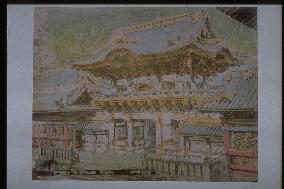
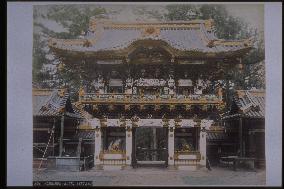
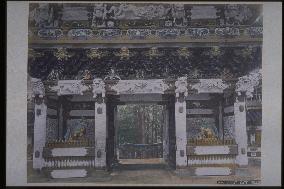
The facade of the Yomei Gate. A panel with the autograph of the Emperor Gosuio is hung in the center, and the upper layer is covered with carvings of dragons and the lower layer us covered with carvings of Chinese lions. The wall to the left and right is placed a statue of Zuishin. The wing moat to the right and left and the corridor connected to it has carvings in brilliant colors.==Date:unknown, Place:Nikko, Photo:Suzuki Shin-ichi, (Credit:Nagasaki University Library/Kyodo News Images) [Cabinet Number41‐3‐0]

  •  
The Yomeimon Gate,Toshogu Shrine,Nikko

The Yomeimon Gate,Toshogu Shrine,Nikko

The facade of the Yomei Gate. A panel with the autograph of the Emperor Gosuio is hung in the center, and the upper layer is covered with carvings of dragons and the lower layer is covered with carvings of Chinese lions. The wall to the left and right is placed a statue of Zuishin. The wing moat to the right and left and the corridor connected to it has carvings in brilliant colors.==Date:unknown, Place:Nikko, Photo:Kusakabe Kinbei, (Credit:Nagasaki University Library/Kyodo News Images) [Cabinet Number40‐10‐0]

  •  
The Yomeimon Gate,Toshogu Shrine,Nikko

The Yomeimon Gate,Toshogu Shrine,Nikko

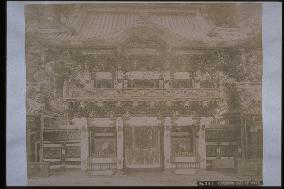
The facade of the Yomei Gate. A panel with calligraphy by Emperor Gosuio is seen in the centre, and the upper part of the gate is covered with dragon carvings, and the lower layer with lion carvings. Statues of auillary deities flank the walls. The colours of the carving in the side wall and surrounding corridor are magnificent.==Date:unknown, Place:Nikko, Photo:unknown, (Credit:Nagasaki University Library/Kyodo News Images) [Cabinet Number31‐29‐0]

  •  
The Yomeimon Gate,Toshogu Shrine,Nikko

The Yomeimon Gate,Toshogu Shrine,Nikko

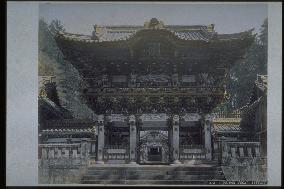
The Yomei Gate from the direction of the Toshogu Kara Gate. The upper layer of the gate is covered with carvings of dragons and the lower layer with lions, supported by twelve white pillars. To the left and right are one-sided carvings of peonies. The corridor leading to the side wall surround the main building.==Date:unknown, Place:Nikko, Photo:unknown, (Credit:Nagasaki University Library/Kyodo News Images) [Cabinet Number31‐18‐0]

  •  
Yomeimon gate from karamon gate of nikko toshogu shrine

Yomeimon gate from karamon gate of nikko toshogu shrine

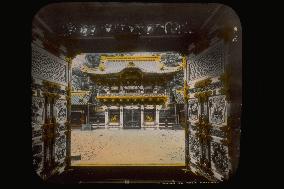
A view of the back of the Yomei Gate from the Toshogu Hall of Worship. The Kara Gate consists of yosegizaiku (wooden mosaic). The pillars have statues carved with Chinese saints. Korean dogs are placed at the back of the Yomei Gate on both sides.==Date:unknown, Place:Nikko, Photo:unknown, (Credit:Nagasaki University Library/Kyodo News Images) [Cabinet Number31‐10‐0]

  •  
The Yomeimon Gate,Toshogu Shrine,Nikko

The Yomeimon Gate,Toshogu Shrine,Nikko

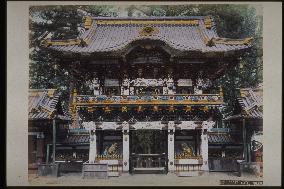
The facade of the Yomei gate. A plaque with calligraphy by Emperor Omizuo is placed in the centre, and the upper tier of the gate is covered with carvings of dragons, and the lower tier with Chinese lions. Statues of Zuishin are placed to the right and left of the niche. The walls of the corridor are divided by red-painted pillars, and have flowers and birds in the upper tier and water quails in the lower tier.==Date:unknown, Place:Nikko, Photo:unknown, (Credit:Nagasaki University Library/Kyodo News Images) [Cabinet Number16‐39‐0]

  •  
The Yomeimon Gate,Toshogu Shrine,Nikko

The Yomeimon Gate,Toshogu Shrine,Nikko

In front of the Yomei gate stand the bell tower and drum tower within the compounds to the left, and the Honjido is to the rear. It was called Honjido because the Yakushinyorai, the honjibutsu (main Buddha of worship) of Tokugawa Ieyasu, was enshrined there, but at present it is called Yakushido. A dragon is painted on the ceiling, and when one claps, the ceiling echoes, so it is called nakiryu (crying dragon). The steps to the Yomei gate and corridor are seen to the right.==Date:unknown, Place:Nikko, Photo:unknown, (Credit:Nagasaki University Library/Kyodo News Images) [Cabinet Number15‐31‐0]

  • Main
  • Top
  • Editorial
  • Creative
  • About Us
  • About ILG
  • Terms of use
  • Company
  • BEHIND
  • Price List
  • Single Plan
  • Monthly Plan
  • Services
  • Shooting
  • Rights Clearance
  • Support
  • FAQ
  • How To Buy
  • Contact Us
  • Become a Partner

© KYODO NEWS IMAGES INC

All Rights Reserved.

  • Editorial
  • Olympics
  • News
  • Sports
  • Japan
  • Tech
  • Royal
  • Disaster
  • NorthKorea
  • Old Japan
  • SNS
  • Creative
  • Food
  • Japan
  • Landscape
  • Animal
  • Popular
  • #Ukraine
  • #Thailand
  • #coronavirus
  • #N. Korea
  • #China
  • #Russia
  • #Ukraine
  • #Thailand
  • #coronavirus
  • #N. Korea
  • #China
  • #Russia
  • Food
  • Japan
  • Landscape
  • Animal
  • Olympics
  • News
  • Sports
  • Japan
  • Tech
  • Royal
  • Disaster
  • NorthKorea
  • Old Japan
  • SNS