•  
Sake Making At Jozan Brewery In Fukui - Japan

Sake Making At Jozan Brewery In Fukui - Japan

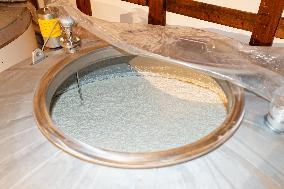
Fermenting moromi is pictured at Jozan Brewery in Fukui. Japanese alcoholic beverages, including sake (nihonshu), shochu and awamori, are made from grains and water. Craftspeople use koji mold to convert the starch in the ingredients into sugar, and oversee the process to make sure the mold grows in optimal conditions. Jozan, a brewery located in Fukui Prefecture, a region renowned for its high-quality rice, has upheld traditional sake-making for over 220 years. Led by Shinpei Tokoyama, the brewery exemplifies its ongoing efforts in coping with challenges in modern era while preserving traditional craftsmanship. With modern techniques, Jozan has realized a meticulous control over the brewing process, ensuring the consistency of product quality without compromising the essence of traditional making methods. In 2017, Jozan also renovated its brewing space, combining functionality with modern design to accommodate both production needs and visitors from around the world. The United Nations Educational, Scientifi

  •  
Sake maker Ichinokura resumes production

Sake maker Ichinokura resumes production

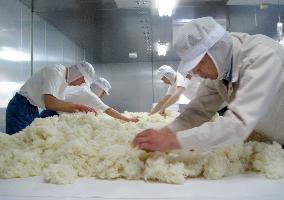
OSAKI, Japan - Workers at Japanese sake maker Ichinokura Co. in Osaki, Miyagi Prefecture, knead steamed rice sprinkled with fermenting agent as they resume production on April 18, 2011, for the first time in around five weeks after the March 11 earthquake and tsunami.

  •  
(MASTER OF CRAFTS)CHINA-ANHUI-QIMEN-KEEMUN BLACK TEA-INHERITOR (CN)

(MASTER OF CRAFTS)CHINA-ANHUI-QIMEN-KEEMUN BLACK TEA-INHERITOR (CN)

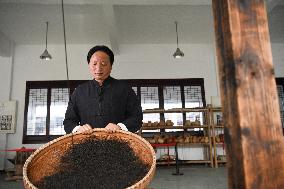
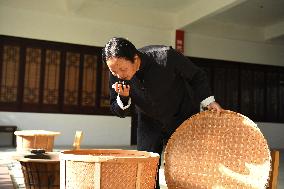
(221130) -- QIMEN, Nov. 30, 2022 (Xinhua) -- Wang Chang does the blending processing of Keemun black tea at his tea company in Qimen County, east China's Anhui Province, Nov. 26, 2022. Keemun black tea, one of the most famous Chinese tea with intensive aroma, has a history of more than 100 years. The tea, also called "Qihong" in Chinese, plays an important role in cultural exchanges between the west and the east. In 2008, the making of Keemun black tea was listed as China's national-level intangible cultural heritage, and nowadays the tea has become a symbol for Anhui Province or even China. The primary processing of Keemun black tea includes four steps, namely natural withering, rolling, fermenting and drying, lasting from before the Qingming festival (April) to June. After that, the refining of the tea is much more complicated, which mainly includes procedures such as screening, winnowing, compressing, re-drying, blending, piling and packing. Of all the refining steps, blending is the key, which decides th

  •  
(MASTER OF CRAFTS)CHINA-ANHUI-QIMEN-KEEMUN BLACK TEA-INHERITOR (CN)

(MASTER OF CRAFTS)CHINA-ANHUI-QIMEN-KEEMUN BLACK TEA-INHERITOR (CN)

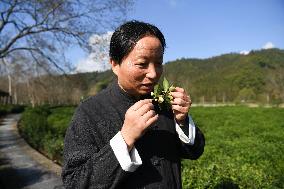
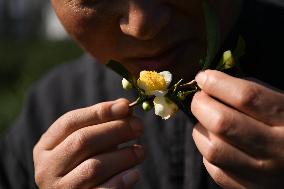
(221130) -- QIMEN, Nov. 30, 2022 (Xinhua) -- Wang Chang smells the scent of tea flowers at a tea garden in Qimen County, east China's Anhui Province, Nov. 26, 2022. Keemun black tea, one of the most famous Chinese tea with intensive aroma, has a history of more than 100 years. The tea, also called "Qihong" in Chinese, plays an important role in cultural exchanges between the west and the east. In 2008, the making of Keemun black tea was listed as China's national-level intangible cultural heritage, and nowadays the tea has become a symbol for Anhui Province or even China. The primary processing of Keemun black tea includes four steps, namely natural withering, rolling, fermenting and drying, lasting from before the Qingming festival (April) to June. After that, the refining of the tea is much more complicated, which mainly includes procedures such as screening, winnowing, compressing, re-drying, blending, piling and packing. Of all the refining steps, blending is the key, which decides the shape, scent, and

  •  
(MASTER OF CRAFTS)CHINA-ANHUI-QIMEN-KEEMUN BLACK TEA-INHERITOR (CN)

(MASTER OF CRAFTS)CHINA-ANHUI-QIMEN-KEEMUN BLACK TEA-INHERITOR (CN)

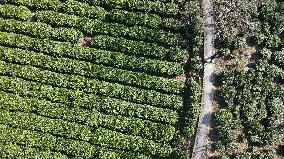
(221130) -- QIMEN, Nov. 30, 2022 (Xinhua) -- This aerial photo taken on Nov. 26, 2022 shows Wang Chang walking at a tea garden in Qimen County, east China's Anhui Province. Keemun black tea, one of the most famous Chinese tea with intensive aroma, has a history of more than 100 years. The tea, also called "Qihong" in Chinese, plays an important role in cultural exchanges between the west and the east. In 2008, the making of Keemun black tea was listed as China's national-level intangible cultural heritage, and nowadays the tea has become a symbol for Anhui Province or even China. The primary processing of Keemun black tea includes four steps, namely natural withering, rolling, fermenting and drying, lasting from before the Qingming festival (April) to June. After that, the refining of the tea is much more complicated, which mainly includes procedures such as screening, winnowing, compressing, re-drying, blending, piling and packing. Of all the refining steps, blending is the key, which decides the shape, sce

  •  
(MASTER OF CRAFTS)CHINA-ANHUI-QIMEN-KEEMUN BLACK TEA-INHERITOR (CN)

(MASTER OF CRAFTS)CHINA-ANHUI-QIMEN-KEEMUN BLACK TEA-INHERITOR (CN)

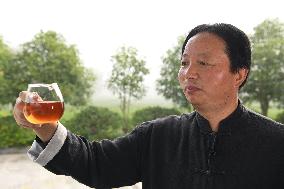
(221130) -- QIMEN, Nov. 30, 2022 (Xinhua) -- Wang Chang tastes a cup of Keemun black tea at a tea garden in Qimen County, east China's Anhui Province, Nov. 26, 2022. Keemun black tea, one of the most famous Chinese tea with intensive aroma, has a history of more than 100 years. The tea, also called "Qihong" in Chinese, plays an important role in cultural exchanges between the west and the east. In 2008, the making of Keemun black tea was listed as China's national-level intangible cultural heritage, and nowadays the tea has become a symbol for Anhui Province or even China. The primary processing of Keemun black tea includes four steps, namely natural withering, rolling, fermenting and drying, lasting from before the Qingming festival (April) to June. After that, the refining of the tea is much more complicated, which mainly includes procedures such as screening, winnowing, compressing, re-drying, blending, piling and packing. Of all the refining steps, blending is the key, which decides the shape, scent, and

  •  
(MASTER OF CRAFTS)CHINA-ANHUI-QIMEN-KEEMUN BLACK TEA-INHERITOR (CN)

(MASTER OF CRAFTS)CHINA-ANHUI-QIMEN-KEEMUN BLACK TEA-INHERITOR (CN)

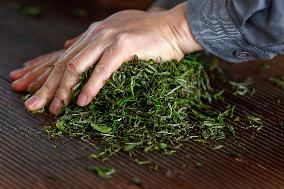
(221130) -- QIMEN, Nov. 30, 2022 (Xinhua) -- A worker rolls tea leaves after withering at Wang Chang's tea company in Qimen County, east China's Anhui Province, March 28, 2022. Keemun black tea, one of the most famous Chinese tea with intensive aroma, has a history of more than 100 years. The tea, also called "Qihong" in Chinese, plays an important role in cultural exchanges between the west and the east. In 2008, the making of Keemun black tea was listed as China's national-level intangible cultural heritage, and nowadays the tea has become a symbol for Anhui Province or even China. The primary processing of Keemun black tea includes four steps, namely natural withering, rolling, fermenting and drying, lasting from before the Qingming festival (April) to June. After that, the refining of the tea is much more complicated, which mainly includes procedures such as screening, winnowing, compressing, re-drying, blending, piling and packing. Of all the refining steps, blending is the key, which decides the shape,

  •  
(MASTER OF CRAFTS)CHINA-ANHUI-QIMEN-KEEMUN BLACK TEA-INHERITOR (CN)

(MASTER OF CRAFTS)CHINA-ANHUI-QIMEN-KEEMUN BLACK TEA-INHERITOR (CN)

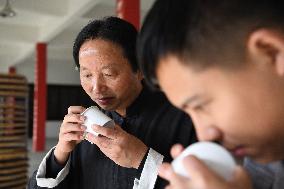
(221130) -- QIMEN, Nov. 30, 2022 (Xinhua) -- Fan Wenhan, apprentice of Wang Chang, evaluates a Keemun black tea product at a tea garden in Qimen County, east China's Anhui Province, Nov. 26, 2022. Keemun black tea, one of the most famous Chinese tea with intensive aroma, has a history of more than 100 years. The tea, also called "Qihong" in Chinese, plays an important role in cultural exchanges between the west and the east. In 2008, the making of Keemun black tea was listed as China's national-level intangible cultural heritage, and nowadays the tea has become a symbol for Anhui Province or even China. The primary processing of Keemun black tea includes four steps, namely natural withering, rolling, fermenting and drying, lasting from before the Qingming festival (April) to June. After that, the refining of the tea is much more complicated, which mainly includes procedures such as screening, winnowing, compressing, re-drying, blending, piling and packing. Of all the refining steps, blending is the key, whic

  •  
(MASTER OF CRAFTS)CHINA-ANHUI-QIMEN-KEEMUN BLACK TEA-INHERITOR (CN)

(MASTER OF CRAFTS)CHINA-ANHUI-QIMEN-KEEMUN BLACK TEA-INHERITOR (CN)

(221130) -- QIMEN, Nov. 30, 2022 (Xinhua) -- Wang Chang does the sieving processing of keemun black tea at a tea garden in Qimen County, east China's Anhui Province, Nov. 26, 2022. Keemun black tea, one of the most famous Chinese tea with intensive aroma, has a history of more than 100 years. The tea, also called "Qihong" in Chinese, plays an important role in cultural exchanges between the west and the east. In 2008, the making of Keemun black tea was listed as China's national-level intangible cultural heritage, and nowadays the tea has become a symbol for Anhui Province or even China. The primary processing of Keemun black tea includes four steps, namely natural withering, rolling, fermenting and drying, lasting from before the Qingming festival (April) to June. After that, the refining of the tea is much more complicated, which mainly includes procedures such as screening, winnowing, compressing, re-drying, blending, piling and packing. Of all the refining steps, blending is the key, which decides the sh

  •  
(MASTER OF CRAFTS)CHINA-ANHUI-QIMEN-KEEMUN BLACK TEA-INHERITOR (CN)

(MASTER OF CRAFTS)CHINA-ANHUI-QIMEN-KEEMUN BLACK TEA-INHERITOR (CN)

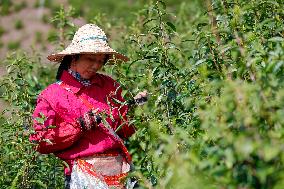
(221130) -- QIMEN, Nov. 30, 2022 (Xinhua) -- A farmer picks tea leaves at a tea garden in Qimen County, east China's Anhui Province, March 28, 2022. Keemun black tea, one of the most famous Chinese tea with intensive aroma, has a history of more than 100 years. The tea, also called "Qihong" in Chinese, plays an important role in cultural exchanges between the west and the east. In 2008, the making of Keemun black tea was listed as China's national-level intangible cultural heritage, and nowadays the tea has become a symbol for Anhui Province or even China. The primary processing of Keemun black tea includes four steps, namely natural withering, rolling, fermenting and drying, lasting from before the Qingming festival (April) to June. After that, the refining of the tea is much more complicated, which mainly includes procedures such as screening, winnowing, compressing, re-drying, blending, piling and packing. Of all the refining steps, blending is the key, which decides the shape, scent, and color of the fin

  •  
(MASTER OF CRAFTS)CHINA-ANHUI-QIMEN-KEEMUN BLACK TEA-INHERITOR (CN)

(MASTER OF CRAFTS)CHINA-ANHUI-QIMEN-KEEMUN BLACK TEA-INHERITOR (CN)

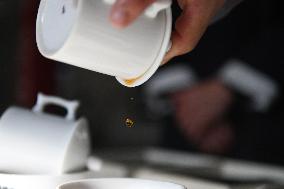
(221130) -- QIMEN, Nov. 30, 2022 (Xinhua) -- Wang Chang pours a cup of keemun black tea at a tea garden in Qimen County, east China's Anhui Province, Nov. 26, 2022. Keemun black tea, one of the most famous Chinese tea with intensive aroma, has a history of more than 100 years. The tea, also called "Qihong" in Chinese, plays an important role in cultural exchanges between the west and the east. In 2008, the making of Keemun black tea was listed as China's national-level intangible cultural heritage, and nowadays the tea has become a symbol for Anhui Province or even China. The primary processing of Keemun black tea includes four steps, namely natural withering, rolling, fermenting and drying, lasting from before the Qingming festival (April) to June. After that, the refining of the tea is much more complicated, which mainly includes procedures such as screening, winnowing, compressing, re-drying, blending, piling and packing. Of all the refining steps, blending is the key, which decides the shape, scent, and

  •  
(MASTER OF CRAFTS)CHINA-ANHUI-QIMEN-KEEMUN BLACK TEA-INHERITOR (CN)

(MASTER OF CRAFTS)CHINA-ANHUI-QIMEN-KEEMUN BLACK TEA-INHERITOR (CN)

(221130) -- QIMEN, Nov. 30, 2022 (Xinhua) -- Wang Chang does the sieving processing of keemun black tea at a tea garden in Qimen County, east China's Anhui Province, Nov. 26, 2022. Keemun black tea, one of the most famous Chinese tea with intensive aroma, has a history of more than 100 years. The tea, also called "Qihong" in Chinese, plays an important role in cultural exchanges between the west and the east. In 2008, the making of Keemun black tea was listed as China's national-level intangible cultural heritage, and nowadays the tea has become a symbol for Anhui Province or even China. The primary processing of Keemun black tea includes four steps, namely natural withering, rolling, fermenting and drying, lasting from before the Qingming festival (April) to June. After that, the refining of the tea is much more complicated, which mainly includes procedures such as screening, winnowing, compressing, re-drying, blending, piling and packing. Of all the refining steps, blending is the key, which decides the sh

  •  
(MASTER OF CRAFTS)CHINA-ANHUI-QIMEN-KEEMUN BLACK TEA-INHERITOR (CN)

(MASTER OF CRAFTS)CHINA-ANHUI-QIMEN-KEEMUN BLACK TEA-INHERITOR (CN)

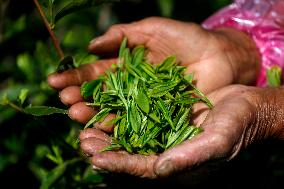
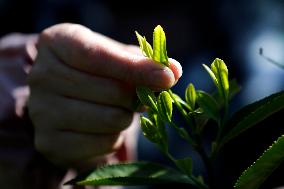
(221130) -- QIMEN, Nov. 30, 2022 (Xinhua) -- A farmer shows newly-picked tea leaves at a tea garden in Qimen County, east China's Anhui Province, March 28, 2022. Keemun black tea, one of the most famous Chinese tea with intensive aroma, has a history of more than 100 years. The tea, also called "Qihong" in Chinese, plays an important role in cultural exchanges between the west and the east. In 2008, the making of Keemun black tea was listed as China's national-level intangible cultural heritage, and nowadays the tea has become a symbol for Anhui Province or even China. The primary processing of Keemun black tea includes four steps, namely natural withering, rolling, fermenting and drying, lasting from before the Qingming festival (April) to June. After that, the refining of the tea is much more complicated, which mainly includes procedures such as screening, winnowing, compressing, re-drying, blending, piling and packing. Of all the refining steps, blending is the key, which decides the shape, scent, and col

  •  
(MASTER OF CRAFTS)CHINA-ANHUI-QIMEN-KEEMUN BLACK TEA-INHERITOR (CN)

(MASTER OF CRAFTS)CHINA-ANHUI-QIMEN-KEEMUN BLACK TEA-INHERITOR (CN)

(221130) -- QIMEN, Nov. 30, 2022 (Xinhua) -- Wang Chang smells the scent of Keemun black tea at a tea garden in Qimen County, east China's Anhui Province, Nov. 26, 2022. Keemun black tea, one of the most famous Chinese tea with intensive aroma, has a history of more than 100 years. The tea, also called "Qihong" in Chinese, plays an important role in cultural exchanges between the west and the east. In 2008, the making of Keemun black tea was listed as China's national-level intangible cultural heritage, and nowadays the tea has become a symbol for Anhui Province or even China. The primary processing of Keemun black tea includes four steps, namely natural withering, rolling, fermenting and drying, lasting from before the Qingming festival (April) to June. After that, the refining of the tea is much more complicated, which mainly includes procedures such as screening, winnowing, compressing, re-drying, blending, piling and packing. Of all the refining steps, blending is the key, which decides the shape, scent,

  •  
(MASTER OF CRAFTS)CHINA-ANHUI-QIMEN-KEEMUN BLACK TEA-INHERITOR (CN)

(MASTER OF CRAFTS)CHINA-ANHUI-QIMEN-KEEMUN BLACK TEA-INHERITOR (CN)

(221130) -- QIMEN, Nov. 30, 2022 (Xinhua) -- Wang Chang smells the scent of tea flowers at a tea garden in Qimen County, east China's Anhui Province, Nov. 26, 2022. Keemun black tea, one of the most famous Chinese tea with intensive aroma, has a history of more than 100 years. The tea, also called "Qihong" in Chinese, plays an important role in cultural exchanges between the west and the east. In 2008, the making of Keemun black tea was listed as China's national-level intangible cultural heritage, and nowadays the tea has become a symbol for Anhui Province or even China. The primary processing of Keemun black tea includes four steps, namely natural withering, rolling, fermenting and drying, lasting from before the Qingming festival (April) to June. After that, the refining of the tea is much more complicated, which mainly includes procedures such as screening, winnowing, compressing, re-drying, blending, piling and packing. Of all the refining steps, blending is the key, which decides the shape, scent, and

  •  
(MASTER OF CRAFTS)CHINA-ANHUI-QIMEN-KEEMUN BLACK TEA-INHERITOR (CN)

(MASTER OF CRAFTS)CHINA-ANHUI-QIMEN-KEEMUN BLACK TEA-INHERITOR (CN)

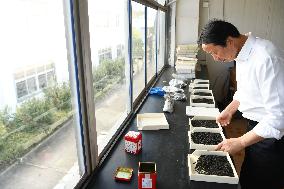
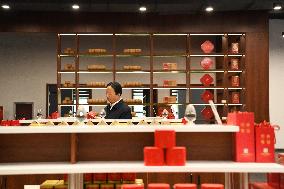
(221130) -- QIMEN, Nov. 30, 2022 (Xinhua) -- Wang Chang checks Keemun black tea products at his tea company in Qimen County, east China's Anhui Province, Nov. 26, 2022. Keemun black tea, one of the most famous Chinese tea with intensive aroma, has a history of more than 100 years. The tea, also called "Qihong" in Chinese, plays an important role in cultural exchanges between the west and the east. In 2008, the making of Keemun black tea was listed as China's national-level intangible cultural heritage, and nowadays the tea has become a symbol for Anhui Province or even China. The primary processing of Keemun black tea includes four steps, namely natural withering, rolling, fermenting and drying, lasting from before the Qingming festival (April) to June. After that, the refining of the tea is much more complicated, which mainly includes procedures such as screening, winnowing, compressing, re-drying, blending, piling and packing. Of all the refining steps, blending is the key, which decides the shape, scent,

  •  
(MASTER OF CRAFTS)CHINA-ANHUI-QIMEN-KEEMUN BLACK TEA-INHERITOR (CN)

(MASTER OF CRAFTS)CHINA-ANHUI-QIMEN-KEEMUN BLACK TEA-INHERITOR (CN)

(221130) -- QIMEN, Nov. 30, 2022 (Xinhua) -- Fan Wenhan, apprentice of Wang Chang, evaluates the processing of Keemun black tea at a tea garden in Qimen County, east China's Anhui Province, Nov. 26, 2022. Keemun black tea, one of the most famous Chinese tea with intensive aroma, has a history of more than 100 years. The tea, also called "Qihong" in Chinese, plays an important role in cultural exchanges between the west and the east. In 2008, the making of Keemun black tea was listed as China's national-level intangible cultural heritage, and nowadays the tea has become a symbol for Anhui Province or even China. The primary processing of Keemun black tea includes four steps, namely natural withering, rolling, fermenting and drying, lasting from before the Qingming festival (April) to June. After that, the refining of the tea is much more complicated, which mainly includes procedures such as screening, winnowing, compressing, re-drying, blending, piling and packing. Of all the refining steps, blending is the k

  •  
(MASTER OF CRAFTS)CHINA-ANHUI-QIMEN-KEEMUN BLACK TEA-INHERITOR (CN)

(MASTER OF CRAFTS)CHINA-ANHUI-QIMEN-KEEMUN BLACK TEA-INHERITOR (CN)

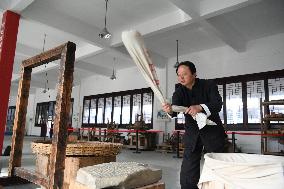
(221130) -- QIMEN, Nov. 30, 2022 (Xinhua) -- Wang Chang does the bagging and beating processing of Keemun black tea at a tea garden in Qimen County, east China's Anhui Province, Nov. 26, 2022. Keemun black tea, one of the most famous Chinese tea with intensive aroma, has a history of more than 100 years. The tea, also called "Qihong" in Chinese, plays an important role in cultural exchanges between the west and the east. In 2008, the making of Keemun black tea was listed as China's national-level intangible cultural heritage, and nowadays the tea has become a symbol for Anhui Province or even China. The primary processing of Keemun black tea includes four steps, namely natural withering, rolling, fermenting and drying, lasting from before the Qingming festival (April) to June. After that, the refining of the tea is much more complicated, which mainly includes procedures such as screening, winnowing, compressing, re-drying, blending, piling and packing. Of all the refining steps, blending is the key, which de

  •  
(MASTER OF CRAFTS)CHINA-ANHUI-QIMEN-KEEMUN BLACK TEA-INHERITOR (CN)

(MASTER OF CRAFTS)CHINA-ANHUI-QIMEN-KEEMUN BLACK TEA-INHERITOR (CN)

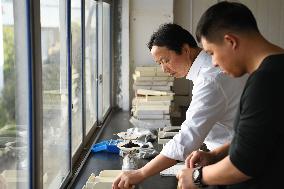
(221130) -- QIMEN, Nov. 30, 2022 (Xinhua) -- Wang Chang (L) and his apprentice Fan Wenhan do the blending processing of Keemun black tea at his tea company in Qimen County, east China's Anhui Province, Nov. 26, 2022. Keemun black tea, one of the most famous Chinese tea with intensive aroma, has a history of more than 100 years. The tea, also called "Qihong" in Chinese, plays an important role in cultural exchanges between the west and the east. In 2008, the making of Keemun black tea was listed as China's national-level intangible cultural heritage, and nowadays the tea has become a symbol for Anhui Province or even China. The primary processing of Keemun black tea includes four steps, namely natural withering, rolling, fermenting and drying, lasting from before the Qingming festival (April) to June. After that, the refining of the tea is much more complicated, which mainly includes procedures such as screening, winnowing, compressing, re-drying, blending, piling and packing. Of all the refining steps, blend

  •  
(MASTER OF CRAFTS)CHINA-ANHUI-QIMEN-KEEMUN BLACK TEA-INHERITOR (CN)

(MASTER OF CRAFTS)CHINA-ANHUI-QIMEN-KEEMUN BLACK TEA-INHERITOR (CN)

(221130) -- QIMEN, Nov. 30, 2022 (Xinhua) -- This aerial photo taken on Nov. 26, 2022 shows a tea garden in Qimen County, east China's Anhui Province. Keemun black tea, one of the most famous Chinese tea with intensive aroma, has a history of more than 100 years. The tea, also called "Qihong" in Chinese, plays an important role in cultural exchanges between the west and the east. In 2008, the making of Keemun black tea was listed as China's national-level intangible cultural heritage, and nowadays the tea has become a symbol for Anhui Province or even China. The primary processing of Keemun black tea includes four steps, namely natural withering, rolling, fermenting and drying, lasting from before the Qingming festival (April) to June. After that, the refining of the tea is much more complicated, which mainly includes procedures such as screening, winnowing, compressing, re-drying, blending, piling and packing. Of all the refining steps, blending is the key, which decides the shape, scent, and color of the f

  •  
(MASTER OF CRAFTS)CHINA-ANHUI-QIMEN-KEEMUN BLACK TEA-INHERITOR (CN)

(MASTER OF CRAFTS)CHINA-ANHUI-QIMEN-KEEMUN BLACK TEA-INHERITOR (CN)

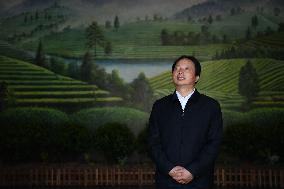
(221130) -- QIMEN, Nov. 30, 2022 (Xinhua) -- Wang Chang poses for a photo at his tea company in Qimen County, east China's Anhui Province, Nov. 26, 2022. Keemun black tea, one of the most famous Chinese tea with intensive aroma, has a history of more than 100 years. The tea, also called "Qihong" in Chinese, plays an important role in cultural exchanges between the west and the east. In 2008, the making of Keemun black tea was listed as China's national-level intangible cultural heritage, and nowadays the tea has become a symbol for Anhui Province or even China. The primary processing of Keemun black tea includes four steps, namely natural withering, rolling, fermenting and drying, lasting from before the Qingming festival (April) to June. After that, the refining of the tea is much more complicated, which mainly includes procedures such as screening, winnowing, compressing, re-drying, blending, piling and packing. Of all the refining steps, blending is the key, which decides the shape, scent, and color of th

  •  
(MASTER OF CRAFTS)CHINA-ANHUI-QIMEN-KEEMUN BLACK TEA-INHERITOR (CN)

(MASTER OF CRAFTS)CHINA-ANHUI-QIMEN-KEEMUN BLACK TEA-INHERITOR (CN)

(221130) -- QIMEN, Nov. 30, 2022 (Xinhua) -- A farmer picks tea leaves at a tea garden in Qimen County, east China's Anhui Province, March 28, 2022. Keemun black tea, one of the most famous Chinese tea with intensive aroma, has a history of more than 100 years. The tea, also called "Qihong" in Chinese, plays an important role in cultural exchanges between the west and the east. In 2008, the making of Keemun black tea was listed as China's national-level intangible cultural heritage, and nowadays the tea has become a symbol for Anhui Province or even China. The primary processing of Keemun black tea includes four steps, namely natural withering, rolling, fermenting and drying, lasting from before the Qingming festival (April) to June. After that, the refining of the tea is much more complicated, which mainly includes procedures such as screening, winnowing, compressing, re-drying, blending, piling and packing. Of all the refining steps, blending is the key, which decides the shape, scent, and color of the fin

  •  
(MASTER OF CRAFTS)CHINA-ANHUI-QIMEN-KEEMUN BLACK TEA-INHERITOR (CN)

(MASTER OF CRAFTS)CHINA-ANHUI-QIMEN-KEEMUN BLACK TEA-INHERITOR (CN)

(221130) -- QIMEN, Nov. 30, 2022 (Xinhua) -- Wang Chang (L) and his apprentice Fan Wenhan evalutate a Keemun black tea product at a tea garden in Qimen County, east China's Anhui Province, Nov. 26, 2022. Keemun black tea, one of the most famous Chinese tea with intensive aroma, has a history of more than 100 years. The tea, also called "Qihong" in Chinese, plays an important role in cultural exchanges between the west and the east. In 2008, the making of Keemun black tea was listed as China's national-level intangible cultural heritage, and nowadays the tea has become a symbol for Anhui Province or even China. The primary processing of Keemun black tea includes four steps, namely natural withering, rolling, fermenting and drying, lasting from before the Qingming festival (April) to June. After that, the refining of the tea is much more complicated, which mainly includes procedures such as screening, winnowing, compressing, re-drying, blending, piling and packing. Of all the refining steps, blending is the ke

  •  
(MASTER OF CRAFTS)CHINA-ANHUI-QIMEN-KEEMUN BLACK TEA-INHERITOR (CN)

(MASTER OF CRAFTS)CHINA-ANHUI-QIMEN-KEEMUN BLACK TEA-INHERITOR (CN)

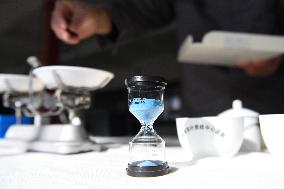
(221130) -- QIMEN, Nov. 30, 2022 (Xinhua) -- Wang Chang makes a cup of Keemun black tea in Qimen County, east China's Anhui Province, Nov. 26, 2022. Keemun black tea, one of the most famous Chinese tea with intensive aroma, has a history of more than 100 years. The tea, also called "Qihong" in Chinese, plays an important role in cultural exchanges between the west and the east. In 2008, the making of Keemun black tea was listed as China's national-level intangible cultural heritage, and nowadays the tea has become a symbol for Anhui Province or even China. The primary processing of Keemun black tea includes four steps, namely natural withering, rolling, fermenting and drying, lasting from before the Qingming festival (April) to June. After that, the refining of the tea is much more complicated, which mainly includes procedures such as screening, winnowing, compressing, re-drying, blending, piling and packing. Of all the refining steps, blending is the key, which decides the shape, scent, and color of the fin

  •  
(MASTER OF CRAFTS)CHINA-ANHUI-QIMEN-KEEMUN BLACK TEA-INHERITOR (CN)

(MASTER OF CRAFTS)CHINA-ANHUI-QIMEN-KEEMUN BLACK TEA-INHERITOR (CN)

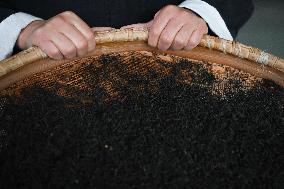
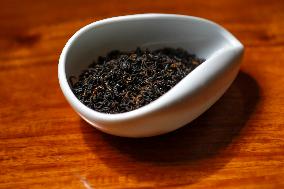
(221130) -- QIMEN, Nov. 30, 2022 (Xinhua) -- This photo taken on March 28, 2022 shows a Keemun black tea product of Wang Chang's tea company in Qimen County, east China's Anhui Province. Keemun black tea, one of the most famous Chinese tea with intensive aroma, has a history of more than 100 years. The tea, also called "Qihong" in Chinese, plays an important role in cultural exchanges between the west and the east. In 2008, the making of Keemun black tea was listed as China's national-level intangible cultural heritage, and nowadays the tea has become a symbol for Anhui Province or even China. The primary processing of Keemun black tea includes four steps, namely natural withering, rolling, fermenting and drying, lasting from before the Qingming festival (April) to June. After that, the refining of the tea is much more complicated, which mainly includes procedures such as screening, winnowing, compressing, re-drying, blending, piling and packing. Of all the refining steps, blending is the key, which decides

  •  
(MASTER OF CRAFTS)CHINA-ANHUI-QIMEN-KEEMUN BLACK TEA-INHERITOR (CN)

(MASTER OF CRAFTS)CHINA-ANHUI-QIMEN-KEEMUN BLACK TEA-INHERITOR (CN)

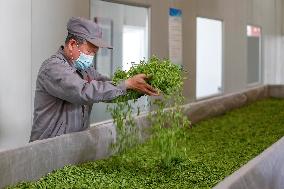
(221130) -- QIMEN, Nov. 30, 2022 (Xinhua) -- A worker puts fresh tea leaves into a withering machine at Wang Chang's tea company in Qimen County, east China's Anhui Province, March 28, 2022. Keemun black tea, one of the most famous Chinese tea with intensive aroma, has a history of more than 100 years. The tea, also called "Qihong" in Chinese, plays an important role in cultural exchanges between the west and the east. In 2008, the making of Keemun black tea was listed as China's national-level intangible cultural heritage, and nowadays the tea has become a symbol for Anhui Province or even China. The primary processing of Keemun black tea includes four steps, namely natural withering, rolling, fermenting and drying, lasting from before the Qingming festival (April) to June. After that, the refining of the tea is much more complicated, which mainly includes procedures such as screening, winnowing, compressing, re-drying, blending, piling and packing. Of all the refining steps, blending is the key, which deci

  •  
LEBANON-BEIRUT PORT-SILOS-COLLAPSE

LEBANON-BEIRUT PORT-SILOS-COLLAPSE

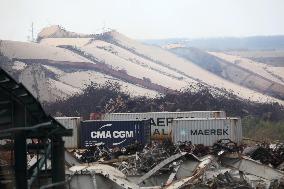
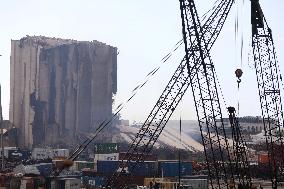
(220824) -- BEIRUT, Aug. 24, 2022 (Xinhua) -- Photo taken on Aug. 24, 2022 shows the southern part of the silos in Beirut port, which remains standing, in Beirut, Lebanon. The northern part of the silos in Beirut port in the Lebanese capital collapsed entirely on Tuesday early morning, causing a massive cloud of dust. The silos, heavily damaged by the August 2020 explosions had been falling gradually over the past few weeks after a fire smoldered for weeks because of the fermenting of 800 tonnes of grains stored inside. (Xinhua/Bilal Jawich)

  •  
LEBANON-BEIRUT PORT-SILOS-COLLAPSE

LEBANON-BEIRUT PORT-SILOS-COLLAPSE

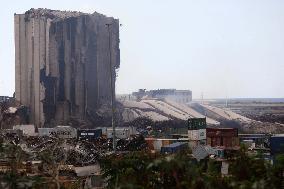
(220824) -- BEIRUT, Aug. 24, 2022 (Xinhua) -- Photo taken on Aug. 24, 2022 shows the collapsed northern part of the silos in Beirut port in Beirut, Lebanon. The northern part of the silos in Beirut port in the Lebanese capital collapsed entirely on Tuesday early morning, causing a massive cloud of dust. The silos, heavily damaged by the August 2020 explosions had been falling gradually over the past few weeks after a fire smoldered for weeks because of the fermenting of 800 tonnes of grains stored inside. (Xinhua/Bilal Jawich)

  •  
LEBANON-BEIRUT PORT-SILOS-COLLAPSE

LEBANON-BEIRUT PORT-SILOS-COLLAPSE

(220824) -- BEIRUT, Aug. 24, 2022 (Xinhua) -- Photo taken on Aug. 24, 2022 shows the collapsed northern part of the silos in Beirut port in Beirut, Lebanon. The northern part of the silos in Beirut port in the Lebanese capital collapsed entirely on Tuesday early morning, causing a massive cloud of dust. The silos, heavily damaged by the August 2020 explosions had been falling gradually over the past few weeks after a fire smoldered for weeks because of the fermenting of 800 tonnes of grains stored inside. (Xinhua/Bilal Jawich)

  •  
LEBANON-BEIRUT PORT-SILOS-COLLAPSE

LEBANON-BEIRUT PORT-SILOS-COLLAPSE

(220824) -- BEIRUT, Aug. 24, 2022 (Xinhua) -- Photo taken on Aug. 24, 2022 shows the collapsed northern part of the silos in Beirut port in Beirut, Lebanon. The northern part of the silos in Beirut port in the Lebanese capital collapsed entirely on Tuesday early morning, causing a massive cloud of dust. The silos, heavily damaged by the August 2020 explosions had been falling gradually over the past few weeks after a fire smoldered for weeks because of the fermenting of 800 tonnes of grains stored inside. (Xinhua/Bilal Jawich)

  •  
Sake brewery in New Zealand

Sake brewery in New Zealand

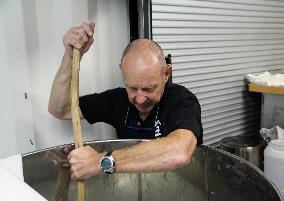
David Joll, head brewer of Zenkuro Sake brewery in Queenstown, New Zealand, in this photo taken Feb. 23, 2018, stirs a vat of fermenting sake using a stick made from manuka myrtle, a native New Zealand tree. ==Kyodo

  •  
Tohoku economy hopes to blossom with camellia products

Tohoku economy hopes to blossom with camellia products

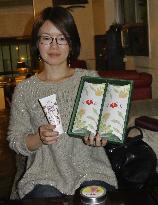
Sayaka Watanabe, 34, shows camellia oil hand cream and tea made by fermenting the leaves of the camellia plant in the Kesen area of Iwate Prefecture, which was hit hard by the devastating March 2011 earthquake, in Tokyo on Feb. 10, 2016. Her company re:terra Co. markets the products made from naturally grown camellia plants in the city of Rikuzentakata to support reconstruction in the area. (Kyodo) ==Kyodo

  •  
Sake maker Ichinokura resumes production

Sake maker Ichinokura resumes production

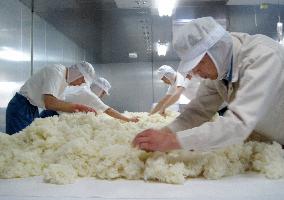
OSAKI, Japan - Workers at Japanese sake maker Ichinokura Co. in Osaki, Miyagi Prefecture, knead steamed rice sprinkled with fermenting agent as they resume production on April 18, 2011, for the first time in around five weeks after the March 11 earthquake and tsunami. (Kyodo)

  •  
New winery in tsunami-hit northeastern Japan town

New winery in tsunami-hit northeastern Japan town

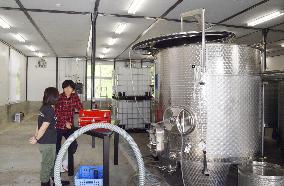
Photo taken Oct. 7, 2020, shows a fermenting tank at a new winery in Minamisanriku, a northeastern Japan town hit hard by the March 2011 earthquake and tsunami disaster in Miyagi Prefecture. The facility, converted from a prefabricated fishery processing plant, opened the same day to boost local tourism.

  •  
World's 1st wood liquor under development

World's 1st wood liquor under development

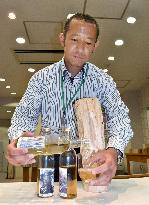
Yuichiro Otsuka, a research fellow at the Forestry and Forest Products Research Institute, pours alcohol made by fermenting white birch in Tsukuba, Ibaraki Prefecture, on June 6, 2018. His research team has developed a technique for making alcohol by fermenting wood. (Kyodo) ==Kyodo

  • Main
  • Top
  • Editorial
  • Creative
  • About Us
  • About ILG
  • Terms of use
  • Company
  • BEHIND
  • Price List
  • Single Plan
  • Monthly Plan
  • Services
  • Shooting
  • Rights Clearance
  • Support
  • FAQ
  • How To Buy
  • Contact Us
  • Become a Partner

© KYODO NEWS IMAGES INC

All Rights Reserved.

  • Editorial
  • Olympics
  • News
  • Sports
  • Japan
  • Tech
  • Royal
  • Disaster
  • NorthKorea
  • Old Japan
  • SNS
  • Creative
  • Food
  • Japan
  • Landscape
  • Animal
  • Popular
  • #Ukraine
  • #Russia
  • #coronavirus
  • #N. Korea
  • #Thailand
  • #China
  • #Ukraine
  • #Russia
  • #coronavirus
  • #N. Korea
  • #Thailand
  • #China
  • Food
  • Japan
  • Landscape
  • Animal
  • Olympics
  • News
  • Sports
  • Japan
  • Tech
  • Royal
  • Disaster
  • NorthKorea
  • Old Japan
  • SNS