•  

Thai capital Bangkok reports unsafe levels of air pollution

STORY: Thai capital Bangkok reports unsafe levels of air pollution SHOOTING TIME: Feb. 15, 2024 DATELINE: Feb. 16, 2024 LENGTH: 00:01:23 LOCATION: Bangkok CATEGORY: ENVIRONMENT SHOTLIST: 1. various of Bangkok STORYLINE: Thailand's Pollution Control Department (PCD) reported unsafe levels of air pollution in all parts of Bangkok on Wednesday, prompting calls for remote work to combat excessive dust particles. Private sector and state agencies are urged to consider allowing their staff to work from home until the weekend as PM 2.5 pollution in the Thai capital and its surrounding areas is projected to worsen in the next two days due to air stagnation and increased fire hotspots, the PCD said in a statement. Unhealthy to very unhealthy levels of PM 2.5 pollutants, ranging from 58-105 micrograms per cubic meter, were detected in the Bangkok metropolitan region on Wednesday, according to the PCD. Governor Chadchart Sittipunt said the Bangkok Metropolitan Administration (BMA) also reached out to its agencies

  •  

Thailand's northern provinces report unsafe levels of air pollution

STORY: Thailand's northern provinces report unsafe levels of air pollution DATELINE: March 28, 2023 LENGTH: 00:01:55 LOCATION: Bangkok CATEGORY: ENVIRONMENT SHOTLIST: 1. various of air pollution in Thailand's northern provinces of Chiang Rai and Chiang Mai STORYLINE: Air pollution continued to plague Thailand's northern provinces, with air quality in some regions reaching unhealthy levels, government reports showed on Monday. The Pollution Control Department (PCD) reported that air quality in most of the country's 17 northern provinces reached unsafe levels, with PM 2.5 soaring to 561 micrograms per cubic meter in some areas in Chiang Rai province, 11 times higher than the national safe limit of 50 micrograms. People in Chiang Rai, Mae Hong Son, Nan and Chiang Mai provinces are advised to take extreme caution this week, PCD official Sakda Tridech said on Monday. The Thai government has attributed the intense air pollution to smoke from forest fires and agricultural burning. Satellite images from the Th

  •  
Air pollution in Fukuoka

Air pollution in Fukuoka

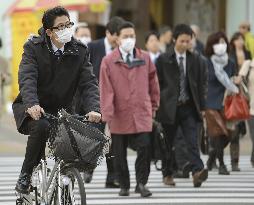
FUKUOKA, Japan - Photo shows people wearing masks in a downtown area in the city of Fukuoka, southwestern Japan, on March 8, 2013. The average daily amount of a toxic air pollutant from China called PM2.5 was projected to reach 42 micrograms per cubic meter in Fukuoka the same day, topping the central government-set environmental standard of up to 35 micrograms, officials of the southwestern Japan city said.

  •  
Air pollution in Fukuoka

Air pollution in Fukuoka

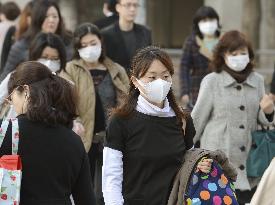
FUKUOKA, Japan - Photo shows women wearing masks in a downtown area in the city of Fukuoka, southwestern Japan, on March 8, 2013. The average daily amount of a toxic air pollutant from China called PM2.5 was projected to reach 42 micrograms per cubic meter in Fukuoka the same day, topping the central government-set environmental standard of up to 35 micrograms, officials of the southwestern Japan city said.

  •  
Japan air pollution from China

Japan air pollution from China

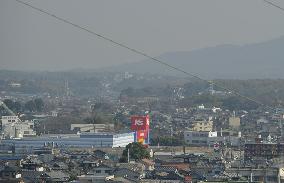
ARAO, Japan - Photo shows an area of the city of Arao, Kumamoto Prefecture, southwestern Japan, on March 5, 2013. The prefecture's residents were urged to avoid going outdoors that day after the pollution level of so-called PM2.5 particulate matters reached 90 to 101 micrograms per cubic meter in an hour in Arao.

  •  
Japan air pollution from China

Japan air pollution from China

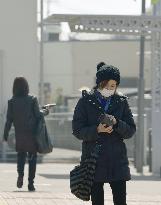
ARAO, Japan - Photo shows a woman wearing a mask in the city of Arao, Kumamoto Prefecture, southwestern Japan, on March 5, 2013. The prefecture's residents were urged to avoid going outdoors that day after the pollution level of so-called PM2.5 particulate matters reached 90 to 101 micrograms per cubic meter in an hour in Arao.

  •  
Air pollution in Beijing

Air pollution in Beijing

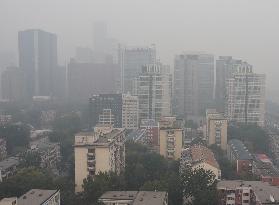
High-rise buildings are vaguely seen in Beijing on Oct. 17, 2015, as the Chinese capital was blanketed by heavy smog. Levels of PM2.5 particulates -- small enough to deeply penetrate the lungs -- marked 345 micrograms per cubic meter, according to the website of the U.S. Embassy in Beijing. (Kyodo) ==Kyodo

  • Main
  • Top
  • Editorial
  • Creative
  • About Us
  • About ILG
  • Terms of use
  • Company
  • BEHIND
  • Price List
  • Single Plan
  • Monthly Plan
  • Services
  • Shooting
  • Rights Clearance
  • Support
  • FAQ
  • How To Buy
  • Contact Us
  • Become a Partner

© KYODO NEWS IMAGES INC

All Rights Reserved.

  • Editorial
  • Olympics
  • News
  • Sports
  • Japan
  • Tech
  • Royal
  • Disaster
  • NorthKorea
  • Old Japan
  • SNS
  • Creative
  • Food
  • Japan
  • Landscape
  • Animal
  • Popular
  • #Ukraine
  • #Russia
  • #coronavirus
  • #N. Korea
  • #China
  • #Thailand
  • #Ukraine
  • #Russia
  • #coronavirus
  • #N. Korea
  • #China
  • #Thailand
  • Food
  • Japan
  • Landscape
  • Animal
  • Olympics
  • News
  • Sports
  • Japan
  • Tech
  • Royal
  • Disaster
  • NorthKorea
  • Old Japan
  • SNS