•  
Haruko Obokata

Haruko Obokata

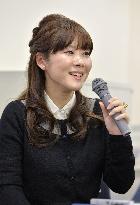
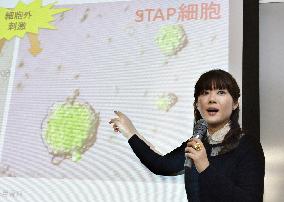
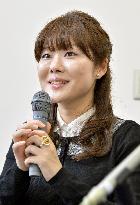
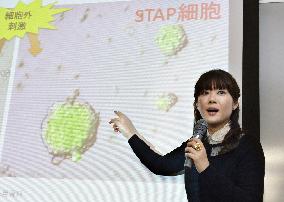
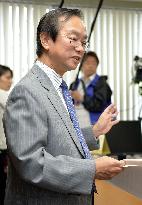
KOBE, Japan - Haruko Obokata, a scientist at Riken's Center for Developmental Biology in Kobe, speaks at a press conference in Kobe, Hyogo Prefecture, on Jan. 28, 2014, on "stimulus-triggered acquisition of pluripotency," or STAP, a method of generating pluripotent cells. A team of scientists led by Obokata has discovered, in research conducted by scientists at the state-backed Riken institute and Harvard University, that by simply exposing body cells to acidic liquids, the cells can be reprogrammed to grow into any type of mature tissue.

  •  
Haruko Obokata

Haruko Obokata

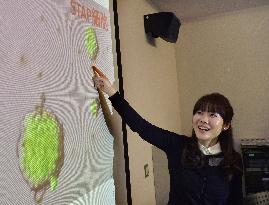
KOBE, Japan - Haruko Obokata, a scientist at Riken's Center for Developmental Biology in Kobe, speaks on "stimulus-triggered acquisition of pluripotency," or STAP, a method of generating pluripotent cells, in Kobe, Hyogo Prefecture, on Jan. 28, 2014. A team of scientists led by Obokata has discovered, in research conducted by scientists at the state-backed Riken institute and Harvard University, that by simply exposing body cells to acidic liquids, cells can be reprogrammed to grow into any type of mature tissue.

  •  
New method for reprogramming body cells

New method for reprogramming body cells

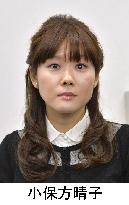
TOKYO, Japan - Photo shows Haruko Obokata, a scientist at Riken's Center for Developmental Biology in Kobe. A team of scientists led by Obokata has discovered, in research conducted by scientists at the state-backed Riken institute and Harvard University, that by simply exposing body cells to acidic liquids, the cells can be reprogrammed to grow into any type of mature tissue. They named the method of generating pluripotent cells, or cells that can grow into any type of mature tissues in the body, "stimulus-triggered acquisition of pluripotency," or STAP. The discovery was announced in the Jan. 30, 2014 issue of Nature.

  •  
New method for reprogramming body cells

New method for reprogramming body cells

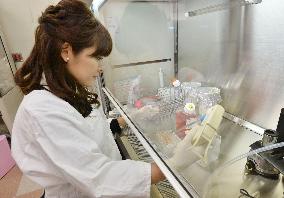
KOBE, Japan - Photo shows Haruko Obokata, a scientist at Riken Center for Developmental Biology, at its laboratory in Kobe, Hyogo Prefecture, on Jan. 28, 2014. A team of scientists led by Obokata has discovered, in research conducted by scientists at the state-backed Riken institute and Harvard University, that by simply exposing body cells to acidic liquids, the cells can be reprogrammed to grow into any type of mature tissue. They named the method of generating pluripotent cells, or cells that can grow into any type of mature tissues in the body, "stimulus-triggered acquisition of pluripotency," or STAP. The discovery was announced in the Jan. 30, 2014 issue of Nature.

  •  
Riken research center chief on STAP cell scandal

Riken research center chief on STAP cell scandal

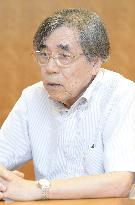
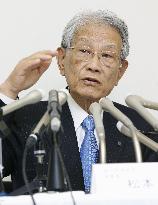
KOBE, Japan - Masatoshi Takeichi, director of the Riken Center for Developmental Biology, speaks about the scandal over the stimulus-triggered acquisition of pluripotency (STAP) cells research in Kobe, western Japan, on June 26, 2014.

  •  
Obokata rejects most recent doubt

Obokata rejects most recent doubt

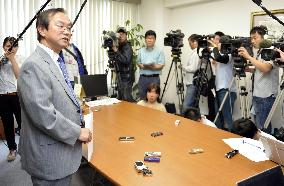
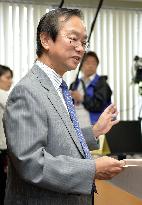
OSAKA, Japan - Hideo Miki, lawyer for Haruko Obokata, a researcher with the government-funded Riken institute, meets reporters in Osaka on June 18, 2014. Miki said Obokata, the lead author of two controversial papers on STAP cells, or stimulus-triggered acquisition of pluripotency cells, is eager to prove on her own that her findings are valid, refuting her research collaborator's recent unsupportive remarks.

  •  
Obokata rejects most recent doubt

Obokata rejects most recent doubt

OSAKA, Japan - Hideo Miki, lawyer for Haruko Obokata, a researcher with the government-funded Riken institute, meets reporters in Osaka on June 18, 2014. Miki said Obokata, the lead author of two controversial papers on STAP cells, or stimulus-triggered acquisition of pluripotency cells, is eager to prove on her own that her findings are valid, refuting her research collaborator's recent unsupportive remarks.

  •  
Obokata issues statement

Obokata issues statement

TOKYO, Japan - Photo shows Haruko Obokata, a researcher with the government-funded Riken institute, during a press conference in Osaka on April 9, 2014. Obokata, at the center of a controversy involving STAP cells, or stimulus-triggered acquisition of pluripotency cells, issued a statement through her lawyer on April 14, saying she "produced STAP cells almost every day and often a few times in one day."

  •  
Obokata issues statement

Obokata issues statement

OSAKA, Japan - Hideo Miki, lawyer for Haruko Obokata, a researcher with the government-funded Riken institute, speaks with reporters in Osaka on April 14, 2014. Obokata, at the center of a controversy involving STAP cells, or stimulus-triggered acquisition of pluripotency cells, issued a statement through Miki the same day, saying she "produced STAP cells almost every day and often a few times in one day."

  •  
Riken admits malpractice in STAP papers

Riken admits malpractice in STAP papers

TOKYO, Japan - File photo shows Haruko Obokata of the government-affiliated Riken institute holding a press conference in Kobe on Jan. 28, 2014, on stimulus-triggered acquisition of pluripotency, or STAP, cells.

  •  
CORRECTED Allegations over stem cell papers

CORRECTED Allegations over stem cell papers

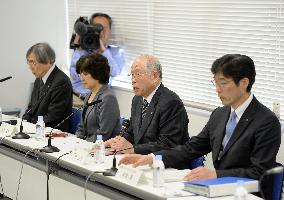
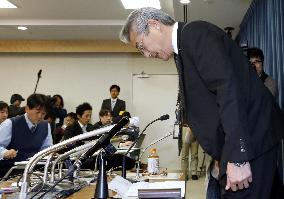
TOKYO, Japan - CORRECTING NAME OF INSTITUTE LED BY NOYORI Ryoji Noyori (2nd from R), president of the government-affiliated Riken institute, speaks at a news conference in Tokyo on March 14, 2014, to provide an interim report on the institute's investigation into allegations concerning two recent papers on potentially groundbreaking stem cell research. Haruko Obokata of the institute and other researchers said in the papers they have found a simple way to produce STAP cells, which are named for stimulus-triggered acquisition of pluripotency.

  •  
STAP cell paper

STAP cell paper

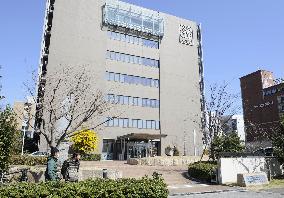
KOBE, Japan - Photo shows the Center for Developmental Biology of the state-affiliated Riken institute in Kobe, western Japan, on March 11, 2014. The Japanese government said the same day it has urged Riken to thoroughly investigate a research paper on "stimulus-triggered acquisition of pluripotency," or STAP.

  •  
STAP cell paper

STAP cell paper

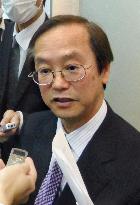
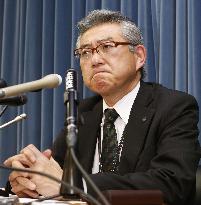
TOKYO, Japan - Satoru Kagaya, spokesman for the state-affiliated Riken institute, holds a press conference in Tokyo on March 11, 2014. The Japanese government said the same day it has urged Riken to thoroughly investigate a research paper on "stimulus-triggered acquisition of pluripotency," or STAP.

  •  
STAP cell paper

STAP cell paper

TOKYO, Japan - Satoru Kagaya, spokesman for the state-affiliated Riken institute, apologizes during a press conference in Tokyo on March 11, 2014. The Japanese government said the same day it has urged Riken to thoroughly investigate a research paper on "stimulus-triggered acquisition of pluripotency," or STAP.

  •  
STAP cell research paper questioned

STAP cell research paper questioned

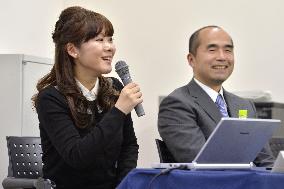
TOKYO, Japan - File photo taken in January 2014 in Kobe, Hyogo Prefecture, shows Haruko Obokata (L), a scientist at the Riken Center for Developmental Biology, and University of Yamanashi professor Teruhiko Wakayama, at a press conference on "stimulus-triggered acquisition of pluripotency," or STAP, a method of generating pluripotent cells. Wakayama said March 10, 2014, he has told his co-authors including Obokata that their research paper on STAP cells should be retracted, citing the lack of credibility of some data used in the research.

  •  
Stem cell research paper questioned

Stem cell research paper questioned

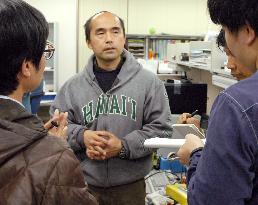
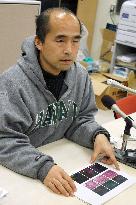
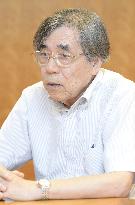
KOFU, Japan - University of Yamanashi professor Teruhiko Wakayama meets reporters in Kofu, Yamanashi Prefecture, on March 10, 2014. Wakayama has told his co-authors that their research paper on what appeared to be a groundbreaking method for producing stem cells should be retracted and resubmitted. Questions have been raised about irregular images contained in the paper, written by a group led by Haruko Obotaka at the Center for Developmental Biology of the government-affiliated Riken institute, on a method it named "stimulus-triggered acquisition of pluripotency" or STAP.

  •  
Japan scientist proposes to retract stem cell research paper

Japan scientist proposes to retract stem cell research paper

KOFU, Japan - Teruhiko Wakayama, a professor at the University of Yamanashi and one of the co-authors of a research paper on what appeared to be a groundbreaking method of producing stem cells, explains his proposal to retract the paper in Kofu, Yamanashi Prefecture, central Japan, on March 10, 2014. Questions have been raised about irregular images contained in the paper, written by a group led by Haruko Obotaka at the Center for Developmental Biology of the government-run Riken institute, on a method it named "stimulus-triggered acquisition of pluripotency" or STAP.

  •  
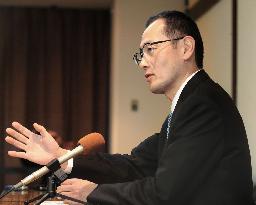
Yamanaka on STAP cells

Yamanaka on STAP cells

KYOTO, Japan - Nobel Prize-winning Japanese scientist Shinya Yamanaka speaks during a press conference in Kyoto, western Japan, on Feb. 10, 2014. Yamanaka spoke about the recent announcement by a group of scientists regarding stimulus-triggered acquisition of pluripotency, or STAP, cells.

  •  
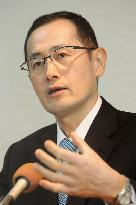
Yamanaka on STAP cells

Yamanaka on STAP cells

KYOTO, Japan - Nobel Prize-winning Japanese scientist Shinya Yamanaka speaks during a press conference in Kyoto, western Japan, on Feb. 10, 2014. Yamanaka spoke about the recent announcement by a group of scientists regarding stimulus-triggered acquisition of pluripotency, or STAP, cells.

  •  
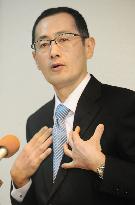
Yamanaka on STAP cells

Yamanaka on STAP cells

KYOTO, Japan - Nobel Prize-winning Japanese scientist Shinya Yamanaka speaks during a press conference in Kyoto, western Japan, on Feb. 10, 2014. Yamanaka spoke about the recent announcement by a group of scientists regarding stimulus-triggered acquisition of pluripotency, or STAP, cells.

  •  
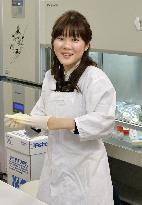
New method for reprogramming body cells

New method for reprogramming body cells

KOBE, Japan - Photo shows Haruko Obokata, a scientist at Riken Center for Developmental Biology in Kobe, wearing an apron given to her by her grandmother at its laboratory in Kobe, Hyogo Prefecture, on Jan. 28, 2014. A team of scientists led by Obokata has discovered, in research conducted by scientists at the state-backed Riken institute and Harvard University, that by simply exposing body cells to acidic liquids, the cells can be reprogrammed to grow into any type of mature tissue. They named the method of generating pluripotent cells, or cells that can grow into any type of mature tissues in the body, "stimulus-triggered acquisition of pluripotency," or STAP. The discovery was announced in the Jan. 30, 2014 issue of Nature.

  •  
New method for reprogramming body cells

New method for reprogramming body cells

KOBE, Japan - Haruko Obokata, a scientist at Riken's Center for Developmental Biology in Kobe, answers a question at a press conference in Kobe, Hyogo Prefecture, on Jan. 28, 2014, on "stimulus-triggered acquisition of pluripotency," or STAP, a method of generating pluripotent cells. A team of scientists led by Obokata has discovered, in research conducted by scientists at the state-backed Riken institute and Harvard University, that by simply exposing body cells to acidic liquids, the cells can be reprogrammed to grow into any type of mature tissue.

  •  
New method for reprogramming body cells

New method for reprogramming body cells

KOBE, Japan - Haruko Obokata, a scientist at Riken's Center for Developmental Biology in Kobe, speaks on "stimulus-triggered acquisition of pluripotency," or STAP, a method of generating pluripotent cells, in Kobe, Hyogo Prefecture, on Jan. 28, 2014. A team of scientists led by Obokata has discovered, in research conducted by scientists at the state-backed Riken institute and Harvard University, that by simply exposing body cells to acidic liquids, cells can be reprogrammed to grow into any type of mature tissue.

  •  
Riken's new Pres. Matsumoto gives press conference

Riken's new Pres. Matsumoto gives press conference

Hiroshi Matsumoto, new president of the Riken research institute, gives a press conference in Tokyo on April 1, 20l5, underscoring the institution's aim to help resolve social problems from scientific perspectives. Matsumoto, a former Kyoto University president, succeeded Ryoji Noyori who stepped down halfway through his term. The institution was hit by the STAP (stimulus-triggered acquisition of pluripotency) cells paper scandal during Noyori's tenure. (Kyodo) ==Kyodo

  •  
Riken research center chief on STAP cell scandal

Riken research center chief on STAP cell scandal

KOBE, Japan - Masatoshi Takeichi, director of the Riken Center for Developmental Biology, speaks about the scandal over the stimulus-triggered acquisition of pluripotency (STAP) cells research in Kobe, western Japan, on June 26, 2014. (Kyodo)

  •  
Obokata rejects most recent doubt

Obokata rejects most recent doubt

OSAKA, Japan - Hideo Miki, lawyer for Haruko Obokata, a researcher with the government-funded Riken institute, meets reporters in Osaka on June 18, 2014. Miki said Obokata, the lead author of two controversial papers on STAP cells, or stimulus-triggered acquisition of pluripotency cells, is eager to prove on her own that her findings are valid, refuting her research collaborator's recent unsupportive remarks. (Kyodo)

  • Main
  • Top
  • Editorial
  • Creative
  • About Us
  • About ILG
  • Terms of use
  • Company
  • BEHIND
  • Price List
  • Single Plan
  • Monthly Plan
  • Services
  • Shooting
  • Rights Clearance
  • Support
  • FAQ
  • How To Buy
  • Contact Us
  • Become a Partner

© KYODO NEWS IMAGES INC

All Rights Reserved.

  • Editorial
  • Olympics
  • News
  • Sports
  • Japan
  • Tech
  • Royal
  • Disaster
  • NorthKorea
  • Old Japan
  • SNS
  • Creative
  • Food
  • Japan
  • Landscape
  • Animal
  • Popular
  • #Ukraine
  • #Russia
  • #coronavirus
  • #N. Korea
  • #China
  • #Thailand
  • #Ukraine
  • #Russia
  • #coronavirus
  • #N. Korea
  • #China
  • #Thailand
  • Food
  • Japan
  • Landscape
  • Animal
  • Olympics
  • News
  • Sports
  • Japan
  • Tech
  • Royal
  • Disaster
  • NorthKorea
  • Old Japan
  • SNS