•  
CHINA-SICHUAN-ZIYANG-MENGXIHE SITE-ARCHAEOLOGICAL DISCOVERY (CN)

CHINA-SICHUAN-ZIYANG-MENGXIHE SITE-ARCHAEOLOGICAL DISCOVERY (CN)

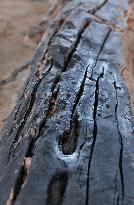
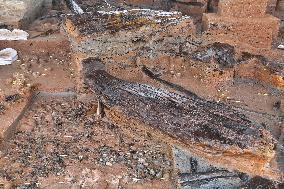
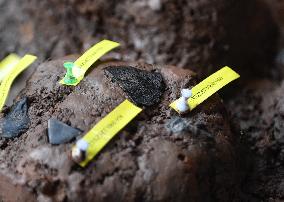
(240130) -- ZIYANG, Jan. 30, 2024 (Xinhua) -- This photo taken on Dec. 5, 2023 shows a piece of ebony unearthed at the Mengxihe Site in Lezhi County of Ziyang, southwest China's Sichuan Province. The Mengxihe Site was announced as one of the six most important archaeological findings of 2023 in China on Tuesday, according to the Sichuan Provincial Institute of Cultural Relics and Archaeology. The Mengxihe Site, dating back 50,000 to 70,000 years, has preserved a number of organic matter remains including animal fossils, ebony and plant seeds. A flood in the summer of 2019 unearthed ebony and animal fossils that had been buried underground for tens of thousands of years, as well as some stone tools used by ancient humans, said Zheng Zhexuan, an archaeologist at the institute. In 2023, more than 105,000 stone tools, wood tools, bone tools and animal fossils, as well as more than 60,000 relics such as plant seeds, fruits and spores were unearthed. Traces of fire, cutting, carving and polishing left by anci

  •  
CHINA-SICHUAN-ZIYANG-MENGXIHE SITE-ARCHAEOLOGICAL DISCOVERY (CN)

CHINA-SICHUAN-ZIYANG-MENGXIHE SITE-ARCHAEOLOGICAL DISCOVERY (CN)

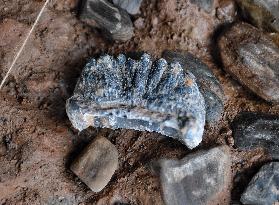
(240130) -- ZIYANG, Jan. 30, 2024 (Xinhua) -- This photo taken on Dec. 5, 2023 shows an elephant tooth unearthed at the Mengxihe Site in Lezhi County of Ziyang, southwest China's Sichuan Province. The Mengxihe Site was announced as one of the six most important archaeological findings of 2023 in China on Tuesday, according to the Sichuan Provincial Institute of Cultural Relics and Archaeology. The Mengxihe Site, dating back 50,000 to 70,000 years, has preserved a number of organic matter remains including animal fossils, ebony and plant seeds. A flood in the summer of 2019 unearthed ebony and animal fossils that had been buried underground for tens of thousands of years, as well as some stone tools used by ancient humans, said Zheng Zhexuan, an archaeologist at the institute. In 2023, more than 105,000 stone tools, wood tools, bone tools and animal fossils, as well as more than 60,000 relics such as plant seeds, fruits and spores were unearthed. Traces of fire, cutting, carving and polishing left by anc

  •  
CHINA-SICHUAN-ZIYANG-MENGXIHE SITE-ARCHAEOLOGICAL DISCOVERY (CN)

CHINA-SICHUAN-ZIYANG-MENGXIHE SITE-ARCHAEOLOGICAL DISCOVERY (CN)

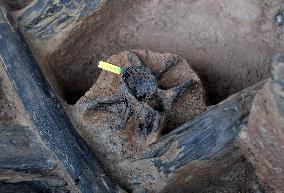
(240130) -- ZIYANG, Jan. 30, 2024 (Xinhua) -- This photo taken on Dec. 5, 2023 shows a piece of vertebra and pieces of ebony unearthed at the Mengxihe Site in Lezhi County of Ziyang, southwest China's Sichuan Province. The Mengxihe Site was announced as one of the six most important archaeological findings of 2023 in China on Tuesday, according to the Sichuan Provincial Institute of Cultural Relics and Archaeology. The Mengxihe Site, dating back 50,000 to 70,000 years, has preserved a number of organic matter remains including animal fossils, ebony and plant seeds. A flood in the summer of 2019 unearthed ebony and animal fossils that had been buried underground for tens of thousands of years, as well as some stone tools used by ancient humans, said Zheng Zhexuan, an archaeologist at the institute. In 2023, more than 105,000 stone tools, wood tools, bone tools and animal fossils, as well as more than 60,000 relics such as plant seeds, fruits and spores were unearthed. Traces of fire, cutting, carving and

  •  
CHINA-SICHUAN-ZIYANG-MENGXIHE SITE-ARCHAEOLOGICAL DISCOVERY (CN)

CHINA-SICHUAN-ZIYANG-MENGXIHE SITE-ARCHAEOLOGICAL DISCOVERY (CN)

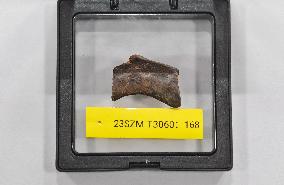
(240130) -- ZIYANG, Jan. 30, 2024 (Xinhua) -- This photo taken on Dec. 5, 2023 shows a bone tool bearing a carved "X" mark, unearthed at the Mengxihe Site in Lezhi County of Ziyang, southwest China's Sichuan Province. The Mengxihe Site was announced as one of the six most important archaeological findings of 2023 in China on Tuesday, according to the Sichuan Provincial Institute of Cultural Relics and Archaeology. The Mengxihe Site, dating back 50,000 to 70,000 years, has preserved a number of organic matter remains including animal fossils, ebony and plant seeds. A flood in the summer of 2019 unearthed ebony and animal fossils that had been buried underground for tens of thousands of years, as well as some stone tools used by ancient humans, said Zheng Zhexuan, an archaeologist at the institute. In 2023, more than 105,000 stone tools, wood tools, bone tools and animal fossils, as well as more than 60,000 relics such as plant seeds, fruits and spores were unearthed. Traces of fire, cutting, carving and

  •  
CHINA-SICHUAN-ZIYANG-MENGXIHE SITE-ARCHAEOLOGICAL DISCOVERY (CN)

CHINA-SICHUAN-ZIYANG-MENGXIHE SITE-ARCHAEOLOGICAL DISCOVERY (CN)

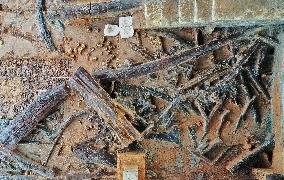
(240130) -- ZIYANG, Jan. 30, 2024 (Xinhua) -- An aerial drone photo taken on Dec. 5, 2023 shows pieces of ebony unearthed at the Mengxihe Site in Lezhi County of Ziyang, southwest China's Sichuan Province. The Mengxihe Site was announced as one of the six most important archaeological findings of 2023 in China on Tuesday, according to the Sichuan Provincial Institute of Cultural Relics and Archaeology. The Mengxihe Site, dating back 50,000 to 70,000 years, has preserved a number of organic matter remains including animal fossils, ebony and plant seeds. A flood in the summer of 2019 unearthed ebony and animal fossils that had been buried underground for tens of thousands of years, as well as some stone tools used by ancient humans, said Zheng Zhexuan, an archaeologist at the institute. In 2023, more than 105,000 stone tools, wood tools, bone tools and animal fossils, as well as more than 60,000 relics such as plant seeds, fruits and spores were unearthed. Traces of fire, cutting, carving and polishing le

  •  
CHINA-SICHUAN-ZIYANG-MENGXIHE SITE-ARCHAEOLOGICAL DISCOVERY (CN)

CHINA-SICHUAN-ZIYANG-MENGXIHE SITE-ARCHAEOLOGICAL DISCOVERY (CN)

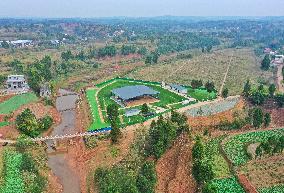
(240130) -- ZIYANG, Jan. 30, 2024 (Xinhua) -- An aerial drone photo taken on Dec. 5, 2023 shows a view of the Mengxihe Site in Lezhi County of Ziyang, southwest China's Sichuan Province. The Mengxihe Site was announced as one of the six most important archaeological findings of 2023 in China on Tuesday, according to the Sichuan Provincial Institute of Cultural Relics and Archaeology. The Mengxihe Site, dating back 50,000 to 70,000 years, has preserved a number of organic matter remains including animal fossils, ebony and plant seeds. A flood in the summer of 2019 unearthed ebony and animal fossils that had been buried underground for tens of thousands of years, as well as some stone tools used by ancient humans, said Zheng Zhexuan, an archaeologist at the institute. In 2023, more than 105,000 stone tools, wood tools, bone tools and animal fossils, as well as more than 60,000 relics such as plant seeds, fruits and spores were unearthed. Traces of fire, cutting, carving and polishing left by ancient human

  •  
CHINA-SICHUAN-ZIYANG-MENGXIHE SITE-ARCHAEOLOGICAL DISCOVERY (CN)

CHINA-SICHUAN-ZIYANG-MENGXIHE SITE-ARCHAEOLOGICAL DISCOVERY (CN)

(240130) -- ZIYANG, Jan. 30, 2024 (Xinhua) -- This photo taken on Dec. 5, 2023 shows a view of the Mengxihe Site in Lezhi County of Ziyang, southwest China's Sichuan Province. The Mengxihe Site was announced as one of the six most important archaeological findings of 2023 in China on Tuesday, according to the Sichuan Provincial Institute of Cultural Relics and Archaeology. The Mengxihe Site, dating back 50,000 to 70,000 years, has preserved a number of organic matter remains including animal fossils, ebony and plant seeds. A flood in the summer of 2019 unearthed ebony and animal fossils that had been buried underground for tens of thousands of years, as well as some stone tools used by ancient humans, said Zheng Zhexuan, an archaeologist at the institute. In 2023, more than 105,000 stone tools, wood tools, bone tools and animal fossils, as well as more than 60,000 relics such as plant seeds, fruits and spores were unearthed. Traces of fire, cutting, carving and polishing left by ancient human behavior w

  •  
CHINA-SICHUAN-ZIYANG-MENGXIHE SITE-ARCHAEOLOGICAL DISCOVERY (CN)

CHINA-SICHUAN-ZIYANG-MENGXIHE SITE-ARCHAEOLOGICAL DISCOVERY (CN)

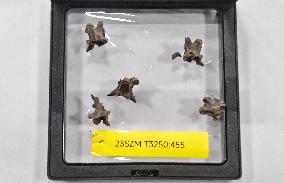
(240130) -- ZIYANG, Jan. 30, 2024 (Xinhua) -- This photo taken on Dec. 5, 2023 shows pieces of snake bones unearthed at the Mengxihe Site in Lezhi County of Ziyang, southwest China's Sichuan Province. The Mengxihe Site was announced as one of the six most important archaeological findings of 2023 in China on Tuesday, according to the Sichuan Provincial Institute of Cultural Relics and Archaeology. The Mengxihe Site, dating back 50,000 to 70,000 years, has preserved a number of organic matter remains including animal fossils, ebony and plant seeds. A flood in the summer of 2019 unearthed ebony and animal fossils that had been buried underground for tens of thousands of years, as well as some stone tools used by ancient humans, said Zheng Zhexuan, an archaeologist at the institute. In 2023, more than 105,000 stone tools, wood tools, bone tools and animal fossils, as well as more than 60,000 relics such as plant seeds, fruits and spores were unearthed. Traces of fire, cutting, carving and polishing left by

  •  
CHINA-SICHUAN-ZIYANG-MENGXIHE SITE-ARCHAEOLOGICAL DISCOVERY (CN)

CHINA-SICHUAN-ZIYANG-MENGXIHE SITE-ARCHAEOLOGICAL DISCOVERY (CN)

(240130) -- ZIYANG, Jan. 30, 2024 (Xinhua) -- This photo taken on Dec. 5, 2023 shows a piece of turtle shell unearthed at the Mengxihe Site in Lezhi County of Ziyang, southwest China's Sichuan Province. The Mengxihe Site was announced as one of the six most important archaeological findings of 2023 in China on Tuesday, according to the Sichuan Provincial Institute of Cultural Relics and Archaeology. The Mengxihe Site, dating back 50,000 to 70,000 years, has preserved a number of organic matter remains including animal fossils, ebony and plant seeds. A flood in the summer of 2019 unearthed ebony and animal fossils that had been buried underground for tens of thousands of years, as well as some stone tools used by ancient humans, said Zheng Zhexuan, an archaeologist at the institute. In 2023, more than 105,000 stone tools, wood tools, bone tools and animal fossils, as well as more than 60,000 relics such as plant seeds, fruits and spores were unearthed. Traces of fire, cutting, carving and polishing left

  •  

Seaweed farming in southwestern Japan

Video taken from a Kyodo News helicopter on Oct. 28, 2023, shows colorful nets spread for seaweed farming in the Ariake Sea off Saga in southwestern Japan. (Kyodo)

  •  
Divers help rebuild aquafarm in Ofunato

Divers help rebuild aquafarm in Ofunato

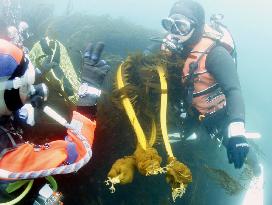
OFUNATO, Japan - Scuba divers cut ''wakame'' brown seaweed in the water off Ofunato, Iwate Prefecture, for fishermen to extract spores to use to restart the city's aquafarming operation, on June 14, 2011.

  •  

Nepali hospital benefits from China-funded waste treatment center

STORY: Nepali hospital benefits from China-funded waste treatment center DATELINE: Sept. 30, 2022 LENGTH: 00:02:44 LOCATION: Kathmandu CATEGORY: SOCIETY SHOTLIST: 1. various shots of Birgunj 2. various shots of Narayani Hospital 3. various shots of the handover ceremony STORYLINE: Narayani Hospital in Nepal's southern city of Birgunj launched its health care waste treatment center Thursday. Equipped with a set of autoclave machines, the center uses steam to kill harmful bacteria, viruses, fungi and spores. A ceremony was held to mark the handover of essential healthcare equipment for the operation of the center. Under a project run by the United Nations Development Program (UNDP) with financial support from China's Global Development and South-South Cooperation Fund (GDF), the hospital has also received medical equipment and parts to ensure proper waste management. 20 officials and 45 others from the hospital have been trained on standard operating procedures regarding health care waste management. L

  •  
Divers help rebuild aquafarm in Ofunato

Divers help rebuild aquafarm in Ofunato

OFUNATO, Japan - Scuba divers cut ''wakame'' brown seaweed in the water off Ofunato, Iwate Prefecture, for fishermen to extract spores to use to restart the city's aquafarming operation, on June 14, 2011. (Kyodo)

  •  
Distilling shochu spirit in Hawaii

Distilling shochu spirit in Hawaii

HAWAII, United States - In his North Shore facility in Hawaii, Ken Hirata makes his own koji rice using koji spores from Japan and premium California-grown short-grain rice from Koda Farms. Photo was taken Nov. 3, 2014. (Kyodo)

  • Main
  • Top
  • Editorial
  • Creative
  • About Us
  • About ILG
  • Terms of use
  • Company
  • BEHIND
  • Price List
  • Single Plan
  • Monthly Plan
  • Services
  • Shooting
  • Rights Clearance
  • Support
  • FAQ
  • How To Buy
  • Contact Us
  • Become a Partner

© KYODO NEWS IMAGES INC

All Rights Reserved.

  • Editorial
  • Olympics
  • News
  • Sports
  • Japan
  • Tech
  • Royal
  • Disaster
  • NorthKorea
  • Old Japan
  • SNS
  • Creative
  • Food
  • Japan
  • Landscape
  • Animal
  • Popular
  • #Ukraine
  • #Russia
  • #coronavirus
  • #N. Korea
  • #Thailand
  • #China
  • #Ukraine
  • #Russia
  • #coronavirus
  • #N. Korea
  • #Thailand
  • #China
  • Food
  • Japan
  • Landscape
  • Animal
  • Olympics
  • News
  • Sports
  • Japan
  • Tech
  • Royal
  • Disaster
  • NorthKorea
  • Old Japan
  • SNS