•  
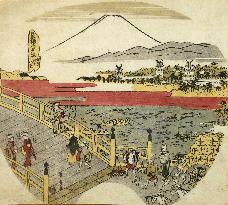
Painting on round fan likely drawn by Utamaro found

Painting on round fan likely drawn by Utamaro found

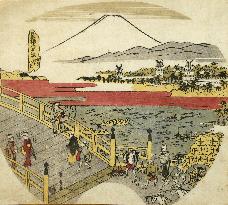
TOKYO, Japan - "Uchiwa-e," a painting on an "uchiwa" round fan believed to have been drawn by famous feudal-era "ukiyoe" woodblock print artist Kitagawa Utamaro, is shown in this file photo taken on Aug. 7, 2014.

  •  
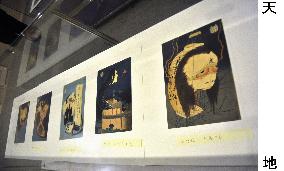
Hokusai's set of 5 woodblock prints

Hokusai's set of 5 woodblock prints

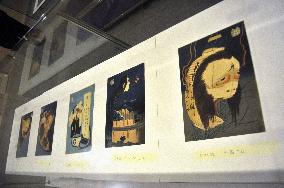
TOKYO, Japan - A set of five woodblock prints by renowned ''ukiyoe'' artist Katsushika Hokusai is displayed at the Japan Ukiyoe Museum in Matsumoto, Nagano Prefecture, on May 6, 2012. Experts examined the set, which is based on ghost stories, in early May, confirming it as an authentic work by Hokusai.

  •  
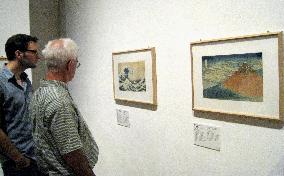
Hokusai exhibition in Berlin

Hokusai exhibition in Berlin

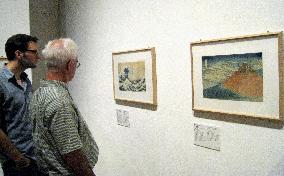
BERLIN, Germany - People look at works by Katsushika Hokusai, a renowned ''ukiyoe'' woodblock print artist from Japan's late Edo period, at the Martin-Gropius-Bau museum in Berlin on Aug. 25, 2011. An exhibition of more than 440 of Hokusai's works is scheduled to be held at the museum through Oct. 24.

  •  
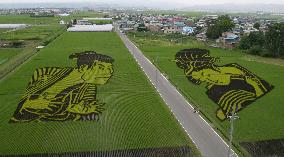
''Rice Paddy Art'' in Aomori

''Rice Paddy Art'' in Aomori

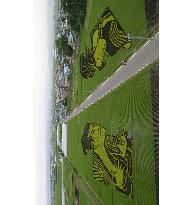
AOMORI, Japan - Rice paddy fields in the village of Inakadate in Aomori Prefecture bear Ukiyoe works by painters Sharaku (L) and Utamaro on July 8. Local rice farmers created the Ukiyoe works by growing different color rice plants. They can be seen until mid-August.

  •  
Historic inn along Tokaido road shut after 366 years in business

Historic inn along Tokaido road shut after 366 years in business

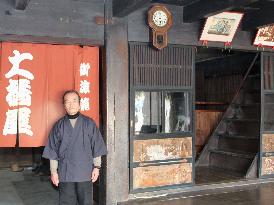
Kazuhiro Aoki, the 19th-generation owner of the historic Japanese inn Ohashiya in Toyokawa, Aichi Prefecture, central Japan, stands at the entrance to the time-honored inn on March 15, 2015, the day its 366-year business came to an end. Ohashiya is best known for being featured in the famous "ukiyoe" woodprint work of "The Fifty-Three Stations of the Tokaido" by Utagawa Hiroshige in the early 19th century. The inn will be donated to the city government for preservation. (Kyodo) ==Kyodo

  •  
Entrepreneur Uragami with Ukiyoe paintings

Entrepreneur Uragami with Ukiyoe paintings

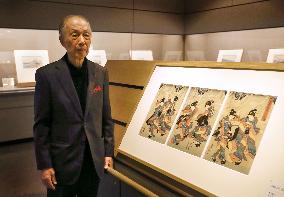
Toshiro Uragami, an 88-year-old entrepreneur, poses with Ukiyoe paintings at the Hagi Uragami Museum in Yamaguchi Prefecture. The museum was founded in 1996 to preserve and exhibit an outstanding art collection donated by Uragami. (Photo by Makoto Hori) (Kyodo) ==Kyodo

  •  
Animation director Takahata speaks on Japanese painting, anime

Animation director Takahata speaks on Japanese painting, anime

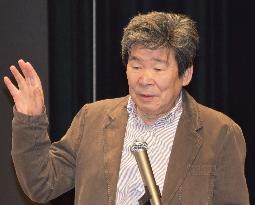
Isao Takahata, an animated film director and co-founder of the famed animation studio Studio Ghibli, speaks in Nagano Prefecture's Obuse Town, where legendary "ukiyoe" artist Katsushika Hokusai spent his later years, on May 10, 2015. He said Japanese-style painting and animated movies have something in common. (Kyodo) ==Kyodo

  •  
Tokyo snapshot: Woodblock print master Kitagawa Utamaro's tomb

Tokyo snapshot: Woodblock print master Kitagawa Utamaro's tomb

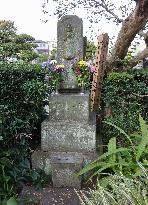
Photo taken at Senkoji temple in the Kitakarasuyama area of Tokyo's Karasuyama district Oct. 15, 2015, shows a tomb of famous feudal-era master ukiyoe woodblock print artist Kitagawa Utamaro. (Kyodo) ==Kyodo

  •  
The Lantern Spectre by Katsushika Hokusai

The Lantern Spectre by Katsushika Hokusai

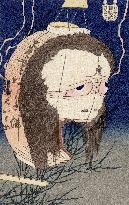
Katsushika Hokusai (1760-1849) - The Lantern Spectre. A burning paper lamp takes on the aspect of a spectral face - one of a set of Ghosts and Goblins. Date: circa 1810

  •  
Fireworks at Ryogoku by Utagawa Hiroshige (Edo series)

Fireworks at Ryogoku by Utagawa Hiroshige (Edo series)

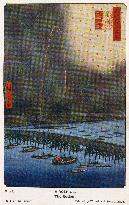
Fireworks at Ryogoku (Ryogoku Hanabi), No. 98 from One Hundred Famous Views of Edo by Utagawa Hiroshige (1797 - 1858) - (see: 10505423 for alternate version).

  •  
Japanese Morning Glory (1)

Japanese Morning Glory (1)

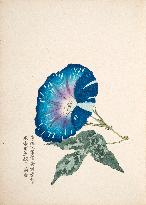
Japanese Morning Glory (1). Illustration from Bunjiro Fujisawa, Morning Glory. Date: 1902

  •  
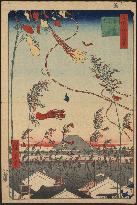
The city flourishing, Tanabata festival

The city flourishing, Tanabata festival

The city flourishing, Tanabata festival. Print shows bamboo decorated with paper streamers and cutouts above the rooftops of the city during the Tanabata festival. Date 1857.

  •  
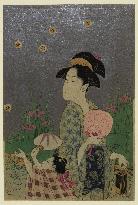
Fireflies

Fireflies

Fireflies. Print shows a woman holding a fan and a firefly cage, with a young girl catching fireflies next to a pond. Date 1793, printed later.

  •  
CORRECTED:''Rice Paddy Art'' in Aomori

CORRECTED:''Rice Paddy Art'' in Aomori

AOMORI, Japan - Rice paddy fields in the village of Inakadate in Aomori Prefecture bear Ukiyoe works by painters Sharaku (L) and Utamaro on July 8. Local rice farmers created the Ukiyoe works by growing different color rice plants. They can be seen until mid-August. (Kyodo)

  •  
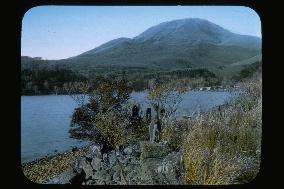
Lake Ashi

Lake Ashi

This photo captures the old town of Motohakone, with Mt. Komagadake viewed from Sainogahara by Lake Ashinoko. It is known that Sainogahara had many stone towers and stone Buddhas druing the Edo Period according to Tokaido Hakone Sanchu-zu (Ukiyoe; Color woodblock print of Hakone's everyday life in Edo period by Gountei Sadahide, 1863). This photo was taken after 1868 when Haibutsukishaku (anti-Buddhist movement at the beginning of the Meiji era) took place and many stones were destroyed or broken .==Date:unknown, Place:Hakone, Photo:unknown, (Credit:Nagasaki University Library/Kyodo News Images) [Cabinet Number98‐32‐0]

  •  
Statues of Enmeijizo (giving a long-life) by Lake Ashi

Statues of Enmeijizo (giving a long-life) by Lake Ashi

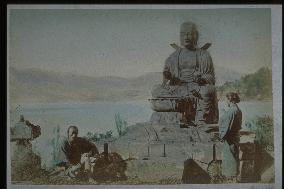
This is Enmei Jizo in autumn, 1871 after Haibutsukishaku (anti-Buddhist movement at the beginning of the Meiji era). Compared with the image in catalogue #5365, the figure's halo is broken, the accompanying jizo figures on the side are gone, and the stone lanterns have been destroyed. There were many stone Buddhas and stone towers as well as this Enmei Jizo in Tokaido Hakon Sanchuzu, documented by a ukiyoe print made by Sadahide Goun during Edo era. It is reported that many were thrown into the lake.==Date:unknown, Place:Hakone, Photo:unknown, (Credit:Nagasaki University Library/Kyodo News Images) [Cabinet Number90‐45‐0]

  •  
Pine trees at Karasaki,Lake Biwa

Pine trees at Karasaki,Lake Biwa

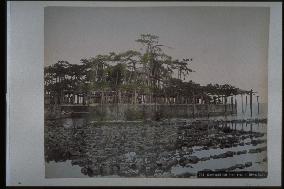
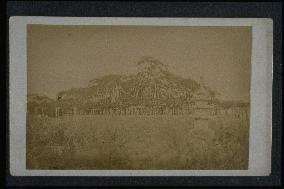
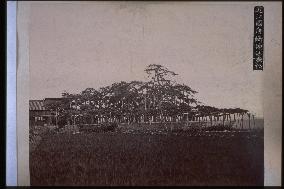
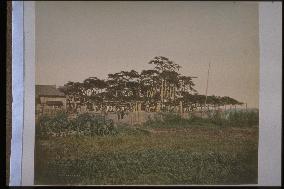
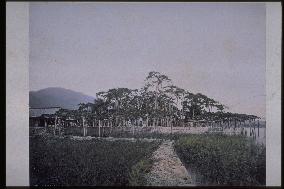
Karasaki-no-Matsu, the pine tree of Karasaki, famous for its portrayal in the ukiyoe print Karasaki-no-Yau (Night Rain of Karasaki), one of the Eight Scenes of Oumi. The tree in the photograph is the second-generation pine with an east-west width of 72 meters, a north-south width of 86 meters and a height of 10 meters. A number of splints and stone walls support the branches stretching out to the lake. This second-generation pine died in 1921, but the third-generation pine is thriving today at the same site.==Date:unknown, Place:Shiga, Photo:unknown, (Credit:Nagasaki University Library/Kyodo News Images) [Cabinet Number87‐34‐0]

  •  
A sunset and a sailboat,Lake Biwa

A sunset and a sailboat,Lake Biwa

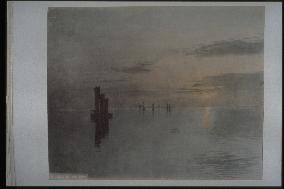
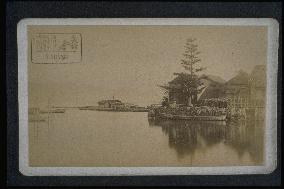
Maruko boats on Lake Biwa. This photograph seems to imitate the image Yabase-no-Kihan, one of Utagawa Hiroshige's Eight Scenes of Oumi and a representative ukiyoe print. Yabase-no-Kihan captures the scene of the boats used to ferry passengers between Otsu and Yabase (present-day Kusatsu City), returning to port. This was a shortcut on the Tokaido Highway.==Date:unknown, Place:Shiga, Photo:unknown, (Credit:Nagasaki University Library/Kyodo News Images) [Cabinet Number87‐35‐0]

  •  
A wisteria trellis at Kameido Shrine

A wisteria trellis at Kameido Shrine

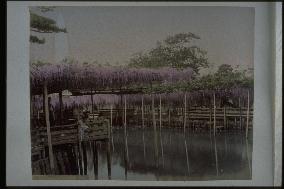
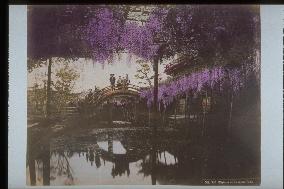
The reflection of the wisteria on Shinji Pond is beautiful. These wisteria blossoms, called Goshaku-fuji, were held in high regard during the entire Edo Period, and they appear in ukiyoe prints by Ando Hiroshige and Utagawa Kuniyoshi. This is still a popular place to appreciate the wisteria blossoms. Taken around 1897.==Date:unknown, Place:Tokyo, Photo:unknown, (Credit:Nagasaki University Library/Kyodo News Images) [Cabinet Number87‐11‐0]

  •  
Horikiri Iris Garden

Horikiri Iris Garden

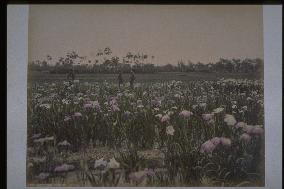
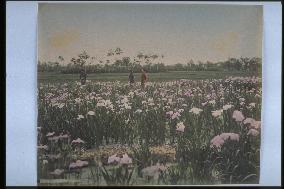
Horikiri Village of Minami Katsushika-gun was famous for its irises from the late Edo Period, and Suzuki Harunobu, Ando Hiroshige and other artists depicted then in ukiyoe prints. This photograph captures the rustic charm of the iris garden in the countryside near Edo. The two women and the man with hanten jacket may be visitors.==Date:unknown, Place:Tokyo, Photo:unknown, (Credit:Nagasaki University Library/Kyodo News Images) [Cabinet Number85‐12‐0]

  •  
Pine trees at Karasaki,Lake Biwa

Pine trees at Karasaki,Lake Biwa

Karasaki-no-Matsu, the pine tree of Karasaki, famous for its portrayal in the ukiyoe print Karasaki-no-Yau (Night Rain of Karasaki), one of the Eight Scenes of Oumi. The tree in the photograph is the second-generation pine with an east-west width of 72 meters, a north-south width of 86 meters and a height of 10 meters. A number of splints and stone walls support the branches stretching out to the lake. This second-generation pine died in 1921, but the third-generation pine is thriving today at the same site.==Date:unknown, Place:Shiga, Photo:unknown, (Credit:Nagasaki University Library/Kyodo News Images) [Cabinet Number71‐24‐0]

  •  
Yahashi Harbour

Yahashi Harbour

The ferry port of Yabase, famous for its portrayal in the ukiyoe print Yabase-no-Kihan, one of Utagawa Hiroshige's Eight Scenes of Oumi. The site is located in present-day Kusatsu City, Shiga Prefecture. The port prospered as a shortcut from the Tokaido Highway to Otsu. After the Meiji Period, the water of Lake Biwa receded and the area was gradually converted into farmland.==Date:unknown, Place:Shiga, Photo:unknown, (Credit:Nagasaki University Library/Kyodo News Images) [Cabinet Number71‐5‐0]

  •  
Maikono-hama coast

Maikono-hama coast

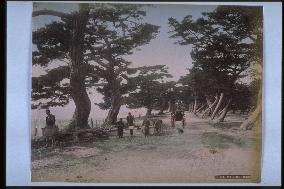
Maikonohama Beach stretches about 1.7 km along the Seto Inland Sea. Located in the western part of present-day Tarumi Ward, it was famous from ancient times as a scenic point with white sand and pine trees. Utagawa Hiroshige made many ukiyoe prints depicting the scenery here. This photograph captures the area around the Old Saigoku Highway (present-day National Route #2), facing west. Taken from the mid- to late-Meiji Period.==Date:unknown, Place:Kobe, Photo:unknown, (Credit:Nagasaki University Library/Kyodo News Images) [Cabinet Number59‐69‐0]

  •  
Horikiri Iris Garden

Horikiri Iris Garden

Horikiri Village of Minami Katsushika-gun was famous for its irises from the late Edo Period, and Suzuki Harunobu, Ando Hiroshige and other artists depicted then in ukiyoe prints. This photograph captures the rustic charm of the iris garden in the countryside near Edo. The two women and the man with hanten jacket may be visitors.==Date:unknown, Place:Tokyo, Photo:unknown, (Credit:Nagasaki University Library/Kyodo News Images) [Cabinet Number53‐23‐0]

  •  
Pine trees at Karasaki,Lake Biwa

Pine trees at Karasaki,Lake Biwa

Karasaki-no-Matsu, the pine tree of Karasaki, famous for its portrayal in the ukiyoe print Karasaki-no-Yau (Night Rain of Karasaki), one of the Eight Scenes of Oumi. The tree in the photograph is the second-generation pine with an east-west width of 72 meters, a north-south width of 86 meters and a height of 10 meters. A number of splints and stone walls support the branches stretching out to the lake. This second-generation pine died in 1921, but the third-generation pine is thriving today at the same site.==Date:unknown, Place:Shiga, Photo:unknown, (Credit:Nagasaki University Library/Kyodo News Images) [Cabinet Number52‐36‐0]

  •  
Pine trees at Karasaki,Lake Biwa

Pine trees at Karasaki,Lake Biwa

Karasaki-no-Matsu, the pine tree of Karasaki, famous for its portrayal in the ukiyoe print Karasaki-no-Yau (Night Rain of Karasaki), one of the Eight Scenes of Oumi. It is the holy tree of Karasaki Shinto Shrine. The tree in the photograph is the second-generation pine with an east-west width of 72 meters, a north-south width of 86 meters and a height of 10 meters. The branches stretch out to the lake. This second-generation pine died in 1921, but the third-generation pine is thriving today at the same site.==Date:unknown, Place:Shiga, Photo:unknown, (Credit:Nagasaki University Library/Kyodo News Images) [Cabinet Number52‐26‐0]

  •  
Pine trees at Karasaki,Lake Biwa

Pine trees at Karasaki,Lake Biwa

Karasaki-no-Matsu, the pine tree of Karasaki, famous for its portrayal in the ukiyoe print Karasaki-no-Yau (Night Rain of Karasaki), one of the Eight Scenes of Oumi. The tree in the photograph is the second-generation pine with an east-west width of 72 meters, a north-south width of 86 meters and a height of 10 meters. A number of splints and stone walls support the branches stretching out to the lake. This second-generation pine died in 1921, but the third-generation pine is thriving today at the same site.==Date:unknown, Place:Shiga, Photo:unknown, (Credit:Nagasaki University Library/Kyodo News Images) [Cabinet Number52‐19‐0]

  •  
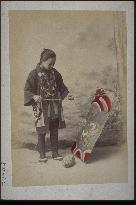
A kite and a child

A kite and a child

A child is wearing a hanten jacket. Han means to bind and ten means to wear. The names of shops and other logos were dyed on the jackets. The kakudako (square Japanese kite) bore illustrations from kabuki plays and ukiyoe woodblock prints.==Date:unknown, Place:unknown, Photo:unknown, (Credit:Nagasaki University Library/Kyodo News Images) [Cabinet Number50‐12‐0]

  •  
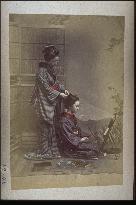
A woman putting on a comb

A woman putting on a comb

The girl in front of the mirror is having accessories applied to her hair. The striped pattern of the kimono worn by the woman on the left was popular during the Edo Period. This pattern appears frequently in ukiyoe woodblock prints.==Date:unknown, Place:unknown, Photo:unknown, (Credit:Nagasaki University Library/Kyodo News Images) [Cabinet Number49‐48‐0]

  •  
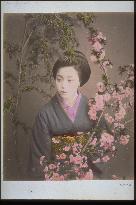
Cherry blossoms and a woman

Cherry blossoms and a woman

It is more like an Ukiyoe (wood block printing) portrait of a woman than a portrait. The comparison of the cherry blossoms in full bloom and the melancholy woman is effective.==Date:unknown, Place:unknown, Photo:Ogawa Kazumasa, (Credit:Nagasaki University Library/Kyodo News Images) [Cabinet Number44‐2‐0]

  •  
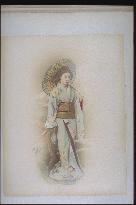
A girl holding an umbrella

A girl holding an umbrella

A full portrait with a parasol to her shoulders. It is a portrait taken at a studio. The way the hems of the kimono are arranged and also the pose indicates that the photographer had the image of the beautiful women in Ukiyoe(woodblock printing) in mind.==Date:unknown, Place:unknown, Photo:Kusakabe Kinbei, (Credit:Nagasaki University Library/Kyodo News Images) [Cabinet Number40‐34‐0]

  •  
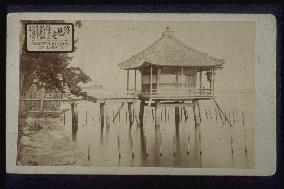
UKIMIDO at KATADA

UKIMIDO at KATADA

The Ukimido of Mangetsuji in Kashida, Otsu City. It is said to have been built by the priest Eshin during the Chotoku years (995-99) to pray for safety on the lake and the welfare of the people. It has been the theme of haiku and ukiyoe prints from ancient days, including a famous haiku by Matsuo Basho. The present Ukimido was rebuilt in 1937, and some details differ from the one in the picture.==Date:unknown, Place:Shiga, Photo:unknown, (Credit:Nagasaki University Library/Kyodo News Images) [Cabinet Number30‐7‐0]

  •  
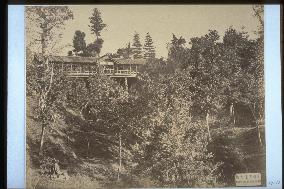
Tsutenbashi bridge at tofukuji temple

Tsutenbashi bridge at tofukuji temple

Located in the Higashiyama district of Kyoto, Tofukuji is one of the major Zen five temples of Kyoto. It is the head temple of the Tofukuji Branch of the Rinzai Sect. The Tsutenkyo is a corridor which connects the Buddha Hall and Founder's Hall, and the roof is seen in the center. The autumn colours are famous here and have been portrayed in ukiyoe by Hiroshige. A man sits on a mat in the trees to the fore.==Date:unknown, Place:Kyoto, Photo:unknown, (Credit:Nagasaki University Library/Kyodo News Images) [Cabinet Number19‐13‐0]

  •  
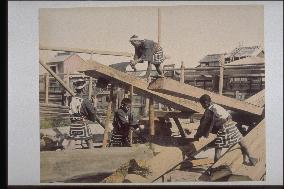
Sawyers

Sawyers

A master wood cutter with his hair tied in a knot saws wood with his students. It is not comparable to the ukiyoe by Hokusai but still evokes the lifestyle of the Edo craftsmen.==Date:unknown, Place:unknown, Photo:unknown, (Credit:Nagasaki University Library/Kyodo News Images) [Cabinet Number11‐52‐0]

  •  
Azaleas and girls

Azaleas and girls

Three girls take a walk in an azalea garden. Two hold umbrellas, and the other places her hand over the azalea shrub. A photo by Ogawa Kazuma, it looks like an ukiyoe . The location is unknown.==Date:unknown, Place:unknown, Photo:Ogawa Kazumasa, (Credit:Nagasaki University Library/Kyodo News Images) [Cabinet Number10‐44‐0]

  •  
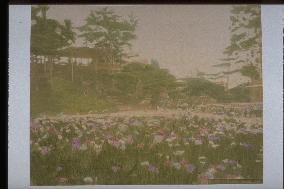
Iris flowers in horikiri

Iris flowers in horikiri

The irises of Horikiri were famous together with the wisteria of Kameido and have been a popular motif in ukiyoe, nishikie and travelogues.==Date:unknown, Place:Tokyo, Photo:Kusakabe Kinbei, (Credit:Nagasaki University Library/Kyodo News Images) [Cabinet Number2‐31‐0]

  •  
A wisteria trellis at Kameido Shrine

A wisteria trellis at Kameido Shrine

The wisteria trellis at Kameido Tenjin was famous from the Edo era and has been portrayed in ukiyoe (wood block prints) and nishikie (coloured prints). The wisteria trellis in the photo was destroyed during World WarⅡ, and the present trellis was restored after the war. The arched bridge in the background has been replaced with a concrete bridge without bridge girders.==Date:unknown, Place:Tokyo, Photo:Kusakabe Kinbei, (Credit:Nagasaki University Library/Kyodo News Images) [Cabinet Number2‐30‐0]

  •  
Hokusai exhibition in Berlin

Hokusai exhibition in Berlin

BERLIN, Germany - People look at works by Katsushika Hokusai, a renowned ''ukiyoe'' woodblock print artist from Japan's late Edo period, at the Martin-Gropius-Bau museum in Berlin on Aug. 25, 2011. An exhibition of more than 440 of Hokusai's works is scheduled to be held at the museum through Oct. 24. (Kyodo)

  •  
Hokusai's set of 5 woodblock prints

Hokusai's set of 5 woodblock prints

TOKYO, Japan - A set of five woodblock prints by renowned ''ukiyoe'' artist Katsushika Hokusai is displayed at the Japan Ukiyoe Museum in Matsumoto, Nagano Prefecture, on May 6, 2012. Experts examined the set, which is based on ghost stories, in early May, confirming it as an authentic work by Hokusai. (Kyodo)

  •  
Painting on round fan likely drawn by Utamaro found

Painting on round fan likely drawn by Utamaro found

TOKYO, Japan - "Uchiwa-e," a painting on an "uchiwa" round fan believed to have been drawn by famous feudal-era "ukiyoe" woodblock print artist Kitagawa Utamaro, is shown in this file photo taken on Aug. 7, 2014. (Kyodo)

  •  
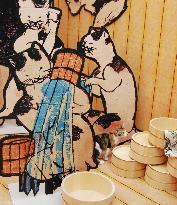
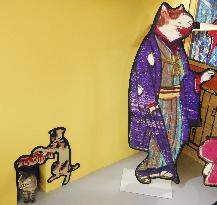
Cat cafe in Tokyo

Cat cafe in Tokyo

Photo taken on June 14, 2018, shows a cat in a room decorated with cutouts of "ukiyoe" woodblock prints at a cat cafe in Tokyo. The cafe incorporates art of the Edo Period, which lasted from the 17th century through 19th century, and offers a stray cat adoption service. (Kyodo) ==Kyodo

  •  
Cat cafe in Tokyo

Cat cafe in Tokyo

Photo taken on June 14, 2018, shows a cat in a room decorated with cutouts of "ukiyoe" woodblock prints at a cat cafe in Tokyo. The cafe incorporates art of the Edo Period, which lasted from the 17th century through 19th century, and offers a stray cat adoption service. (Kyodo) ==Kyodo

  •  
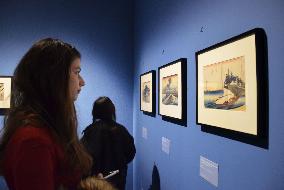
Ukiyoe painter exhibition in Italy

Ukiyoe painter exhibition in Italy

Visitors look at the works of ukiyoe artist Utagawa Hiroshige at an exhibition in Rome, Italy, in March 2018. (Kyodo) ==Kyodo

  •  
Ukiyoe painter exhibition in Italy

Ukiyoe painter exhibition in Italy

Visitors look at the works of ukiyoe artist Utagawa Hiroshige at an exhibition in Rome, Italy, in March 2018. (Kyodo) ==Kyodo

  •  
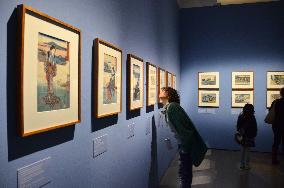
Ukiyoe painter exhibition in Italy

Ukiyoe painter exhibition in Italy

Visitors look at the works of ukiyoe artist Utagawa Kuniyoshi at an exhibition in Milan, Italy, on Dec. 15, 2017. (Kyodo) ==Kyodo

  •  
Ukiyoe painter exhibition in Italy

Ukiyoe painter exhibition in Italy

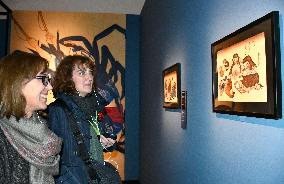
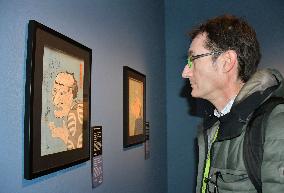
A visitor gazes at a drawing by ukiyoe artist Utagawa Kuniyoshi at an exhibition in Milan, Italy, on Dec. 15, 2017. (Kyodo) ==Kyodo

  • Main
  • Top
  • Editorial
  • Creative
  • About Us
  • About ILG
  • Terms of use
  • Company
  • BEHIND
  • Price List
  • Single Plan
  • Monthly Plan
  • Services
  • Shooting
  • Rights Clearance
  • Support
  • FAQ
  • How To Buy
  • Contact Us
  • Become a Partner

© KYODO NEWS IMAGES INC

All Rights Reserved.

  • Editorial
  • Olympics
  • News
  • Sports
  • Japan
  • Tech
  • Royal
  • Disaster
  • NorthKorea
  • Old Japan
  • SNS
  • Creative
  • Food
  • Japan
  • Landscape
  • Animal
  • Popular
  • #Ukraine
  • #Russia
  • #coronavirus
  • #N. Korea
  • #China
  • #Thailand
  • #Ukraine
  • #Russia
  • #coronavirus
  • #N. Korea
  • #China
  • #Thailand
  • Food
  • Japan
  • Landscape
  • Animal
  • Olympics
  • News
  • Sports
  • Japan
  • Tech
  • Royal
  • Disaster
  • NorthKorea
  • Old Japan
  • SNS