•  
(MASTER OF CRAFTS)CHINA-ANHUI-QIMEN-KEEMUN BLACK TEA-INHERITOR (CN)

(MASTER OF CRAFTS)CHINA-ANHUI-QIMEN-KEEMUN BLACK TEA-INHERITOR (CN)

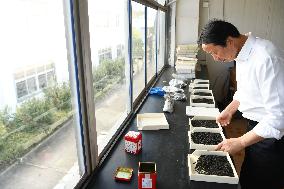
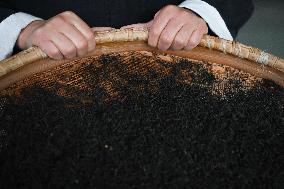
(221130) -- QIMEN, Nov. 30, 2022 (Xinhua) -- Wang Chang does the blending processing of Keemun black tea at his tea company in Qimen County, east China's Anhui Province, Nov. 26, 2022. Keemun black tea, one of the most famous Chinese tea with intensive aroma, has a history of more than 100 years. The tea, also called "Qihong" in Chinese, plays an important role in cultural exchanges between the west and the east. In 2008, the making of Keemun black tea was listed as China's national-level intangible cultural heritage, and nowadays the tea has become a symbol for Anhui Province or even China. The primary processing of Keemun black tea includes four steps, namely natural withering, rolling, fermenting and drying, lasting from before the Qingming festival (April) to June. After that, the refining of the tea is much more complicated, which mainly includes procedures such as screening, winnowing, compressing, re-drying, blending, piling and packing. Of all the refining steps, blending is the key, which decides th

  •  
(MASTER OF CRAFTS)CHINA-ANHUI-QIMEN-KEEMUN BLACK TEA-INHERITOR (CN)

(MASTER OF CRAFTS)CHINA-ANHUI-QIMEN-KEEMUN BLACK TEA-INHERITOR (CN)

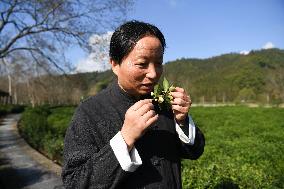
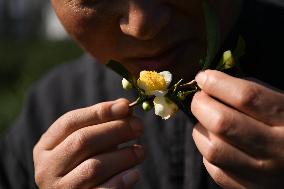
(221130) -- QIMEN, Nov. 30, 2022 (Xinhua) -- Wang Chang smells the scent of tea flowers at a tea garden in Qimen County, east China's Anhui Province, Nov. 26, 2022. Keemun black tea, one of the most famous Chinese tea with intensive aroma, has a history of more than 100 years. The tea, also called "Qihong" in Chinese, plays an important role in cultural exchanges between the west and the east. In 2008, the making of Keemun black tea was listed as China's national-level intangible cultural heritage, and nowadays the tea has become a symbol for Anhui Province or even China. The primary processing of Keemun black tea includes four steps, namely natural withering, rolling, fermenting and drying, lasting from before the Qingming festival (April) to June. After that, the refining of the tea is much more complicated, which mainly includes procedures such as screening, winnowing, compressing, re-drying, blending, piling and packing. Of all the refining steps, blending is the key, which decides the shape, scent, and

  •  
(MASTER OF CRAFTS)CHINA-ANHUI-QIMEN-KEEMUN BLACK TEA-INHERITOR (CN)

(MASTER OF CRAFTS)CHINA-ANHUI-QIMEN-KEEMUN BLACK TEA-INHERITOR (CN)

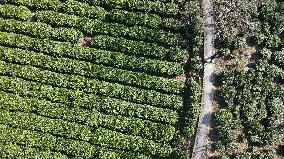
(221130) -- QIMEN, Nov. 30, 2022 (Xinhua) -- This aerial photo taken on Nov. 26, 2022 shows Wang Chang walking at a tea garden in Qimen County, east China's Anhui Province. Keemun black tea, one of the most famous Chinese tea with intensive aroma, has a history of more than 100 years. The tea, also called "Qihong" in Chinese, plays an important role in cultural exchanges between the west and the east. In 2008, the making of Keemun black tea was listed as China's national-level intangible cultural heritage, and nowadays the tea has become a symbol for Anhui Province or even China. The primary processing of Keemun black tea includes four steps, namely natural withering, rolling, fermenting and drying, lasting from before the Qingming festival (April) to June. After that, the refining of the tea is much more complicated, which mainly includes procedures such as screening, winnowing, compressing, re-drying, blending, piling and packing. Of all the refining steps, blending is the key, which decides the shape, sce

  •  
(MASTER OF CRAFTS)CHINA-ANHUI-QIMEN-KEEMUN BLACK TEA-INHERITOR (CN)

(MASTER OF CRAFTS)CHINA-ANHUI-QIMEN-KEEMUN BLACK TEA-INHERITOR (CN)

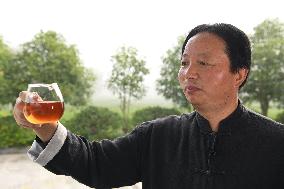
(221130) -- QIMEN, Nov. 30, 2022 (Xinhua) -- Wang Chang tastes a cup of Keemun black tea at a tea garden in Qimen County, east China's Anhui Province, Nov. 26, 2022. Keemun black tea, one of the most famous Chinese tea with intensive aroma, has a history of more than 100 years. The tea, also called "Qihong" in Chinese, plays an important role in cultural exchanges between the west and the east. In 2008, the making of Keemun black tea was listed as China's national-level intangible cultural heritage, and nowadays the tea has become a symbol for Anhui Province or even China. The primary processing of Keemun black tea includes four steps, namely natural withering, rolling, fermenting and drying, lasting from before the Qingming festival (April) to June. After that, the refining of the tea is much more complicated, which mainly includes procedures such as screening, winnowing, compressing, re-drying, blending, piling and packing. Of all the refining steps, blending is the key, which decides the shape, scent, and

  •  
(MASTER OF CRAFTS)CHINA-ANHUI-QIMEN-KEEMUN BLACK TEA-INHERITOR (CN)

(MASTER OF CRAFTS)CHINA-ANHUI-QIMEN-KEEMUN BLACK TEA-INHERITOR (CN)

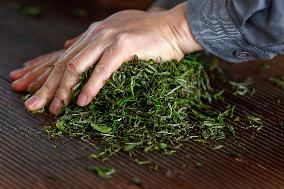
(221130) -- QIMEN, Nov. 30, 2022 (Xinhua) -- A worker rolls tea leaves after withering at Wang Chang's tea company in Qimen County, east China's Anhui Province, March 28, 2022. Keemun black tea, one of the most famous Chinese tea with intensive aroma, has a history of more than 100 years. The tea, also called "Qihong" in Chinese, plays an important role in cultural exchanges between the west and the east. In 2008, the making of Keemun black tea was listed as China's national-level intangible cultural heritage, and nowadays the tea has become a symbol for Anhui Province or even China. The primary processing of Keemun black tea includes four steps, namely natural withering, rolling, fermenting and drying, lasting from before the Qingming festival (April) to June. After that, the refining of the tea is much more complicated, which mainly includes procedures such as screening, winnowing, compressing, re-drying, blending, piling and packing. Of all the refining steps, blending is the key, which decides the shape,

  •  
(MASTER OF CRAFTS)CHINA-ANHUI-QIMEN-KEEMUN BLACK TEA-INHERITOR (CN)

(MASTER OF CRAFTS)CHINA-ANHUI-QIMEN-KEEMUN BLACK TEA-INHERITOR (CN)

(221130) -- QIMEN, Nov. 30, 2022 (Xinhua) -- Fan Wenhan, apprentice of Wang Chang, evaluates a Keemun black tea product at a tea garden in Qimen County, east China's Anhui Province, Nov. 26, 2022. Keemun black tea, one of the most famous Chinese tea with intensive aroma, has a history of more than 100 years. The tea, also called "Qihong" in Chinese, plays an important role in cultural exchanges between the west and the east. In 2008, the making of Keemun black tea was listed as China's national-level intangible cultural heritage, and nowadays the tea has become a symbol for Anhui Province or even China. The primary processing of Keemun black tea includes four steps, namely natural withering, rolling, fermenting and drying, lasting from before the Qingming festival (April) to June. After that, the refining of the tea is much more complicated, which mainly includes procedures such as screening, winnowing, compressing, re-drying, blending, piling and packing. Of all the refining steps, blending is the key, whic

  •  
(MASTER OF CRAFTS)CHINA-ANHUI-QIMEN-KEEMUN BLACK TEA-INHERITOR (CN)

(MASTER OF CRAFTS)CHINA-ANHUI-QIMEN-KEEMUN BLACK TEA-INHERITOR (CN)

(221130) -- QIMEN, Nov. 30, 2022 (Xinhua) -- Wang Chang does the sieving processing of keemun black tea at a tea garden in Qimen County, east China's Anhui Province, Nov. 26, 2022. Keemun black tea, one of the most famous Chinese tea with intensive aroma, has a history of more than 100 years. The tea, also called "Qihong" in Chinese, plays an important role in cultural exchanges between the west and the east. In 2008, the making of Keemun black tea was listed as China's national-level intangible cultural heritage, and nowadays the tea has become a symbol for Anhui Province or even China. The primary processing of Keemun black tea includes four steps, namely natural withering, rolling, fermenting and drying, lasting from before the Qingming festival (April) to June. After that, the refining of the tea is much more complicated, which mainly includes procedures such as screening, winnowing, compressing, re-drying, blending, piling and packing. Of all the refining steps, blending is the key, which decides the sh

  •  
(MASTER OF CRAFTS)CHINA-ANHUI-QIMEN-KEEMUN BLACK TEA-INHERITOR (CN)

(MASTER OF CRAFTS)CHINA-ANHUI-QIMEN-KEEMUN BLACK TEA-INHERITOR (CN)

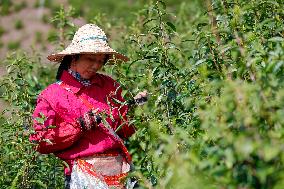
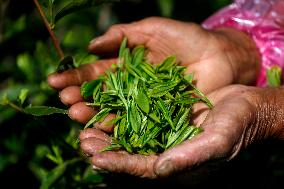
(221130) -- QIMEN, Nov. 30, 2022 (Xinhua) -- A farmer picks tea leaves at a tea garden in Qimen County, east China's Anhui Province, March 28, 2022. Keemun black tea, one of the most famous Chinese tea with intensive aroma, has a history of more than 100 years. The tea, also called "Qihong" in Chinese, plays an important role in cultural exchanges between the west and the east. In 2008, the making of Keemun black tea was listed as China's national-level intangible cultural heritage, and nowadays the tea has become a symbol for Anhui Province or even China. The primary processing of Keemun black tea includes four steps, namely natural withering, rolling, fermenting and drying, lasting from before the Qingming festival (April) to June. After that, the refining of the tea is much more complicated, which mainly includes procedures such as screening, winnowing, compressing, re-drying, blending, piling and packing. Of all the refining steps, blending is the key, which decides the shape, scent, and color of the fin

  •  
(MASTER OF CRAFTS)CHINA-ANHUI-QIMEN-KEEMUN BLACK TEA-INHERITOR (CN)

(MASTER OF CRAFTS)CHINA-ANHUI-QIMEN-KEEMUN BLACK TEA-INHERITOR (CN)

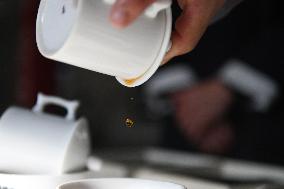
(221130) -- QIMEN, Nov. 30, 2022 (Xinhua) -- Wang Chang pours a cup of keemun black tea at a tea garden in Qimen County, east China's Anhui Province, Nov. 26, 2022. Keemun black tea, one of the most famous Chinese tea with intensive aroma, has a history of more than 100 years. The tea, also called "Qihong" in Chinese, plays an important role in cultural exchanges between the west and the east. In 2008, the making of Keemun black tea was listed as China's national-level intangible cultural heritage, and nowadays the tea has become a symbol for Anhui Province or even China. The primary processing of Keemun black tea includes four steps, namely natural withering, rolling, fermenting and drying, lasting from before the Qingming festival (April) to June. After that, the refining of the tea is much more complicated, which mainly includes procedures such as screening, winnowing, compressing, re-drying, blending, piling and packing. Of all the refining steps, blending is the key, which decides the shape, scent, and

  •  
(MASTER OF CRAFTS)CHINA-ANHUI-QIMEN-KEEMUN BLACK TEA-INHERITOR (CN)

(MASTER OF CRAFTS)CHINA-ANHUI-QIMEN-KEEMUN BLACK TEA-INHERITOR (CN)

(221130) -- QIMEN, Nov. 30, 2022 (Xinhua) -- Wang Chang does the sieving processing of keemun black tea at a tea garden in Qimen County, east China's Anhui Province, Nov. 26, 2022. Keemun black tea, one of the most famous Chinese tea with intensive aroma, has a history of more than 100 years. The tea, also called "Qihong" in Chinese, plays an important role in cultural exchanges between the west and the east. In 2008, the making of Keemun black tea was listed as China's national-level intangible cultural heritage, and nowadays the tea has become a symbol for Anhui Province or even China. The primary processing of Keemun black tea includes four steps, namely natural withering, rolling, fermenting and drying, lasting from before the Qingming festival (April) to June. After that, the refining of the tea is much more complicated, which mainly includes procedures such as screening, winnowing, compressing, re-drying, blending, piling and packing. Of all the refining steps, blending is the key, which decides the sh

  •  
(MASTER OF CRAFTS)CHINA-ANHUI-QIMEN-KEEMUN BLACK TEA-INHERITOR (CN)

(MASTER OF CRAFTS)CHINA-ANHUI-QIMEN-KEEMUN BLACK TEA-INHERITOR (CN)

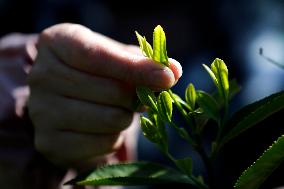
(221130) -- QIMEN, Nov. 30, 2022 (Xinhua) -- A farmer shows newly-picked tea leaves at a tea garden in Qimen County, east China's Anhui Province, March 28, 2022. Keemun black tea, one of the most famous Chinese tea with intensive aroma, has a history of more than 100 years. The tea, also called "Qihong" in Chinese, plays an important role in cultural exchanges between the west and the east. In 2008, the making of Keemun black tea was listed as China's national-level intangible cultural heritage, and nowadays the tea has become a symbol for Anhui Province or even China. The primary processing of Keemun black tea includes four steps, namely natural withering, rolling, fermenting and drying, lasting from before the Qingming festival (April) to June. After that, the refining of the tea is much more complicated, which mainly includes procedures such as screening, winnowing, compressing, re-drying, blending, piling and packing. Of all the refining steps, blending is the key, which decides the shape, scent, and col

  •  
(MASTER OF CRAFTS)CHINA-ANHUI-QIMEN-KEEMUN BLACK TEA-INHERITOR (CN)

(MASTER OF CRAFTS)CHINA-ANHUI-QIMEN-KEEMUN BLACK TEA-INHERITOR (CN)

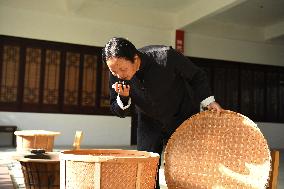
(221130) -- QIMEN, Nov. 30, 2022 (Xinhua) -- Wang Chang smells the scent of Keemun black tea at a tea garden in Qimen County, east China's Anhui Province, Nov. 26, 2022. Keemun black tea, one of the most famous Chinese tea with intensive aroma, has a history of more than 100 years. The tea, also called "Qihong" in Chinese, plays an important role in cultural exchanges between the west and the east. In 2008, the making of Keemun black tea was listed as China's national-level intangible cultural heritage, and nowadays the tea has become a symbol for Anhui Province or even China. The primary processing of Keemun black tea includes four steps, namely natural withering, rolling, fermenting and drying, lasting from before the Qingming festival (April) to June. After that, the refining of the tea is much more complicated, which mainly includes procedures such as screening, winnowing, compressing, re-drying, blending, piling and packing. Of all the refining steps, blending is the key, which decides the shape, scent,

  •  
(MASTER OF CRAFTS)CHINA-ANHUI-QIMEN-KEEMUN BLACK TEA-INHERITOR (CN)

(MASTER OF CRAFTS)CHINA-ANHUI-QIMEN-KEEMUN BLACK TEA-INHERITOR (CN)

(221130) -- QIMEN, Nov. 30, 2022 (Xinhua) -- Wang Chang smells the scent of tea flowers at a tea garden in Qimen County, east China's Anhui Province, Nov. 26, 2022. Keemun black tea, one of the most famous Chinese tea with intensive aroma, has a history of more than 100 years. The tea, also called "Qihong" in Chinese, plays an important role in cultural exchanges between the west and the east. In 2008, the making of Keemun black tea was listed as China's national-level intangible cultural heritage, and nowadays the tea has become a symbol for Anhui Province or even China. The primary processing of Keemun black tea includes four steps, namely natural withering, rolling, fermenting and drying, lasting from before the Qingming festival (April) to June. After that, the refining of the tea is much more complicated, which mainly includes procedures such as screening, winnowing, compressing, re-drying, blending, piling and packing. Of all the refining steps, blending is the key, which decides the shape, scent, and

  •  
(MASTER OF CRAFTS)CHINA-ANHUI-QIMEN-KEEMUN BLACK TEA-INHERITOR (CN)

(MASTER OF CRAFTS)CHINA-ANHUI-QIMEN-KEEMUN BLACK TEA-INHERITOR (CN)

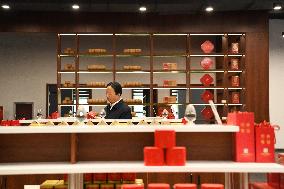
(221130) -- QIMEN, Nov. 30, 2022 (Xinhua) -- Wang Chang checks Keemun black tea products at his tea company in Qimen County, east China's Anhui Province, Nov. 26, 2022. Keemun black tea, one of the most famous Chinese tea with intensive aroma, has a history of more than 100 years. The tea, also called "Qihong" in Chinese, plays an important role in cultural exchanges between the west and the east. In 2008, the making of Keemun black tea was listed as China's national-level intangible cultural heritage, and nowadays the tea has become a symbol for Anhui Province or even China. The primary processing of Keemun black tea includes four steps, namely natural withering, rolling, fermenting and drying, lasting from before the Qingming festival (April) to June. After that, the refining of the tea is much more complicated, which mainly includes procedures such as screening, winnowing, compressing, re-drying, blending, piling and packing. Of all the refining steps, blending is the key, which decides the shape, scent,

  •  
(MASTER OF CRAFTS)CHINA-ANHUI-QIMEN-KEEMUN BLACK TEA-INHERITOR (CN)

(MASTER OF CRAFTS)CHINA-ANHUI-QIMEN-KEEMUN BLACK TEA-INHERITOR (CN)

(221130) -- QIMEN, Nov. 30, 2022 (Xinhua) -- Fan Wenhan, apprentice of Wang Chang, evaluates the processing of Keemun black tea at a tea garden in Qimen County, east China's Anhui Province, Nov. 26, 2022. Keemun black tea, one of the most famous Chinese tea with intensive aroma, has a history of more than 100 years. The tea, also called "Qihong" in Chinese, plays an important role in cultural exchanges between the west and the east. In 2008, the making of Keemun black tea was listed as China's national-level intangible cultural heritage, and nowadays the tea has become a symbol for Anhui Province or even China. The primary processing of Keemun black tea includes four steps, namely natural withering, rolling, fermenting and drying, lasting from before the Qingming festival (April) to June. After that, the refining of the tea is much more complicated, which mainly includes procedures such as screening, winnowing, compressing, re-drying, blending, piling and packing. Of all the refining steps, blending is the k

  •  
(MASTER OF CRAFTS)CHINA-ANHUI-QIMEN-KEEMUN BLACK TEA-INHERITOR (CN)

(MASTER OF CRAFTS)CHINA-ANHUI-QIMEN-KEEMUN BLACK TEA-INHERITOR (CN)

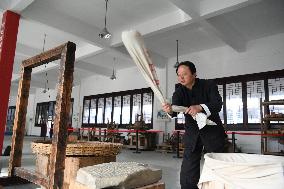
(221130) -- QIMEN, Nov. 30, 2022 (Xinhua) -- Wang Chang does the bagging and beating processing of Keemun black tea at a tea garden in Qimen County, east China's Anhui Province, Nov. 26, 2022. Keemun black tea, one of the most famous Chinese tea with intensive aroma, has a history of more than 100 years. The tea, also called "Qihong" in Chinese, plays an important role in cultural exchanges between the west and the east. In 2008, the making of Keemun black tea was listed as China's national-level intangible cultural heritage, and nowadays the tea has become a symbol for Anhui Province or even China. The primary processing of Keemun black tea includes four steps, namely natural withering, rolling, fermenting and drying, lasting from before the Qingming festival (April) to June. After that, the refining of the tea is much more complicated, which mainly includes procedures such as screening, winnowing, compressing, re-drying, blending, piling and packing. Of all the refining steps, blending is the key, which de

  •  
(MASTER OF CRAFTS)CHINA-ANHUI-QIMEN-KEEMUN BLACK TEA-INHERITOR (CN)

(MASTER OF CRAFTS)CHINA-ANHUI-QIMEN-KEEMUN BLACK TEA-INHERITOR (CN)

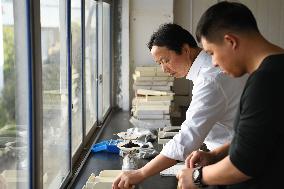
(221130) -- QIMEN, Nov. 30, 2022 (Xinhua) -- Wang Chang (L) and his apprentice Fan Wenhan do the blending processing of Keemun black tea at his tea company in Qimen County, east China's Anhui Province, Nov. 26, 2022. Keemun black tea, one of the most famous Chinese tea with intensive aroma, has a history of more than 100 years. The tea, also called "Qihong" in Chinese, plays an important role in cultural exchanges between the west and the east. In 2008, the making of Keemun black tea was listed as China's national-level intangible cultural heritage, and nowadays the tea has become a symbol for Anhui Province or even China. The primary processing of Keemun black tea includes four steps, namely natural withering, rolling, fermenting and drying, lasting from before the Qingming festival (April) to June. After that, the refining of the tea is much more complicated, which mainly includes procedures such as screening, winnowing, compressing, re-drying, blending, piling and packing. Of all the refining steps, blend

  •  
(MASTER OF CRAFTS)CHINA-ANHUI-QIMEN-KEEMUN BLACK TEA-INHERITOR (CN)

(MASTER OF CRAFTS)CHINA-ANHUI-QIMEN-KEEMUN BLACK TEA-INHERITOR (CN)

(221130) -- QIMEN, Nov. 30, 2022 (Xinhua) -- This aerial photo taken on Nov. 26, 2022 shows a tea garden in Qimen County, east China's Anhui Province. Keemun black tea, one of the most famous Chinese tea with intensive aroma, has a history of more than 100 years. The tea, also called "Qihong" in Chinese, plays an important role in cultural exchanges between the west and the east. In 2008, the making of Keemun black tea was listed as China's national-level intangible cultural heritage, and nowadays the tea has become a symbol for Anhui Province or even China. The primary processing of Keemun black tea includes four steps, namely natural withering, rolling, fermenting and drying, lasting from before the Qingming festival (April) to June. After that, the refining of the tea is much more complicated, which mainly includes procedures such as screening, winnowing, compressing, re-drying, blending, piling and packing. Of all the refining steps, blending is the key, which decides the shape, scent, and color of the f

  •  
(MASTER OF CRAFTS)CHINA-ANHUI-QIMEN-KEEMUN BLACK TEA-INHERITOR (CN)

(MASTER OF CRAFTS)CHINA-ANHUI-QIMEN-KEEMUN BLACK TEA-INHERITOR (CN)

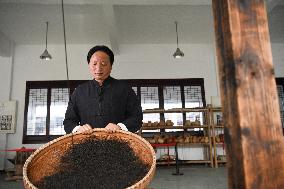
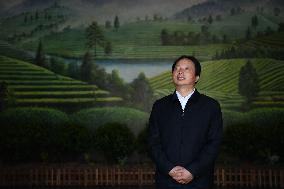
(221130) -- QIMEN, Nov. 30, 2022 (Xinhua) -- Wang Chang poses for a photo at his tea company in Qimen County, east China's Anhui Province, Nov. 26, 2022. Keemun black tea, one of the most famous Chinese tea with intensive aroma, has a history of more than 100 years. The tea, also called "Qihong" in Chinese, plays an important role in cultural exchanges between the west and the east. In 2008, the making of Keemun black tea was listed as China's national-level intangible cultural heritage, and nowadays the tea has become a symbol for Anhui Province or even China. The primary processing of Keemun black tea includes four steps, namely natural withering, rolling, fermenting and drying, lasting from before the Qingming festival (April) to June. After that, the refining of the tea is much more complicated, which mainly includes procedures such as screening, winnowing, compressing, re-drying, blending, piling and packing. Of all the refining steps, blending is the key, which decides the shape, scent, and color of th

  •  
(MASTER OF CRAFTS)CHINA-ANHUI-QIMEN-KEEMUN BLACK TEA-INHERITOR (CN)

(MASTER OF CRAFTS)CHINA-ANHUI-QIMEN-KEEMUN BLACK TEA-INHERITOR (CN)

(221130) -- QIMEN, Nov. 30, 2022 (Xinhua) -- A farmer picks tea leaves at a tea garden in Qimen County, east China's Anhui Province, March 28, 2022. Keemun black tea, one of the most famous Chinese tea with intensive aroma, has a history of more than 100 years. The tea, also called "Qihong" in Chinese, plays an important role in cultural exchanges between the west and the east. In 2008, the making of Keemun black tea was listed as China's national-level intangible cultural heritage, and nowadays the tea has become a symbol for Anhui Province or even China. The primary processing of Keemun black tea includes four steps, namely natural withering, rolling, fermenting and drying, lasting from before the Qingming festival (April) to June. After that, the refining of the tea is much more complicated, which mainly includes procedures such as screening, winnowing, compressing, re-drying, blending, piling and packing. Of all the refining steps, blending is the key, which decides the shape, scent, and color of the fin

  •  
(MASTER OF CRAFTS)CHINA-ANHUI-QIMEN-KEEMUN BLACK TEA-INHERITOR (CN)

(MASTER OF CRAFTS)CHINA-ANHUI-QIMEN-KEEMUN BLACK TEA-INHERITOR (CN)

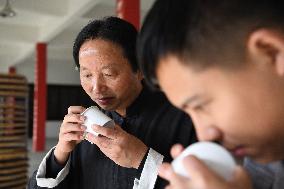
(221130) -- QIMEN, Nov. 30, 2022 (Xinhua) -- Wang Chang (L) and his apprentice Fan Wenhan evalutate a Keemun black tea product at a tea garden in Qimen County, east China's Anhui Province, Nov. 26, 2022. Keemun black tea, one of the most famous Chinese tea with intensive aroma, has a history of more than 100 years. The tea, also called "Qihong" in Chinese, plays an important role in cultural exchanges between the west and the east. In 2008, the making of Keemun black tea was listed as China's national-level intangible cultural heritage, and nowadays the tea has become a symbol for Anhui Province or even China. The primary processing of Keemun black tea includes four steps, namely natural withering, rolling, fermenting and drying, lasting from before the Qingming festival (April) to June. After that, the refining of the tea is much more complicated, which mainly includes procedures such as screening, winnowing, compressing, re-drying, blending, piling and packing. Of all the refining steps, blending is the ke

  •  
(MASTER OF CRAFTS)CHINA-ANHUI-QIMEN-KEEMUN BLACK TEA-INHERITOR (CN)

(MASTER OF CRAFTS)CHINA-ANHUI-QIMEN-KEEMUN BLACK TEA-INHERITOR (CN)

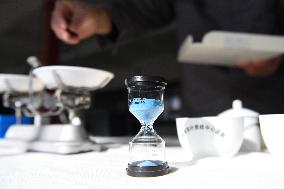
(221130) -- QIMEN, Nov. 30, 2022 (Xinhua) -- Wang Chang makes a cup of Keemun black tea in Qimen County, east China's Anhui Province, Nov. 26, 2022. Keemun black tea, one of the most famous Chinese tea with intensive aroma, has a history of more than 100 years. The tea, also called "Qihong" in Chinese, plays an important role in cultural exchanges between the west and the east. In 2008, the making of Keemun black tea was listed as China's national-level intangible cultural heritage, and nowadays the tea has become a symbol for Anhui Province or even China. The primary processing of Keemun black tea includes four steps, namely natural withering, rolling, fermenting and drying, lasting from before the Qingming festival (April) to June. After that, the refining of the tea is much more complicated, which mainly includes procedures such as screening, winnowing, compressing, re-drying, blending, piling and packing. Of all the refining steps, blending is the key, which decides the shape, scent, and color of the fin

  •  
(MASTER OF CRAFTS)CHINA-ANHUI-QIMEN-KEEMUN BLACK TEA-INHERITOR (CN)

(MASTER OF CRAFTS)CHINA-ANHUI-QIMEN-KEEMUN BLACK TEA-INHERITOR (CN)

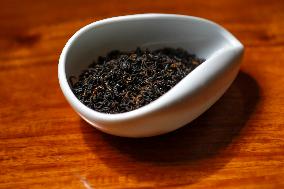
(221130) -- QIMEN, Nov. 30, 2022 (Xinhua) -- This photo taken on March 28, 2022 shows a Keemun black tea product of Wang Chang's tea company in Qimen County, east China's Anhui Province. Keemun black tea, one of the most famous Chinese tea with intensive aroma, has a history of more than 100 years. The tea, also called "Qihong" in Chinese, plays an important role in cultural exchanges between the west and the east. In 2008, the making of Keemun black tea was listed as China's national-level intangible cultural heritage, and nowadays the tea has become a symbol for Anhui Province or even China. The primary processing of Keemun black tea includes four steps, namely natural withering, rolling, fermenting and drying, lasting from before the Qingming festival (April) to June. After that, the refining of the tea is much more complicated, which mainly includes procedures such as screening, winnowing, compressing, re-drying, blending, piling and packing. Of all the refining steps, blending is the key, which decides

  •  
(MASTER OF CRAFTS)CHINA-ANHUI-QIMEN-KEEMUN BLACK TEA-INHERITOR (CN)

(MASTER OF CRAFTS)CHINA-ANHUI-QIMEN-KEEMUN BLACK TEA-INHERITOR (CN)

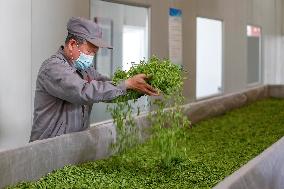
(221130) -- QIMEN, Nov. 30, 2022 (Xinhua) -- A worker puts fresh tea leaves into a withering machine at Wang Chang's tea company in Qimen County, east China's Anhui Province, March 28, 2022. Keemun black tea, one of the most famous Chinese tea with intensive aroma, has a history of more than 100 years. The tea, also called "Qihong" in Chinese, plays an important role in cultural exchanges between the west and the east. In 2008, the making of Keemun black tea was listed as China's national-level intangible cultural heritage, and nowadays the tea has become a symbol for Anhui Province or even China. The primary processing of Keemun black tea includes four steps, namely natural withering, rolling, fermenting and drying, lasting from before the Qingming festival (April) to June. After that, the refining of the tea is much more complicated, which mainly includes procedures such as screening, winnowing, compressing, re-drying, blending, piling and packing. Of all the refining steps, blending is the key, which deci

  •  
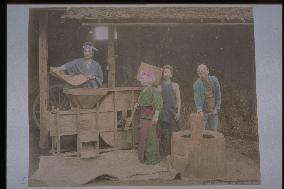
Threshing with a basket and a mortar

Threshing with a basket and a mortar

This is a scene of harvesting. A man pounds rice with a vertical pestle in a wooden mill. The rice hulls are removed to make brown rice which is then passed through a winnowing device to remove foreign objects. The woman is creating air flow to blow away the foreign objects.==Date:unknown, Place:unknown, Photo:unknown, (Credit:Nagasaki University Library/Kyodo News Images) [Cabinet Number84‐5‐0]

  •  
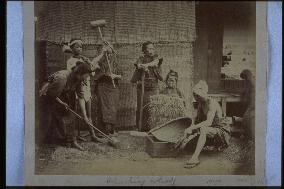
A scene of threshing

A scene of threshing

Four women and men take turns striking grains with a tool called a donji to remove husks. After this, a winnowing basket is used to remove foreign particles, and the hulled grains are packed in straw bags. A container is visible under the basket. A mat is hanging behind to prevent grains from scattering.==Date:unknown, Place:unknown, Photo:unknown, (Credit:Nagasaki University Library/Kyodo News Images) [Cabinet Number69‐75‐0]

  • Main
  • Top
  • Editorial
  • Creative
  • About Us
  • About ILG
  • Terms of use
  • Company
  • BEHIND
  • Price List
  • Single Plan
  • Monthly Plan
  • Services
  • Shooting
  • Rights Clearance
  • Support
  • FAQ
  • How To Buy
  • Contact Us
  • Become a Partner

© KYODO NEWS IMAGES INC

All Rights Reserved.

  • Editorial
  • Olympics
  • News
  • Sports
  • Japan
  • Tech
  • Royal
  • Disaster
  • NorthKorea
  • Old Japan
  • SNS
  • Creative
  • Food
  • Japan
  • Landscape
  • Animal
  • Popular
  • #Ukraine
  • #China
  • #coronavirus
  • #N. Korea
  • #Thailand
  • #Russia
  • #Ukraine
  • #China
  • #coronavirus
  • #N. Korea
  • #Thailand
  • #Russia
  • Food
  • Japan
  • Landscape
  • Animal
  • Olympics
  • News
  • Sports
  • Japan
  • Tech
  • Royal
  • Disaster
  • NorthKorea
  • Old Japan
  • SNS