•  
(MASTER OF CRAFTS) CHINA-ANHUI-SHEXIAN COUNTY-HUIZHOU INK-INHERITOR (CN)

(MASTER OF CRAFTS) CHINA-ANHUI-SHEXIAN COUNTY-HUIZHOU INK-INHERITOR (CN)

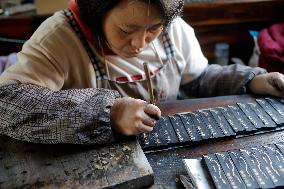
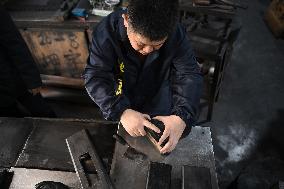
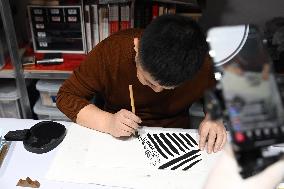
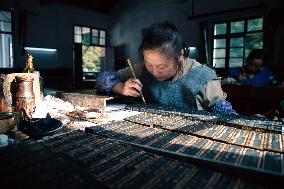
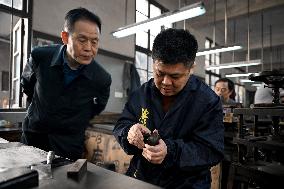
(231031) -- SHEXIAN COUNTY, Oct. 31, 2023 (Xinhua) -- A worker paints ink sticks at a workshop of the Ancient Hu Kaiwen Ink Factory in Shexian County, Huangshan City of east China's Anhui Province, Oct. 24, 2023. Shexian County, located in Huangshan City of east China's Anhui Province, is known as the "Capital of Ink" dating back to the Southern Tang Dynasty (937-975). After it was renamed Huizhou in 1121, the term "Huizhou Ink", or "Hui Mo" in Chinese, stands for high-quality ink product in China. Huizhou Ink, a type of paint usually applied in traditional Chinese calligraphy and brush painting, is mainly made of pine soot, tung oil soot or lacquer soot, and colloid, and mixed with more than a dozen precious ingredients such as musk, gold foil and pearl powder. Due to its high-standard making procedures, Huizhou Ink is lustrous black in colour, solid in quality, anti-tinting on paper, unsticky with brush, long-lasting with time, fragrant in smell and mothproof in storage. In June 2006, the making craft of Hu

  •  
(MASTER OF CRAFTS) CHINA-ANHUI-SHEXIAN COUNTY-HUIZHOU INK-INHERITOR (CN)

(MASTER OF CRAFTS) CHINA-ANHUI-SHEXIAN COUNTY-HUIZHOU INK-INHERITOR (CN)

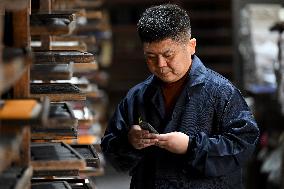
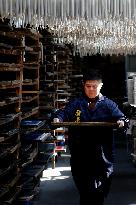
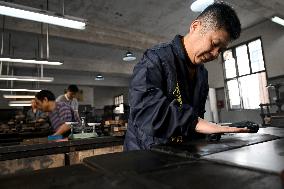
(231031) -- SHEXIAN COUNTY, Oct. 31, 2023 (Xinhua) -- Zhou Jian checks dried ink sticks at a workshop of the Ancient Hu Kaiwen Ink Factory in Shexian County, Huangshan City of east China's Anhui Province, Oct. 24, 2023. Shexian County, located in Huangshan City of east China's Anhui Province, is known as the "Capital of Ink" dating back to the Southern Tang Dynasty (937-975). After it was renamed Huizhou in 1121, the term "Huizhou Ink", or "Hui Mo" in Chinese, stands for high-quality ink product in China. Huizhou Ink, a type of paint usually applied in traditional Chinese calligraphy and brush painting, is mainly made of pine soot, tung oil soot or lacquer soot, and colloid, and mixed with more than a dozen precious ingredients such as musk, gold foil and pearl powder. Due to its high-standard making procedures, Huizhou Ink is lustrous black in colour, solid in quality, anti-tinting on paper, unsticky with brush, long-lasting with time, fragrant in smell and mothproof in storage. In June 2006, the making craf

  •  
(MASTER OF CRAFTS) CHINA-ANHUI-SHEXIAN COUNTY-HUIZHOU INK-INHERITOR (CN)

(MASTER OF CRAFTS) CHINA-ANHUI-SHEXIAN COUNTY-HUIZHOU INK-INHERITOR (CN)

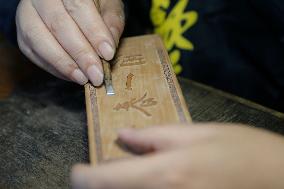
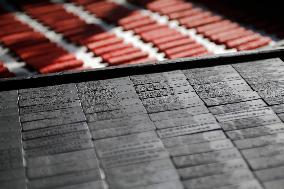
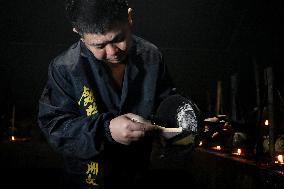
(231031) -- SHEXIAN COUNTY, Oct. 31, 2023 (Xinhua) -- Zhou Jian carves an ink mold at the Ancient Hu Kaiwen Ink Factory in Shexian County, Huangshan City of east China's Anhui Province, Oct. 24, 2023. Shexian County, located in Huangshan City of east China's Anhui Province, is known as the "Capital of Ink" dating back to the Southern Tang Dynasty (937-975). After it was renamed Huizhou in 1121, the term "Huizhou Ink", or "Hui Mo" in Chinese, stands for high-quality ink product in China. Huizhou Ink, a type of paint usually applied in traditional Chinese calligraphy and brush painting, is mainly made of pine soot, tung oil soot or lacquer soot, and colloid, and mixed with more than a dozen precious ingredients such as musk, gold foil and pearl powder. Due to its high-standard making procedures, Huizhou Ink is lustrous black in colour, solid in quality, anti-tinting on paper, unsticky with brush, long-lasting with time, fragrant in smell and mothproof in storage. In June 2006, the making craft of Huizhou Ink wa

  •  
(MASTER OF CRAFTS) CHINA-ANHUI-SHEXIAN COUNTY-HUIZHOU INK-INHERITOR (CN)

(MASTER OF CRAFTS) CHINA-ANHUI-SHEXIAN COUNTY-HUIZHOU INK-INHERITOR (CN)

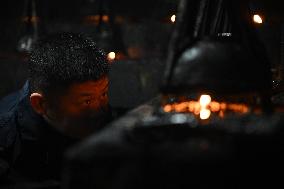
(231031) -- SHEXIAN COUNTY, Oct. 31, 2023 (Xinhua) -- Zhou Jian checks the collecting of tung oil soot at the Ancient Hu Kaiwen Ink Factory in Shexian County, Huangshan City of east China's Anhui Province, Oct. 25, 2023. Shexian County, located in Huangshan City of east China's Anhui Province, is known as the "Capital of Ink" dating back to the Southern Tang Dynasty (937-975). After it was renamed Huizhou in 1121, the term "Huizhou Ink", or "Hui Mo" in Chinese, stands for high-quality ink product in China. Huizhou Ink, a type of paint usually applied in traditional Chinese calligraphy and brush painting, is mainly made of pine soot, tung oil soot or lacquer soot, and colloid, and mixed with more than a dozen precious ingredients such as musk, gold foil and pearl powder. Due to its high-standard making procedures, Huizhou Ink is lustrous black in colour, solid in quality, anti-tinting on paper, unsticky with brush, long-lasting with time, fragrant in smell and mothproof in storage. In June 2006, the making cra

  •  
(MASTER OF CRAFTS) CHINA-ANHUI-SHEXIAN COUNTY-HUIZHOU INK-INHERITOR (CN)

(MASTER OF CRAFTS) CHINA-ANHUI-SHEXIAN COUNTY-HUIZHOU INK-INHERITOR (CN)

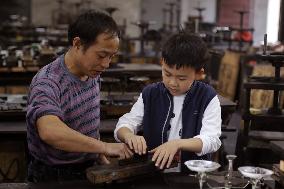
(231031) -- SHEXIAN COUNTY, Oct. 31, 2023 (Xinhua) -- Zhou Jian's son Zhou Mo (R) makes a ink stick under the guidance of a worker at a workshop of the Ancient Hu Kaiwen Ink Factory in Shexian County, Huangshan City of east China's Anhui Province, Oct. 24, 2023. Shexian County, located in Huangshan City of east China's Anhui Province, is known as the "Capital of Ink" dating back to the Southern Tang Dynasty (937-975). After it was renamed Huizhou in 1121, the term "Huizhou Ink", or "Hui Mo" in Chinese, stands for high-quality ink product in China. Huizhou Ink, a type of paint usually applied in traditional Chinese calligraphy and brush painting, is mainly made of pine soot, tung oil soot or lacquer soot, and colloid, and mixed with more than a dozen precious ingredients such as musk, gold foil and pearl powder. Due to its high-standard making procedures, Huizhou Ink is lustrous black in colour, solid in quality, anti-tinting on paper, unsticky with brush, long-lasting with time, fragrant in smell and mothproo

  •  
(MASTER OF CRAFTS) CHINA-ANHUI-SHEXIAN COUNTY-HUIZHOU INK-INHERITOR (CN)

(MASTER OF CRAFTS) CHINA-ANHUI-SHEXIAN COUNTY-HUIZHOU INK-INHERITOR (CN)

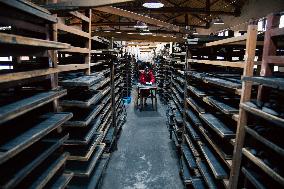
(231031) -- SHEXIAN COUNTY, Oct. 31, 2023 (Xinhua) -- Ink sticks are dried at a workshop of the Ancient Hu Kaiwen Ink Factory in Shexian County, Huangshan City of east China's Anhui Province, Oct. 24, 2023. Shexian County, located in Huangshan City of east China's Anhui Province, is known as the "Capital of Ink" dating back to the Southern Tang Dynasty (937-975). After it was renamed Huizhou in 1121, the term "Huizhou Ink", or "Hui Mo" in Chinese, stands for high-quality ink product in China. Huizhou Ink, a type of paint usually applied in traditional Chinese calligraphy and brush painting, is mainly made of pine soot, tung oil soot or lacquer soot, and colloid, and mixed with more than a dozen precious ingredients such as musk, gold foil and pearl powder. Due to its high-standard making procedures, Huizhou Ink is lustrous black in colour, solid in quality, anti-tinting on paper, unsticky with brush, long-lasting with time, fragrant in smell and mothproof in storage. In June 2006, the making craft of Huizhou

  •  
(MASTER OF CRAFTS) CHINA-ANHUI-SHEXIAN COUNTY-HUIZHOU INK-INHERITOR (CN)

(MASTER OF CRAFTS) CHINA-ANHUI-SHEXIAN COUNTY-HUIZHOU INK-INHERITOR (CN)

(231031) -- SHEXIAN COUNTY, Oct. 31, 2023 (Xinhua) -- Zhou Jian airs ink sticks at workshop of the Ancient Hu Kaiwen Ink Factory in Shexian County, Huangshan City of east China's Anhui Province, Oct. 24, 2023. Shexian County, located in Huangshan City of east China's Anhui Province, is known as the "Capital of Ink" dating back to the Southern Tang Dynasty (937-975). After it was renamed Huizhou in 1121, the term "Huizhou Ink", or "Hui Mo" in Chinese, stands for high-quality ink product in China. Huizhou Ink, a type of paint usually applied in traditional Chinese calligraphy and brush painting, is mainly made of pine soot, tung oil soot or lacquer soot, and colloid, and mixed with more than a dozen precious ingredients such as musk, gold foil and pearl powder. Due to its high-standard making procedures, Huizhou Ink is lustrous black in colour, solid in quality, anti-tinting on paper, unsticky with brush, long-lasting with time, fragrant in smell and mothproof in storage. In June 2006, the making craft of Huizh

  •  
(MASTER OF CRAFTS) CHINA-ANHUI-SHEXIAN COUNTY-HUIZHOU INK-INHERITOR (CN)

(MASTER OF CRAFTS) CHINA-ANHUI-SHEXIAN COUNTY-HUIZHOU INK-INHERITOR (CN)

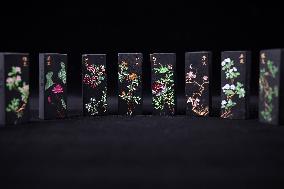
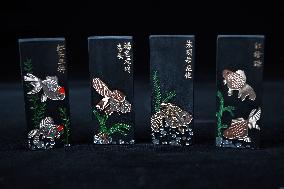
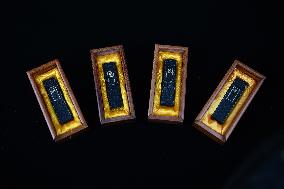
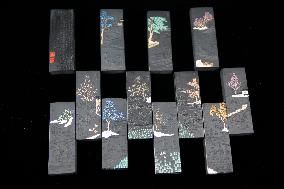
(231031) -- SHEXIAN COUNTY, Oct. 31, 2023 (Xinhua) -- Ink stick products are seen at a workshop of the Ancient Hu Kaiwen Ink Factory in Shexian County, Huangshan City of east China's Anhui Province, Oct. 24, 2023. Shexian County, located in Huangshan City of east China's Anhui Province, is known as the "Capital of Ink" dating back to the Southern Tang Dynasty (937-975). After it was renamed Huizhou in 1121, the term "Huizhou Ink", or "Hui Mo" in Chinese, stands for high-quality ink product in China. Huizhou Ink, a type of paint usually applied in traditional Chinese calligraphy and brush painting, is mainly made of pine soot, tung oil soot or lacquer soot, and colloid, and mixed with more than a dozen precious ingredients such as musk, gold foil and pearl powder. Due to its high-standard making procedures, Huizhou Ink is lustrous black in colour, solid in quality, anti-tinting on paper, unsticky with brush, long-lasting with time, fragrant in smell and mothproof in storage. In June 2006, the making craft of H

  •  
(MASTER OF CRAFTS) CHINA-ANHUI-SHEXIAN COUNTY-HUIZHOU INK-INHERITOR (CN)

(MASTER OF CRAFTS) CHINA-ANHUI-SHEXIAN COUNTY-HUIZHOU INK-INHERITOR (CN)

(231031) -- SHEXIAN COUNTY, Oct. 31, 2023 (Xinhua) -- Zhou Jian takes out an ink stick out of a mold at the Ancient Hu Kaiwen Ink Factory in Shexian County, Huangshan City of east China's Anhui Province, Oct. 24, 2023. Shexian County, located in Huangshan City of east China's Anhui Province, is known as the "Capital of Ink" dating back to the Southern Tang Dynasty (937-975). After it was renamed Huizhou in 1121, the term "Huizhou Ink", or "Hui Mo" in Chinese, stands for high-quality ink product in China. Huizhou Ink, a type of paint usually applied in traditional Chinese calligraphy and brush painting, is mainly made of pine soot, tung oil soot or lacquer soot, and colloid, and mixed with more than a dozen precious ingredients such as musk, gold foil and pearl powder. Due to its high-standard making procedures, Huizhou Ink is lustrous black in colour, solid in quality, anti-tinting on paper, unsticky with brush, long-lasting with time, fragrant in smell and mothproof in storage. In June 2006, the making craft

  •  
(MASTER OF CRAFTS) CHINA-ANHUI-SHEXIAN COUNTY-HUIZHOU INK-INHERITOR (CN)

(MASTER OF CRAFTS) CHINA-ANHUI-SHEXIAN COUNTY-HUIZHOU INK-INHERITOR (CN)

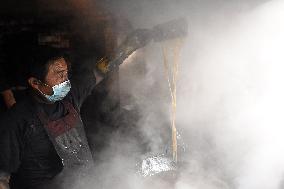
(231031) -- SHEXIAN COUNTY, Oct. 31, 2023 (Xinhua) -- A worker makes colloid at the Ancient Hu Kaiwen Ink Factory in Shexian County, Huangshan City of east China's Anhui Province, Oct. 25, 2023. Shexian County, located in Huangshan City of east China's Anhui Province, is known as the "Capital of Ink" dating back to the Southern Tang Dynasty (937-975). After it was renamed Huizhou in 1121, the term "Huizhou Ink", or "Hui Mo" in Chinese, stands for high-quality ink product in China. Huizhou Ink, a type of paint usually applied in traditional Chinese calligraphy and brush painting, is mainly made of pine soot, tung oil soot or lacquer soot, and colloid, and mixed with more than a dozen precious ingredients such as musk, gold foil and pearl powder. Due to its high-standard making procedures, Huizhou Ink is lustrous black in colour, solid in quality, anti-tinting on paper, unsticky with brush, long-lasting with time, fragrant in smell and mothproof in storage. In June 2006, the making craft of Huizhou Ink was list

  •  
(MASTER OF CRAFTS) CHINA-ANHUI-SHEXIAN COUNTY-HUIZHOU INK-INHERITOR (CN)

(MASTER OF CRAFTS) CHINA-ANHUI-SHEXIAN COUNTY-HUIZHOU INK-INHERITOR (CN)

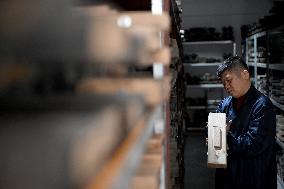
(231031) -- SHEXIAN COUNTY, Oct. 31, 2023 (Xinhua) -- Zhou Jian checks an ink mold at a storeroom of the Ancient Hu Kaiwen Ink Factory in Shexian County, Huangshan City of east China's Anhui Province, Oct. 24, 2023. Shexian County, located in Huangshan City of east China's Anhui Province, is known as the "Capital of Ink" dating back to the Southern Tang Dynasty (937-975). After it was renamed Huizhou in 1121, the term "Huizhou Ink", or "Hui Mo" in Chinese, stands for high-quality ink product in China. Huizhou Ink, a type of paint usually applied in traditional Chinese calligraphy and brush painting, is mainly made of pine soot, tung oil soot or lacquer soot, and colloid, and mixed with more than a dozen precious ingredients such as musk, gold foil and pearl powder. Due to its high-standard making procedures, Huizhou Ink is lustrous black in colour, solid in quality, anti-tinting on paper, unsticky with brush, long-lasting with time, fragrant in smell and mothproof in storage. In June 2006, the making craft of

  •  
(MASTER OF CRAFTS) CHINA-ANHUI-SHEXIAN COUNTY-HUIZHOU INK-INHERITOR (CN)

(MASTER OF CRAFTS) CHINA-ANHUI-SHEXIAN COUNTY-HUIZHOU INK-INHERITOR (CN)

(231031) -- SHEXIAN COUNTY, Oct. 31, 2023 (Xinhua) -- A worker hammers an ink cake at a workshop of the Ancient Hu Kaiwen Ink Factory in Shexian County, Huangshan City of east China's Anhui Province, Oct. 25, 2023. Shexian County, located in Huangshan City of east China's Anhui Province, is known as the "Capital of Ink" dating back to the Southern Tang Dynasty (937-975). After it was renamed Huizhou in 1121, the term "Huizhou Ink", or "Hui Mo" in Chinese, stands for high-quality ink product in China. Huizhou Ink, a type of paint usually applied in traditional Chinese calligraphy and brush painting, is mainly made of pine soot, tung oil soot or lacquer soot, and colloid, and mixed with more than a dozen precious ingredients such as musk, gold foil and pearl powder. Due to its high-standard making procedures, Huizhou Ink is lustrous black in colour, solid in quality, anti-tinting on paper, unsticky with brush, long-lasting with time, fragrant in smell and mothproof in storage. In June 2006, the making craft of

  •  
(MASTER OF CRAFTS) CHINA-ANHUI-SHEXIAN COUNTY-HUIZHOU INK-INHERITOR (CN)

(MASTER OF CRAFTS) CHINA-ANHUI-SHEXIAN COUNTY-HUIZHOU INK-INHERITOR (CN)

(231031) -- SHEXIAN COUNTY, Oct. 31, 2023 (Xinhua) -- Zhou Jian shows writings with Huizhou Ink products through live broadcasting in Shexian County, Huangshan City of east China's Anhui Province, Oct. 24, 2023. Shexian County, located in Huangshan City of east China's Anhui Province, is known as the "Capital of Ink" dating back to the Southern Tang Dynasty (937-975). After it was renamed Huizhou in 1121, the term "Huizhou Ink", or "Hui Mo" in Chinese, stands for high-quality ink product in China. Huizhou Ink, a type of paint usually applied in traditional Chinese calligraphy and brush painting, is mainly made of pine soot, tung oil soot or lacquer soot, and colloid, and mixed with more than a dozen precious ingredients such as musk, gold foil and pearl powder. Due to its high-standard making procedures, Huizhou Ink is lustrous black in colour, solid in quality, anti-tinting on paper, unsticky with brush, long-lasting with time, fragrant in smell and mothproof in storage. In June 2006, the making craft of Hui

  •  
(MASTER OF CRAFTS) CHINA-ANHUI-SHEXIAN COUNTY-HUIZHOU INK-INHERITOR (CN)

(MASTER OF CRAFTS) CHINA-ANHUI-SHEXIAN COUNTY-HUIZHOU INK-INHERITOR (CN)

(231031) -- SHEXIAN COUNTY, Oct. 31, 2023 (Xinhua) -- Zhou Jian kneads a piece of ink cake at the Ancient Hu Kaiwen Ink Factory in Shexian County, Huangshan City of east China's Anhui Province, Oct. 24, 2023. Shexian County, located in Huangshan City of east China's Anhui Province, is known as the "Capital of Ink" dating back to the Southern Tang Dynasty (937-975). After it was renamed Huizhou in 1121, the term "Huizhou Ink", or "Hui Mo" in Chinese, stands for high-quality ink product in China. Huizhou Ink, a type of paint usually applied in traditional Chinese calligraphy and brush painting, is mainly made of pine soot, tung oil soot or lacquer soot, and colloid, and mixed with more than a dozen precious ingredients such as musk, gold foil and pearl powder. Due to its high-standard making procedures, Huizhou Ink is lustrous black in colour, solid in quality, anti-tinting on paper, unsticky with brush, long-lasting with time, fragrant in smell and mothproof in storage. In June 2006, the making craft of Huizho

  •  
(MASTER OF CRAFTS) CHINA-ANHUI-SHEXIAN COUNTY-HUIZHOU INK-INHERITOR (CN)

(MASTER OF CRAFTS) CHINA-ANHUI-SHEXIAN COUNTY-HUIZHOU INK-INHERITOR (CN)

(231031) -- SHEXIAN COUNTY, Oct. 31, 2023 (Xinhua) -- Ink stick products are seen at a workshop of the Ancient Hu Kaiwen Ink Factory in Shexian County, Huangshan City of east China's Anhui Province, Oct. 24, 2023. Shexian County, located in Huangshan City of east China's Anhui Province, is known as the "Capital of Ink" dating back to the Southern Tang Dynasty (937-975). After it was renamed Huizhou in 1121, the term "Huizhou Ink", or "Hui Mo" in Chinese, stands for high-quality ink product in China. Huizhou Ink, a type of paint usually applied in traditional Chinese calligraphy and brush painting, is mainly made of pine soot, tung oil soot or lacquer soot, and colloid, and mixed with more than a dozen precious ingredients such as musk, gold foil and pearl powder. Due to its high-standard making procedures, Huizhou Ink is lustrous black in colour, solid in quality, anti-tinting on paper, unsticky with brush, long-lasting with time, fragrant in smell and mothproof in storage. In June 2006, the making craft of H

  •  
(MASTER OF CRAFTS) CHINA-ANHUI-SHEXIAN COUNTY-HUIZHOU INK-INHERITOR (CN)

(MASTER OF CRAFTS) CHINA-ANHUI-SHEXIAN COUNTY-HUIZHOU INK-INHERITOR (CN)

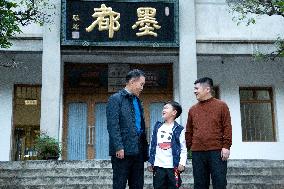
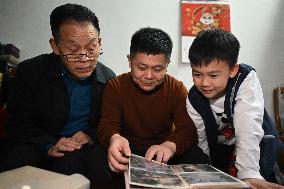
(231031) -- SHEXIAN COUNTY, Oct. 31, 2023 (Xinhua) -- Zhou Jian (R), his father Zhou Meihong (L) and his son Zhou Mo pose for a family photo at the Ancient Hu Kaiwen Ink Factory in Shexian County, Huangshan City of east China's Anhui Province, Oct. 24, 2023. Shexian County, located in Huangshan City of east China's Anhui Province, is known as the "Capital of Ink" dating back to the Southern Tang Dynasty (937-975). After it was renamed Huizhou in 1121, the term "Huizhou Ink", or "Hui Mo" in Chinese, stands for high-quality ink product in China. Huizhou Ink, a type of paint usually applied in traditional Chinese calligraphy and brush painting, is mainly made of pine soot, tung oil soot or lacquer soot, and colloid, and mixed with more than a dozen precious ingredients such as musk, gold foil and pearl powder. Due to its high-standard making procedures, Huizhou Ink is lustrous black in colour, solid in quality, anti-tinting on paper, unsticky with brush, long-lasting with time, fragrant in smell and mothproof in

  •  
(MASTER OF CRAFTS) CHINA-ANHUI-SHEXIAN COUNTY-HUIZHOU INK-INHERITOR (CN)

(MASTER OF CRAFTS) CHINA-ANHUI-SHEXIAN COUNTY-HUIZHOU INK-INHERITOR (CN)

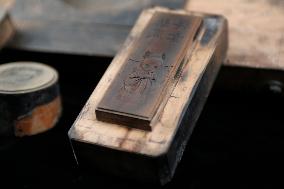
(231031) -- SHEXIAN COUNTY, Oct. 31, 2023 (Xinhua) -- This photo taken on Oct. 24, 2023 shows a mold for ink stick in Shexian County, Huangshan City of east China's Anhui Province. Shexian County, located in Huangshan City of east China's Anhui Province, is known as the "Capital of Ink" dating back to the Southern Tang Dynasty (937-975). After it was renamed Huizhou in 1121, the term "Huizhou Ink", or "Hui Mo" in Chinese, stands for high-quality ink product in China. Huizhou Ink, a type of paint usually applied in traditional Chinese calligraphy and brush painting, is mainly made of pine soot, tung oil soot or lacquer soot, and colloid, and mixed with more than a dozen precious ingredients such as musk, gold foil and pearl powder. Due to its high-standard making procedures, Huizhou Ink is lustrous black in colour, solid in quality, anti-tinting on paper, unsticky with brush, long-lasting with time, fragrant in smell and mothproof in storage. In June 2006, the making craft of Huizhou Ink was listed as one of t

  •  
(MASTER OF CRAFTS) CHINA-ANHUI-SHEXIAN COUNTY-HUIZHOU INK-INHERITOR (CN)

(MASTER OF CRAFTS) CHINA-ANHUI-SHEXIAN COUNTY-HUIZHOU INK-INHERITOR (CN)

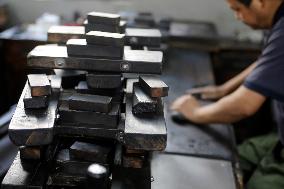
(231031) -- SHEXIAN COUNTY, Oct. 31, 2023 (Xinhua) -- A worker checks dried ink sticks at a workshop of the Ancient Hu Kaiwen Ink Factory in Shexian County, Huangshan City of east China's Anhui Province, Oct. 24, 2023. Shexian County, located in Huangshan City of east China's Anhui Province, is known as the "Capital of Ink" dating back to the Southern Tang Dynasty (937-975). After it was renamed Huizhou in 1121, the term "Huizhou Ink", or "Hui Mo" in Chinese, stands for high-quality ink product in China. Huizhou Ink, a type of paint usually applied in traditional Chinese calligraphy and brush painting, is mainly made of pine soot, tung oil soot or lacquer soot, and colloid, and mixed with more than a dozen precious ingredients such as musk, gold foil and pearl powder. Due to its high-standard making procedures, Huizhou Ink is lustrous black in colour, solid in quality, anti-tinting on paper, unsticky with brush, long-lasting with time, fragrant in smell and mothproof in storage. In June 2006, the making craft

  •  
(MASTER OF CRAFTS) CHINA-ANHUI-SHEXIAN COUNTY-HUIZHOU INK-INHERITOR (CN)

(MASTER OF CRAFTS) CHINA-ANHUI-SHEXIAN COUNTY-HUIZHOU INK-INHERITOR (CN)

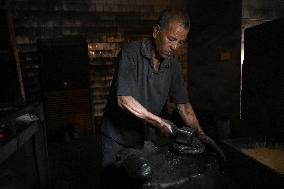
(231031) -- SHEXIAN COUNTY, Oct. 31, 2023 (Xinhua) -- A worker makes ink sticks at the Ancient Hu Kaiwen Ink Factory in Shexian County, Huangshan City of east China's Anhui Province, Oct. 24, 2023. Shexian County, located in Huangshan City of east China's Anhui Province, is known as the "Capital of Ink" dating back to the Southern Tang Dynasty (937-975). After it was renamed Huizhou in 1121, the term "Huizhou Ink", or "Hui Mo" in Chinese, stands for high-quality ink product in China. Huizhou Ink, a type of paint usually applied in traditional Chinese calligraphy and brush painting, is mainly made of pine soot, tung oil soot or lacquer soot, and colloid, and mixed with more than a dozen precious ingredients such as musk, gold foil and pearl powder. Due to its high-standard making procedures, Huizhou Ink is lustrous black in colour, solid in quality, anti-tinting on paper, unsticky with brush, long-lasting with time, fragrant in smell and mothproof in storage. In June 2006, the making craft of Huizhou Ink was l

  •  
(MASTER OF CRAFTS) CHINA-ANHUI-SHEXIAN COUNTY-HUIZHOU INK-INHERITOR (CN)

(MASTER OF CRAFTS) CHINA-ANHUI-SHEXIAN COUNTY-HUIZHOU INK-INHERITOR (CN)

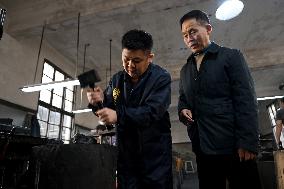
(231031) -- SHEXIAN COUNTY, Oct. 31, 2023 (Xinhua) -- Zhou Jian (L) hammers an ink cake, with his father, Zhou Meihong, on his side at a workshop of the Ancient Hu Kaiwen Ink Factory in Shexian County, Huangshan City of east China's Anhui Province, Oct. 24, 2023. Shexian County, located in Huangshan City of east China's Anhui Province, is known as the "Capital of Ink" dating back to the Southern Tang Dynasty (937-975). After it was renamed Huizhou in 1121, the term "Huizhou Ink", or "Hui Mo" in Chinese, stands for high-quality ink product in China. Huizhou Ink, a type of paint usually applied in traditional Chinese calligraphy and brush painting, is mainly made of pine soot, tung oil soot or lacquer soot, and colloid, and mixed with more than a dozen precious ingredients such as musk, gold foil and pearl powder. Due to its high-standard making procedures, Huizhou Ink is lustrous black in colour, solid in quality, anti-tinting on paper, unsticky with brush, long-lasting with time, fragrant in smell and mothpro

  •  
(MASTER OF CRAFTS) CHINA-ANHUI-SHEXIAN COUNTY-HUIZHOU INK-INHERITOR (CN)

(MASTER OF CRAFTS) CHINA-ANHUI-SHEXIAN COUNTY-HUIZHOU INK-INHERITOR (CN)

(231031) -- SHEXIAN COUNTY, Oct. 31, 2023 (Xinhua) -- Ink stick products are seen at a workshop of the Ancient Hu Kaiwen Ink Factory in Shexian County, Huangshan City of east China's Anhui Province, Oct. 24, 2023. Shexian County, located in Huangshan City of east China's Anhui Province, is known as the "Capital of Ink" dating back to the Southern Tang Dynasty (937-975). After it was renamed Huizhou in 1121, the term "Huizhou Ink", or "Hui Mo" in Chinese, stands for high-quality ink product in China. Huizhou Ink, a type of paint usually applied in traditional Chinese calligraphy and brush painting, is mainly made of pine soot, tung oil soot or lacquer soot, and colloid, and mixed with more than a dozen precious ingredients such as musk, gold foil and pearl powder. Due to its high-standard making procedures, Huizhou Ink is lustrous black in colour, solid in quality, anti-tinting on paper, unsticky with brush, long-lasting with time, fragrant in smell and mothproof in storage. In June 2006, the making craft of H

  •  
(MASTER OF CRAFTS) CHINA-ANHUI-SHEXIAN COUNTY-HUIZHOU INK-INHERITOR (CN)

(MASTER OF CRAFTS) CHINA-ANHUI-SHEXIAN COUNTY-HUIZHOU INK-INHERITOR (CN)

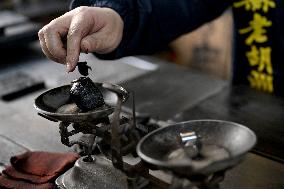
(231031) -- SHEXIAN COUNTY, Oct. 31, 2023 (Xinhua) -- Zhou Jian weights a piece of ink cake at the Ancient Hu Kaiwen Ink Factory in Shexian County, Huangshan City of east China's Anhui Province, Oct. 24, 2023. Shexian County, located in Huangshan City of east China's Anhui Province, is known as the "Capital of Ink" dating back to the Southern Tang Dynasty (937-975). After it was renamed Huizhou in 1121, the term "Huizhou Ink", or "Hui Mo" in Chinese, stands for high-quality ink product in China. Huizhou Ink, a type of paint usually applied in traditional Chinese calligraphy and brush painting, is mainly made of pine soot, tung oil soot or lacquer soot, and colloid, and mixed with more than a dozen precious ingredients such as musk, gold foil and pearl powder. Due to its high-standard making procedures, Huizhou Ink is lustrous black in colour, solid in quality, anti-tinting on paper, unsticky with brush, long-lasting with time, fragrant in smell and mothproof in storage. In June 2006, the making craft of Huizh

  •  
(MASTER OF CRAFTS) CHINA-ANHUI-SHEXIAN COUNTY-HUIZHOU INK-INHERITOR (CN)

(MASTER OF CRAFTS) CHINA-ANHUI-SHEXIAN COUNTY-HUIZHOU INK-INHERITOR (CN)

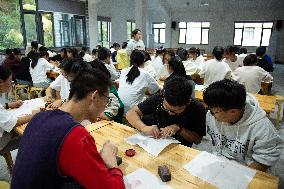
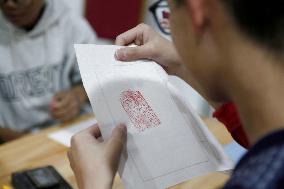
(231031) -- SHEXIAN COUNTY, Oct. 31, 2023 (Xinhua) -- Students experience rubbing of ink molds during an educational tourism project at the Ancient Hu Kaiwen Ink Factory in Shexian County, Huangshan City of east China's Anhui Province, Oct. 24, 2023. Shexian County, located in Huangshan City of east China's Anhui Province, is known as the "Capital of Ink" dating back to the Southern Tang Dynasty (937-975). After it was renamed Huizhou in 1121, the term "Huizhou Ink", or "Hui Mo" in Chinese, stands for high-quality ink product in China. Huizhou Ink, a type of paint usually applied in traditional Chinese calligraphy and brush painting, is mainly made of pine soot, tung oil soot or lacquer soot, and colloid, and mixed with more than a dozen precious ingredients such as musk, gold foil and pearl powder. Due to its high-standard making procedures, Huizhou Ink is lustrous black in colour, solid in quality, anti-tinting on paper, unsticky with brush, long-lasting with time, fragrant in smell and mothproof in storage

  •  
(MASTER OF CRAFTS) CHINA-ANHUI-SHEXIAN COUNTY-HUIZHOU INK-INHERITOR (CN)

(MASTER OF CRAFTS) CHINA-ANHUI-SHEXIAN COUNTY-HUIZHOU INK-INHERITOR (CN)

(231031) -- SHEXIAN COUNTY, Oct. 31, 2023 (Xinhua) -- Ink stick products are seen at a workshop of the Ancient Hu Kaiwen Ink Factory in Shexian County, Huangshan City of east China's Anhui Province, Oct. 24, 2023. Shexian County, located in Huangshan City of east China's Anhui Province, is known as the "Capital of Ink" dating back to the Southern Tang Dynasty (937-975). After it was renamed Huizhou in 1121, the term "Huizhou Ink", or "Hui Mo" in Chinese, stands for high-quality ink product in China. Huizhou Ink, a type of paint usually applied in traditional Chinese calligraphy and brush painting, is mainly made of pine soot, tung oil soot or lacquer soot, and colloid, and mixed with more than a dozen precious ingredients such as musk, gold foil and pearl powder. Due to its high-standard making procedures, Huizhou Ink is lustrous black in colour, solid in quality, anti-tinting on paper, unsticky with brush, long-lasting with time, fragrant in smell and mothproof in storage. In June 2006, the making craft of H

  •  
(MASTER OF CRAFTS) CHINA-ANHUI-SHEXIAN COUNTY-HUIZHOU INK-INHERITOR (CN)

(MASTER OF CRAFTS) CHINA-ANHUI-SHEXIAN COUNTY-HUIZHOU INK-INHERITOR (CN)

(231031) -- SHEXIAN COUNTY, Oct. 31, 2023 (Xinhua) -- A worker paints on ink sticks at a workshop of the Ancient Hu Kaiwen Ink Factory in Shexian County, Huangshan City of east China's Anhui Province, Oct. 24, 2023. Shexian County, located in Huangshan City of east China's Anhui Province, is known as the "Capital of Ink" dating back to the Southern Tang Dynasty (937-975). After it was renamed Huizhou in 1121, the term "Huizhou Ink", or "Hui Mo" in Chinese, stands for high-quality ink product in China. Huizhou Ink, a type of paint usually applied in traditional Chinese calligraphy and brush painting, is mainly made of pine soot, tung oil soot or lacquer soot, and colloid, and mixed with more than a dozen precious ingredients such as musk, gold foil and pearl powder. Due to its high-standard making procedures, Huizhou Ink is lustrous black in colour, solid in quality, anti-tinting on paper, unsticky with brush, long-lasting with time, fragrant in smell and mothproof in storage. In June 2006, the making craft of

  •  
(MASTER OF CRAFTS) CHINA-ANHUI-SHEXIAN COUNTY-HUIZHOU INK-INHERITOR (CN)

(MASTER OF CRAFTS) CHINA-ANHUI-SHEXIAN COUNTY-HUIZHOU INK-INHERITOR (CN)

(231031) -- SHEXIAN COUNTY, Oct. 31, 2023 (Xinhua) -- Zhou Jian (C) looks at a family album with his father Zhou Meihong (L) and his son Zhou Mo at the office of the Ancient Hu Kaiwen Ink Factory in Shexian County, Huangshan City of east China's Anhui Province, Oct. 24, 2023. Shexian County, located in Huangshan City of east China's Anhui Province, is known as the "Capital of Ink" dating back to the Southern Tang Dynasty (937-975). After it was renamed Huizhou in 1121, the term "Huizhou Ink", or "Hui Mo" in Chinese, stands for high-quality ink product in China. Huizhou Ink, a type of paint usually applied in traditional Chinese calligraphy and brush painting, is mainly made of pine soot, tung oil soot or lacquer soot, and colloid, and mixed with more than a dozen precious ingredients such as musk, gold foil and pearl powder. Due to its high-standard making procedures, Huizhou Ink is lustrous black in colour, solid in quality, anti-tinting on paper, unsticky with brush, long-lasting with time, fragrant in smel

  •  
(MASTER OF CRAFTS) CHINA-ANHUI-SHEXIAN COUNTY-HUIZHOU INK-INHERITOR (CN)

(MASTER OF CRAFTS) CHINA-ANHUI-SHEXIAN COUNTY-HUIZHOU INK-INHERITOR (CN)

(231031) -- SHEXIAN COUNTY, Oct. 31, 2023 (Xinhua) -- A student checks a rubbing of ink mold during an educational tourism project at the Ancient Hu Kaiwen Ink Factory in Shexian County, Huangshan City of east China's Anhui Province, Oct. 24, 2023. Shexian County, located in Huangshan City of east China's Anhui Province, is known as the "Capital of Ink" dating back to the Southern Tang Dynasty (937-975). After it was renamed Huizhou in 1121, the term "Huizhou Ink", or "Hui Mo" in Chinese, stands for high-quality ink product in China. Huizhou Ink, a type of paint usually applied in traditional Chinese calligraphy and brush painting, is mainly made of pine soot, tung oil soot or lacquer soot, and colloid, and mixed with more than a dozen precious ingredients such as musk, gold foil and pearl powder. Due to its high-standard making procedures, Huizhou Ink is lustrous black in colour, solid in quality, anti-tinting on paper, unsticky with brush, long-lasting with time, fragrant in smell and mothproof in storage.

  •  
(MASTER OF CRAFTS) CHINA-ANHUI-SHEXIAN COUNTY-HUIZHOU INK-INHERITOR (CN)

(MASTER OF CRAFTS) CHINA-ANHUI-SHEXIAN COUNTY-HUIZHOU INK-INHERITOR (CN)

(231031) -- SHEXIAN COUNTY, Oct. 31, 2023 (Xinhua) -- Zhou Jian collects tung oil soot from a bowl at a workshop of the Ancient Hu Kaiwen Ink Factory in Shexian County, Huangshan City of east China's Anhui Province, Oct. 25, 2023. Shexian County, located in Huangshan City of east China's Anhui Province, is known as the "Capital of Ink" dating back to the Southern Tang Dynasty (937-975). After it was renamed Huizhou in 1121, the term "Huizhou Ink", or "Hui Mo" in Chinese, stands for high-quality ink product in China. Huizhou Ink, a type of paint usually applied in traditional Chinese calligraphy and brush painting, is mainly made of pine soot, tung oil soot or lacquer soot, and colloid, and mixed with more than a dozen precious ingredients such as musk, gold foil and pearl powder. Due to its high-standard making procedures, Huizhou Ink is lustrous black in colour, solid in quality, anti-tinting on paper, unsticky with brush, long-lasting with time, fragrant in smell and mothproof in storage. In June 2006, the

  •  
(MASTER OF CRAFTS) CHINA-ANHUI-SHEXIAN COUNTY-HUIZHOU INK-INHERITOR (CN)

(MASTER OF CRAFTS) CHINA-ANHUI-SHEXIAN COUNTY-HUIZHOU INK-INHERITOR (CN)

(231031) -- SHEXIAN COUNTY, Oct. 31, 2023 (Xinhua) -- Zhou Jian (R) takes an ink stick out of a mold, with his father, Zhou Meihong, on his side at a workshop of the Ancient Hu Kaiwen Ink Factory in Shexian County, Huangshan City of east China's Anhui Province, Oct. 24, 2023. Shexian County, located in Huangshan City of east China's Anhui Province, is known as the "Capital of Ink" dating back to the Southern Tang Dynasty (937-975). After it was renamed Huizhou in 1121, the term "Huizhou Ink", or "Hui Mo" in Chinese, stands for high-quality ink product in China. Huizhou Ink, a type of paint usually applied in traditional Chinese calligraphy and brush painting, is mainly made of pine soot, tung oil soot or lacquer soot, and colloid, and mixed with more than a dozen precious ingredients such as musk, gold foil and pearl powder. Due to its high-standard making procedures, Huizhou Ink is lustrous black in colour, solid in quality, anti-tinting on paper, unsticky with brush, long-lasting with time, fragrant in smel

  •  
THE TINTING, TONING AND WASHING ROOM AT THE THOMAS H INCE ST

THE TINTING, TONING AND WASHING ROOM AT THE THOMAS H INCE ST

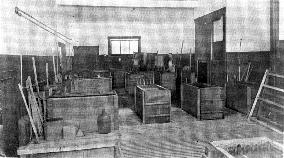
THE TINTING, TONING AND WASHING ROOM AT THE THOMAS H INCE STUDIOS LABORATORY. PICTURE FROM THE RONALD GRANT ARCHIVE MPP/180BK THE TINTING, TONING AND WASHING ROOM AT THE THOMAS H INCE STUDIOS LABORATORY. MPP/180BK

  •  
THE TINTING, TONING AND WASHING ROOM AT THE THOMAS H INCE ST

THE TINTING, TONING AND WASHING ROOM AT THE THOMAS H INCE ST

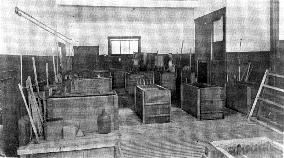
THE TINTING, TONING AND WASHING ROOM AT THE THOMAS H INCE STUDIOS LABORATORY. PICTURE FROM THE RONALD GRANT ARCHIVE MPP/180BK THE TINTING, TONING AND WASHING ROOM AT THE THOMAS H INCE STUDIOS LABORATORY. MPP/180BK

  •  
A distant view of the city of Kobe

A distant view of the city of Kobe

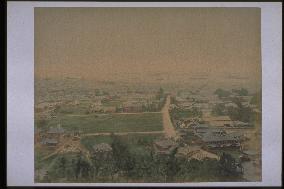
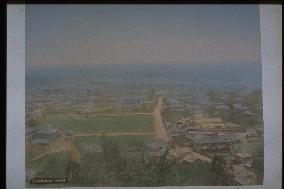
View of Kobe harbour from Mt. Suwa. Mid-Meiji Period. This is the same as photograph #4485, although the tinting of the buildings is different. The house surrounded by walls on the right of the main street running north-south is the residence of Kodera Yasujiro. The City of Kobe acquired this house in 1941 and named it Sorakuen. Yasujiro was a retainer of the Kuki family in the Sanda feudal domain. His first son, Kenkichi, became the first elected mayor of Kobe City in 1947.==Date:unknown, Place:Kobe, Photo:unknown, (Credit:Nagasaki University Library/Kyodo News Images) [Cabinet Number96‐46‐0]

  •  
Nishi Otani Entsu-kyo Bridge

Nishi Otani Entsu-kyo Bridge

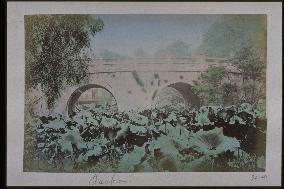
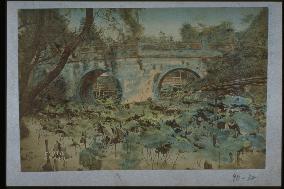
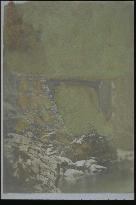
Enzu-kyo Bridge at Nishi Otani Temple, looking north-northeast from the southwestern edge of Kogetsu Pond. Made of stone, the bridge was built in 1865. Called Spectacles Bridge because of its shape, the bridge bustled with people who came here to view the red and white lotus flowers from the end of the Edo to the Meiji Period. There is a tea house on the other side of the bridge. The quality of the photo tinting is poor.==Date:unknown, Place:Kyoto, Photo:unknown, (Credit:Nagasaki University Library/Kyodo News Images) [Cabinet Number92‐20‐0]

  •  
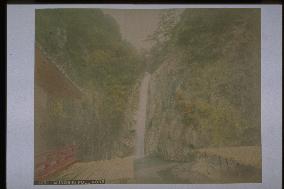
Nunobiki Falls

Nunobiki Falls

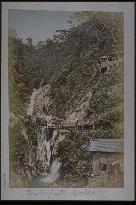
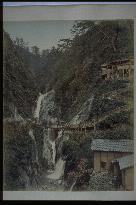
Medaki waterfall at Nunobiki Falls. The wooden bridge and teahouse have not yet been built, indicating that this photograph was taken in the first half of the Meiji Period. Although the tinting is different, this is the same as photographs #2807, #4481 and #4870. The rough tinting suggests that the photograph was produced in the latter half of the Meiji Period.==Date:unknown, Place:Kobe, Photo:unknown, (Credit:Nagasaki University Library/Kyodo News Images) [Cabinet Number92‐24‐0]

  •  
Nishi Otani Entsu-kyo Bridge

Nishi Otani Entsu-kyo Bridge

Enzu-kyo Bridge at Nishi Otani Temple, looking north from the southern edge of Kogetsu Pond. Made of stone, the bridge was built in 1865. Called Spectacles Bridge because of its shape, the bridge bustled with people who came here to view the red and white lotus flowers from the end of the Edo to the Meiji Period. There is a tea house on the other side of the bridge. The quality of the photo tinting is poor.==Date:unknown, Place:Kyoto, Photo:unknown, (Credit:Nagasaki University Library/Kyodo News Images) [Cabinet Number90‐32‐0]

  •  
A woman with rolled-up hair holding a pipe

A woman with rolled-up hair holding a pipe

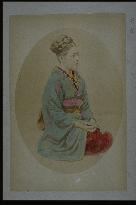
This was made from the same negative as photograph #3895, but the tinting shows the shoddy touch of an amateur.==Date:unknown, Place:unknown, Photo:unknown, (Credit:Nagasaki University Library/Kyodo News Images) [Cabinet Number90‐10‐0]

  •  
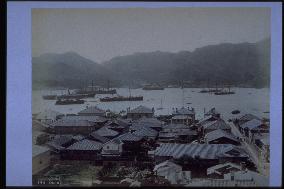
A distant view of the city of Kobe

A distant view of the city of Kobe

View of Kobe harbour from Mt. Suwa. Mid-Meiji Period. This is the same as photograph #4871, although the tinting of the buildings is different. The Kodera family residence is visible, surrounded by walls on the right of the main street running north-south. The area beyond the residence and to the left (east) is the present-day hub of the Hyogo Prefecture administration and site of both the Prefecture Office and Prefecture Police Headquarters. The photograph, taken about 20 years after the opening of Kobe port, shows the town expanding from the coast to the mountain side.==Date:unknown, Place:Kobe, Photo:unknown, (Credit:Nagasaki University Library/Kyodo News Images) [Cabinet Number88‐1‐0]

  •  
A tattooed man

A tattooed man

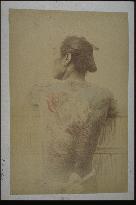
This photograph from the album by Kashima Seibei shows a naked tattooed man pouring sake in a cup in the bathroom. Tinting was done following the design on the subject's back. The colouring is rather poor.==Date:unknown, Place:unknown, Photo:Kajima Seibei, (Credit:Nagasaki University Library/Kyodo News Images) [Cabinet Number84‐16‐0]

  •  
Nunobiki Falls

Nunobiki Falls

Medaki waterfall, probably taken from the wooden bridge portrayed in photograph #2814 (Medaki Waterfall of Nunobiki) taken in the mid-Meiji Period. The rough tinting suggests that the photograph was produced in the latter half of the Meiji Period.==Date:unknown, Place:Kobe, Photo:unknown, (Credit:Nagasaki University Library/Kyodo News Images) [Cabinet Number79‐11‐0]

  •  
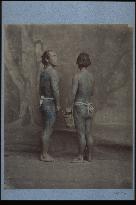
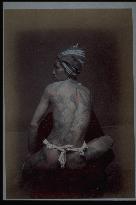
Tattooed men

Tattooed men

This is a photograph from the album 1876 by Stillfried and Andersen. Two tattooed men pose in front of a backdrop. The tinting of the tattoo seems faithful to the original design.==Date:unknown, Place:unknown, Photo:R. Stillfried, (Credit:Nagasaki University Library/Kyodo News Images) [Cabinet Number76‐30‐0]

  •  
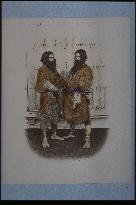
Ainu men

Ainu men

The clothing of the man on the left looks unnatural, especially the right elbow area (including designs). Later tinting may have caused this unnatural appearance. As for the man on the right as well, it is impossible to see what is hanging from his waist. They all wear gaiters. The wooden doors (wall) are the same as those in photograph #4064.==Date:unknown, Place:Hokkaido, Photo:R. Stillfried, (Credit:Nagasaki University Library/Kyodo News Images) [Cabinet Number76‐26‐0]

  •  
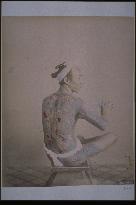
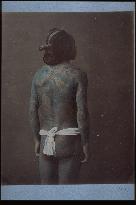
A tattooed man

A tattooed man

This is a photograph from the 1876 Stillfried and Andersen album. The tinting seems to have been done following the design on the subject's back.==Date:unknown, Place:unknown, Photo:R. Stillfried, (Credit:Nagasaki University Library/Kyodo News Images) [Cabinet Number76‐29‐0]

  •  
Western-style buildings in the Oura foreign settlement

Western-style buildings in the Oura foreign settlement

This photo captures the back of trading company buildings and consulates along Oura coast street in the mid Meiji period. The street on the right is paved with stones and a rickshaw, a typical mode of transportation, is parked. A number of commercial ships and war vessels are anchored in the port illustrating Nagasaki Port’s golden trade period. This photo is a good example of the clear, high quality photo tinting techniques of the time.==Date:Late Meiji (1898-1912), Place:Nagasaki, Photo:unknown, (Credit:Nagasaki University Library/Kyodo News Images) [Cabinet Number75‐1‐0]

  •  
A tattooed man

A tattooed man

This photograph from a small Yokohama album shows a body tattoo. The tinting was done later, but seems to follow the original design carefully.==Date:unknown, Place:unknown, Photo:unknown, (Credit:Nagasaki University Library/Kyodo News Images) [Cabinet Number69‐49‐0]

  •  
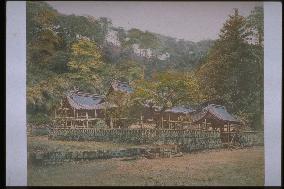
Gongen Shrine,Hakone

Gongen Shrine,Hakone

This is the main hall of Hakone Shrine. Timbering is surruounding the shrine. Since there is no record of restoration during the Meiji Period, repainting was being done at this time. In 1884, the Department of Internal Affairs had given 300 yen for the purpose of preserving the old temples and shrines and the timing could be the same. This is the same photo as catalog #139, but with different tinting.==Date:unknown, Place:Hakone, Photo:unknown, (Credit:Nagasaki University Library/Kyodo News Images) [Cabinet Number64‐50‐0]

  •  
Nunobiki Falls

Nunobiki Falls

This is Metaki Waterfall of Nunobiki. Nunobiki Waterfalls located in the upstream of Ikuta River consist of Otaki, Meotodaki, Tsuzumigadaki. Since the wooden bridge which surrounds the river and the teahouse were not built yet, this photograph is assumed to have been taken in the first half of the Meiji Period. Although the tinting is different, this is the same as the photographs #4481, 4682, and 4870.==Date:unknown, Place:Kobe, Photo:unknown, (Credit:Nagasaki University Library/Kyodo News Images) [Cabinet Number56‐15‐0]

  •  
A tattooed man

A tattooed man

This photograph from a small Yokohama album by Ogawa Kazumasa shows a tattooed man leaning against the wall. The design was coloured in at the time of tinting, following the design on the skin. This is the same as photograph #3964.==Date:unknown, Place:unknown, Photo:unknown, (Credit:Nagasaki University Library/Kyodo News Images) [Cabinet Number50‐41‐0]

  •  
Colouring pictures

Colouring pictures

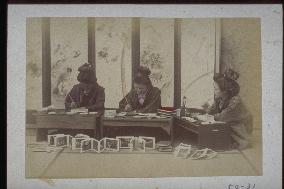
This is a very rare shot of women tinting photographs. This particular photograph comes from a small Yokohama Album. The three women are colouring photographs at desks. The finished work is displayed in front of the desks.==Date:unknown, Place:unknown, Photo:unknown, (Credit:Nagasaki University Library/Kyodo News Images) [Cabinet Number50‐31‐0]

  •  
Hozu River

Hozu River

Rock formations seen from a boat going down Hozu River. Hozu Gorge, also called Arashi Gorge, is a 13km stretch from around Hozu Bridge in Kameoka to Togetsu Bridge at Arashiyama. This is a scenic point where rapids and unusual rock formations can be enjoyed. Tributaries such as Kiyotaki River flow into the V-shaped gorge at an altitude of 400 meters. The upper part of the photograph is unclear because of poor tinting work.==Date:unknown, Place:Kyoto, Photo:unknown, (Credit:Nagasaki University Library/Kyodo News Images) [Cabinet Number46‐101‐0]

  •  
Cherry trees at Suwa Park

Cherry trees at Suwa Park

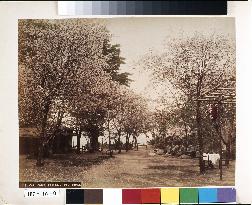
The west side of Suwa Park is viewed from near the fountain around 1895. The cherry blossoms in full bloom are depicted with bright tinting. This is said to be the first Western-style fountain built in Japan. The cherry trees inside the fence seems to be the ganjitsu-sakura species. This is a soothing scene of Suwa Park in the mid-Meiji Period.==Date:unknown, Place:Nagasaki, Photo:unknown, (Credit:Nagasaki University Library/Kyodo News Images) [Cabinet Number107‐10‐0]

  • Main
  • Top
  • Editorial
  • Creative
  • About Us
  • About ILG
  • Terms of use
  • Company
  • BEHIND
  • Price List
  • Single Plan
  • Monthly Plan
  • Services
  • Shooting
  • Rights Clearance
  • Support
  • FAQ
  • How To Buy
  • Contact Us
  • Become a Partner

© KYODO NEWS IMAGES INC

All Rights Reserved.

  • Editorial
  • Olympics
  • News
  • Sports
  • Japan
  • Tech
  • Royal
  • Disaster
  • NorthKorea
  • Old Japan
  • SNS
  • Creative
  • Food
  • Japan
  • Landscape
  • Animal
  • Popular
  • #Ukraine
  • #Thailand
  • #coronavirus
  • #N. Korea
  • #China
  • #Russia
  • #Ukraine
  • #Thailand
  • #coronavirus
  • #N. Korea
  • #China
  • #Russia
  • Food
  • Japan
  • Landscape
  • Animal
  • Olympics
  • News
  • Sports
  • Japan
  • Tech
  • Royal
  • Disaster
  • NorthKorea
  • Old Japan
  • SNS