•  
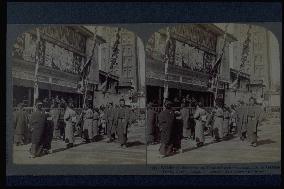
Asakusa Tower and theatres

Asakusa Tower and theatres

Egawa Taiseikan, famous for its girls doing acrobatics on balance balls. Some of the girls are looking out onto the street. Formerly rice paddies owned by Sensoji Temple, the Asakusa Sixth District was filled in with soil from the digging of Oike in 1883 and became the largest entertainment district in Japan after the mid-Meiji Period. The tower in the background is Ryounkaku, also called Asakusa Junikai (Twelve Stories). An introduction to the tower is written on the white signboard to the right. This stereograph dates from 1904.==Date:1904, Place:Tokyo, Photo:Underwood, (Credit:Nagasaki University Library/Kyodo News Images) [Cabinet Number97‐68‐0]

  •  
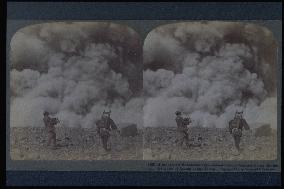
Eruption of Mt. Asama

Eruption of Mt. Asama

Mt. Asama is a three-layered composite volcano. This photograph captures a researcher taking shots of the smoke and his assistant at the edge of the mouth of Mt. Kamayama (2568m), the central crater. Official record keeping of Mt. Asama eruptions started only after 1886. This photograph was taken in 1904, during a lull in the mid-Meiji Period (1894-1908) when volcanic activity was relatively minor. ==Date:1904, Place:Nagano, Photo:Underwood, (Credit:Nagasaki University Library/Kyodo News Images) [Cabinet Number97‐61‐0]

  •  
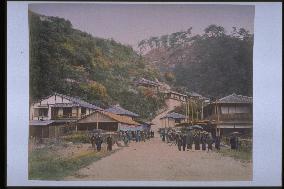
The entrance to Mt. Nunobiki

The entrance to Mt. Nunobiki

The start of the trail to Nunobiki Falls taken in mid-Meiji Period. The hill on the right is Mt. Isago. Ikuta River runs between the two hills. The Medaki (Female Waterfall) is located at the top of the path to the left. This is the same as photograph #2821, only tinted differently. The composition featuring people posing in the midst of famous scenery as if for a commemorative photograph is typical of Kusakabe Kinbei.==Date:about 1885, Place:Kobe, Photo:Kusakabe Kinbei, (Credit:Nagasaki University Library/Kyodo News Images) [Cabinet Number96‐68‐0]

  •  
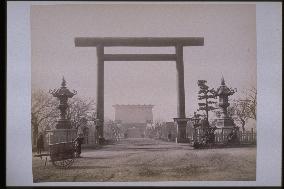
The torii gate of Yasukuni Shrine

The torii gate of Yasukuni Shrine

The bronze Otorii was erected in 1887 after the old wooden torii built in 1873 was removed. The lanterns on both sides of the gate were donated by the police and called the Police Department Golden Lanterns. The building in the centre is the main hall unveiled on May 19, 1872. Mid-Meiji Period.==Date:unknown, Place:Tokyo, Photo:unknown, (Credit:Nagasaki University Library/Kyodo News Images) [Cabinet Number96‐52‐0]

  •  
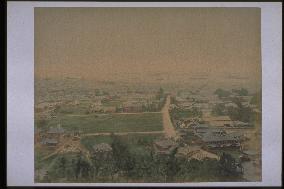
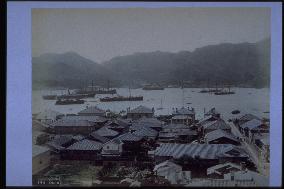
A distant view of the city of Kobe

A distant view of the city of Kobe

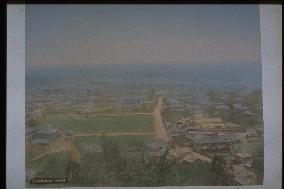
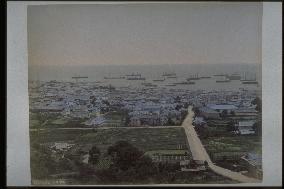
View of Kobe harbour from Mt. Suwa. Mid-Meiji Period. This is the same as photograph #4485, although the tinting of the buildings is different. The house surrounded by walls on the right of the main street running north-south is the residence of Kodera Yasujiro. The City of Kobe acquired this house in 1941 and named it Sorakuen. Yasujiro was a retainer of the Kuki family in the Sanda feudal domain. His first son, Kenkichi, became the first elected mayor of Kobe City in 1947.==Date:unknown, Place:Kobe, Photo:unknown, (Credit:Nagasaki University Library/Kyodo News Images) [Cabinet Number96‐46‐0]

  •  
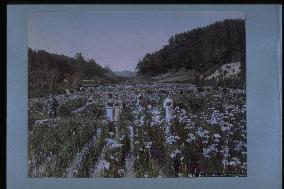
The Iris Garden,Isogo

The Iris Garden,Isogo

Growing flowers to be shipped to central Tokyo became popular in Isoko, Okamura, and Tomioka from mid-Meiji Period on and some of the flowers were exported. Isoko was famous from ancient times for its flower production, including the Sugita plum grove, but the iris garden at Masaka in Yokohama became a popular spot for locals and visitors from around the middle of the Meiji Period.==Date:unknown, Place:Yokohama, Photo:unknown, (Credit:Nagasaki University Library/Kyodo News Images) [Cabinet Number96‐47‐0]

  •  
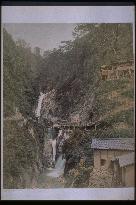
Nunobiki Falls

Nunobiki Falls

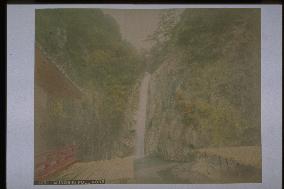
Medaki waterfall at Nunobiki Falls, taken sometime between the early and mid-Meiji Period. Although it is tinted differently, this is the same as photograph #2807, #4481 and #4682. The flow from Odaki to Medaki turns into the Shin Ikuta River and eventually pours into the sea. Many water mills for polishing rice were located downstream from this area.==Date:unknown, Place:Kobe, Photo:unknown, (Credit:Nagasaki University Library/Kyodo News Images) [Cabinet Number96‐45‐0]

  •  
Himeji Castle

Himeji Castle

Himeji Castle (Himeji City, Hyogo Prefecture, National Treasure, also know as Shirasagi [White Heron] Castle) is viewed from the southeast. Mid-Meiji Period. This five-level seven-story donjon was built after the old three-story donjon built by Toyotomi Hideyoshi was demolished. Himeji Castle showcases the spectacular architecture of a modern Japanese castle It became Japan's first World Heritage Site in 1993.==Date:unknown, Place:Himeji, Photo:unknown, (Credit:Nagasaki University Library/Kyodo News Images) [Cabinet Number93‐35‐0]

  •  
Oura waterfront street

Oura waterfront street

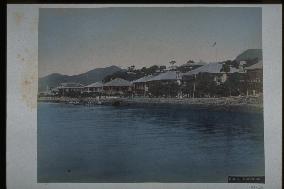
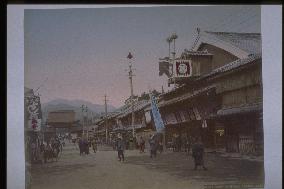
This is the Oura Bund around the mid-Meiji period. The second building from the right is Oura No. 10, the home of the Nagasaki Club, a social place for foreign residents at the time. The electric pole in front of the building was installed by Nagasaki Electric Light Company after 1893. The hill behind the buildings is Higashiyamate. Russel Hall (the main hall of Kwassui Gakuen School), built in 1882, is visible. ==Date:unknown, Place:Nagasaki, Photo:unknown, (Credit:Nagasaki University Library/Kyodo News Images)

  •  
Niju-bashi Bridge,the Imperial Palace

Niju-bashi Bridge,the Imperial Palace

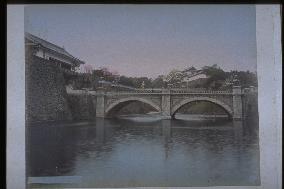
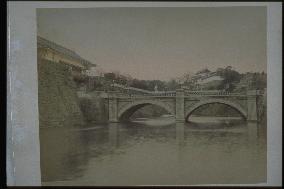
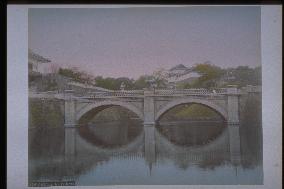
Kakumon Bridge spanning the inner moat (Nijubashi Moat) is said to have been built during the Kansei Period (1789-1801). During the Edo and Meiji Periods, the bridge in the foreground was called Nishinomaru Ote-bashi and the one behind it Nishinomaru Shimojo-bashi. The names currently used by the Imperial House Agency are Imperial Palace Main Gate Stone Bridge and Imperial Palace Main Gate Iron Bridge, respectively. Since 1948, commoners have been allowed to cross these bridges on January 2 and on the Emperor's birthday. Mid-Meiji Period.==Date:unknown, Place:Tokyo, Photo:unknown, (Credit:Nagasaki University Library/Kyodo News Images) [Cabinet Number88‐36‐0]

  •  
Autumn tints of Takinogawa, Oji

Autumn tints of Takinogawa, Oji

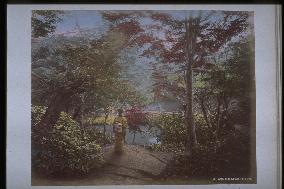
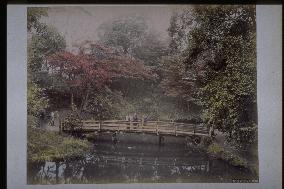
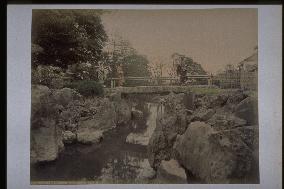
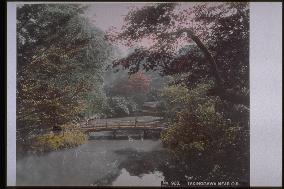
This seems to be Otonashi River (Shakujii River near Kongoji, the autumn colours temple. A bridge with a romantic atmosphere is said to have spanned a bend in the river. There was a bridge with a pleasant atmosphere. The deity Benzaiten was enshrined in a hollow in the rock near the bridge. A teahouse once stood on the hill. The river merges into Sumida River (formerly Arakawa), which flows northeast. Taken in the mid-Meiji Period.==Date:unknown, Place:Tokyo, Photo:unknown, (Credit:Nagasaki University Library/Kyodo News Images) [Cabinet Number88‐35‐0]

  •  
A distant view of the city of Kobe

A distant view of the city of Kobe

View of Kobe harbour from Mt. Suwa. Mid-Meiji Period. This is the same as photograph #4871, although the tinting of the buildings is different. The Kodera family residence is visible, surrounded by walls on the right of the main street running north-south. The area beyond the residence and to the left (east) is the present-day hub of the Hyogo Prefecture administration and site of both the Prefecture Office and Prefecture Police Headquarters. The photograph, taken about 20 years after the opening of Kobe port, shows the town expanding from the coast to the mountain side.==Date:unknown, Place:Kobe, Photo:unknown, (Credit:Nagasaki University Library/Kyodo News Images) [Cabinet Number88‐1‐0]

  •  
A distant view of the city of Kobe

A distant view of the city of Kobe

View of Kobe harbour from Mt. Suwa (present-day Chuo Ward). Mid-Meiji Period. This is a tinted version of photograph #2823. The octagonal building on the left is the Hyogo Prefecture Council Hall built in 1882. The iron pier for foreign vessels (built in 1884) is visible further down to the south. On the right of the north-south street is the Kodera residence and its garden under construction (present-day Sorakuen).==Date:unknown, Place:Kobe, Photo:unknown, (Credit:Nagasaki University Library/Kyodo News Images) [Cabinet Number87‐46‐0]

  •  
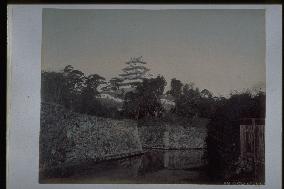
Osaka Castle

Osaka Castle

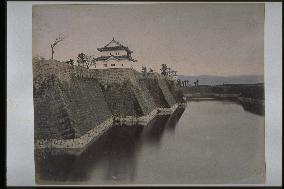
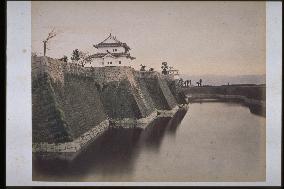
Rokuban Yagura and Sanban Yagura (No.6 and No.3 watchtowers) on the southern outer moat of Osaka Castle. The castle was studded with watchtowers, such as Inui Yagura, Fushimi Yagura and the No.1 through No.7 corner watchtowers. However, only No. 6 and No. 1 exist today. Mid-Meiji Period.==Date:1872, Place:Osaka, Photo:Uchida Kuichi, (Credit:Nagasaki University Library/Kyodo News Images) [Cabinet Number87‐44‐0]

  •  
Niju-bashi Bridge,the Imperial Palace

Niju-bashi Bridge,the Imperial Palace

Kakumon Bridge spanning the inner moat (Nijubashi Moat) is said to have been built during the Kansei Period (1789-1801). During the Edo and Meiji Periods, the bridge in the foreground was called Nishinomaru Ote-bashi and the one behind it Nishinomaru Shimojo-bashi. The names currently used by the Imperial House Agency are Imperial Palace Main Gate Stone Bridge and Imperial Palace Main Gate Iron Bridge, respectively. Since 1948, commoners have been allowed to cross these bridges on January 2 and on the Emperor's birthday. Mid-Meiji Period.==Date:unknown, Place:Tokyo, Photo:unknown, (Credit:Nagasaki University Library/Kyodo News Images) [Cabinet Number87‐1‐0]

  •  
The Fujimi Watchtower and the moat,the Imperial Palace

The Fujimi Watchtower and the moat,the Imperial Palace

Today, the first thing to greet the eyes of people heading to the Imperial Palace from Tokyo Station is the two-story watchtower. The one on the right is named Sakurada Tatsumi Yagura. The gate in the centre is Kikyo-mon. The three-story watchtower on the left is Fujimi Sanju Yagura. The moat is Kikyo-bori. The last vestiges of Edo Castle remain here, and this spot is used frequently on TV history programs. The buildings were destroyed by the Great Kanto Earthquake of 1923 and rebuilt around 1927. Mid-Meiji Period.==Date:unknown, Place:Tokyo, Photo:unknown, (Credit:Nagasaki University Library/Kyodo News Images) [Cabinet Number87‐2‐0]

  •  
Autumn tints of Takinogawa, Oji

Autumn tints of Takinogawa, Oji

This bridge appears many times in photographs of Takinogawa taken during the Meiji Period. The former Takinogawa Village was located west of Mt. Asuka. The groves of maple trees where people enjoyed the autumn colours centered around Kongoji, which was also called the autumn colours temple (present-day Takinogawa 3-chome, Kita Ward). People enjoyed the cherry blossoms at Mt. Asuka in spring and the colourful leaves of Takinogawa in autumn. Mid-Meiji Period.==Date:unknown, Place:Tokyo, Photo:unknown, (Credit:Nagasaki University Library/Kyodo News Images) [Cabinet Number85‐13‐0]

  •  
Satake Garden,Mukojima

Satake Garden,Mukojima

Called Koyoen, the garden of the Akita Clan Satake family opened to the public in the mid-Meiji Period and gained fame as one of the most beautiful gardens of the former Edo. However, in 1903 it became the possession of Sapporo Brewery Company, which established its Azuma-bashi factory nearby and used the remainder of the garden as a beer garden where customers could enjoy the product of the brewery. In 1906, the facility became the Dai Nippon Brewery Company Azuma Factory, and the garden disappeared in the wake of factory expansions during the Taisho Period (1912-1926) and the Great Kanto Earthquake of 1923. Today, a few trees and an explanation panel next to the Sumida Ward Hall are the only reminders of the former garden.==Date:unknown, Place:Tokyo, Photo:unknown, (Credit:Nagasaki University Library/Kyodo News Images) [Cabinet Number85‐9‐0]

  •  
Woman dancing to musical instraments

Woman dancing to musical instraments

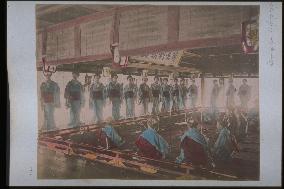
This is a so-odori or all-geisha singing and dancing performance. The women wear the same costume. Derived from Edo era kabuki dancing, this is a Japanese version of the synchronized dancing of the mid-Meiji Period. From around this time Western music and dancing was becoming popular. This popularization brought the birth of female opera companies like Takarazuka and Shochiku .==Date:unknown, Place:unknown, Photo:unknown, (Credit:Nagasaki University Library/Kyodo News Images) [Cabinet Number83‐2‐0]

  •  
Lake Ashi

Lake Ashi

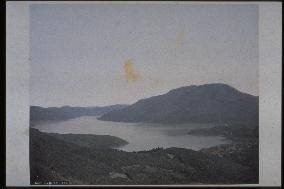
Viewing northwest from Mt. Kurakake. This photo was taken after 1886, as Hakone Imperial Villa is visible on top of the mountain of Dogashima Island. It appears the date of the photo is later than mid-Meiji, as more houses are seen in Hakone than in catalogue #2972. The mountains at the back right are Momagadake and Kamiyama. The peninsula on the left is Mt. Hatabiki.==Date:unknown, Place:Hakone, Photo:A. Farsari, (Credit:Nagasaki University Library/Kyodo News Images) [Cabinet Number82‐26‐0]

  •  
Nunobiki Falls

Nunobiki Falls

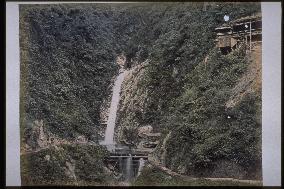
Medaki waterfall at Nunobiki Falls, taken around the same time as photographs #2814 and 2827 (Medaki Waterfall of Nunobiki). The presence of the wooden bridge over the river and the teahouse and the absence of a water supply pump suggest that this was taken on the mid-Meiji Period. It seems to be a scene in summer, when many visitors came to enjoy the cool air.==Date:unknown, Place:Kobe, Photo:A. Farsari, (Credit:Nagasaki University Library/Kyodo News Images) [Cabinet Number82‐8‐0]

  •  
Torii,Suwa Shrine

Torii,Suwa Shrine

This hand-tinted photograph taken around 1887 depicts the view of Suwa Shinto Shrine from the Ninotorii (second torii gate) inside the Great Torii Gate. The Donko Teahouse is visible on the right. The Western-style building on the approach is indicative of the tide of modernization in the mid-Meiji Period.==Date:unknown, Place:Nagasaki, Photo:A. Farsari, (Credit:Nagasaki University Library/Kyodo News Images) [Cabinet Number81‐34‐0]

  •  
Minatogawa Shrine

Minatogawa Shrine

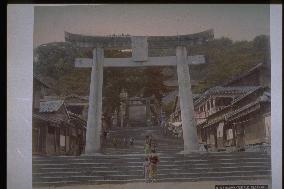
The main gate of Minatogawa Shinto Shrine seen from what is now Kobe Station, the starting point of the Tokaido Line in Chuo Ward. Probably taken in the mid-Meiji Period. The theater on the right is Daikoku-za, renovated in 1890. An ultra-modern lamp is installed at the front. This area was formerly an entertainment quarter bristling with shacks for plays, musume gidayu, acrobats, restaurants and so on.==Date:unknown, Place:Kobe, Photo:A. Farsari, (Credit:Nagasaki University Library/Kyodo News Images) [Cabinet Number81‐32‐0]

  •  
Niju-bashi Bridge,the Imperial Palace

Niju-bashi Bridge,the Imperial Palace

The gate on the left, called Nishinomaru Ote-mon during the Edo Period, became the main gate of the Imperial Palace in 1889 after the construction of the new palace the previous year. The first gate, Korai-mon, in front of the main gate was later removed and only the Watari Yagura-mon exists today. Mid-Meiji Period.==Date:unknown, Place:Tokyo, Photo:A. Farsari, (Credit:Nagasaki University Library/Kyodo News Images) [Cabinet Number81‐17‐0]

  •  
Kintai-kyo Bridge

Kintai-kyo Bridge

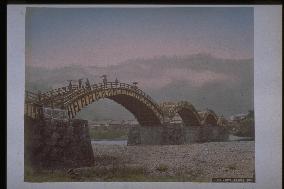
Kintai Bridge was built in 1673 by Kikkawa Hiroyoshi, the third lord of Iwakuni Domain. It is said that Kodama Kurohemon designed the bridge. The bridge is a five-arched wooden structure. The bridge has been repaired about ten times in the past. Mid-Meiji Period. Hand-tinted.==Date:unknown, Place:Iwakuni, Photo:A. Farsari, (Credit:Nagasaki University Library/Kyodo News Images) [Cabinet Number81‐29‐0]

  •  
Autumn tints of Takinogawa, Oji

Autumn tints of Takinogawa, Oji

The 8th Shogun, Tokugawa Yoshimune, visited this area in 1720-21 and was pleased to find that the Oji Gongen Shrine and the name of the Otonashi River originated in his home province, Kishu. As a result he ordered the planting of Yoshino cherry trees at Mt. Asuka and maple trees along Takinogawa to provide autumn colours. Consequently, the Oji area became a popular tourist spot for people from Edo. Taken in the mid-Meiji Period.==Date:unknown, Place:Tokyo, Photo:unknown, (Credit:Nagasaki University Library/Kyodo News Images) [Cabinet Number80‐34‐0]

  •  
Nunobiki Falls

Nunobiki Falls

Medaki waterfall, probably taken from the wooden bridge portrayed in photograph #2814 (Medaki Waterfall of Nunobiki) taken in the mid-Meiji Period. The rough tinting suggests that the photograph was produced in the latter half of the Meiji Period.==Date:unknown, Place:Kobe, Photo:unknown, (Credit:Nagasaki University Library/Kyodo News Images) [Cabinet Number79‐11‐0]

  •  
Arima Spa

Arima Spa

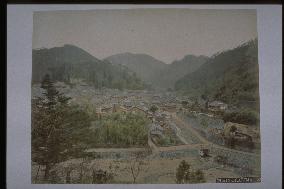
View of the ancient Arima Spa, taken from the north looking south. Visitors crossed Taikobashi Bridge, visible in the background, and proceeded to the left (east) to the bath houses (present-day Kin-no-yu). Zenpukuji, a temple of the Soto Sect of Zen Buddhism, is on the right. Taikobashi Bridge was replaced with an iron bridge in 1891, indicating that this photograph was taken before that year, probably in the mid-Meiji Period. Present-day Kita Ward.==Date:unknown, Place:Kobe, Photo:Tamamura Kozaburo, (Credit:Nagasaki University Library/Kyodo News Images) [Cabinet Number79‐12‐0]

  •  
Waterfront of the Kobe foreign settlement

Waterfront of the Kobe foreign settlement

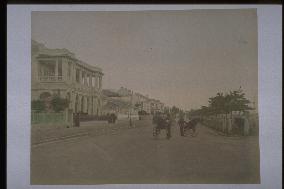
View of the waterfront street in the foreign settlement (present-day Chuo Ward), looking from the western edge facing east in the mid-Meiji Period. The building on the left is the Kobe branch of Hong Kong and Shanghai Banking Corporation. Trading companies, banks and consulates line the street, revealing the port in its heyday. On the right is a promenade where foreigners enjoyed strolling.==Date:unknown, Place:Kobe, Photo:unknown, (Credit:Nagasaki University Library/Kyodo News Images) [Cabinet Number79‐9‐0]

  •  
Hairdressing

Hairdressing

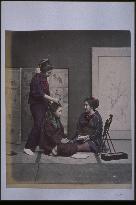
The woman is having her hair done in momoware style, which gained popularity among young women during the mid-Meiji Period. The momoware hairstyle is created by binding the hair up high, then parting it down the middle into two separate halves.==Date:unknown, Place:unknown, Photo:R. Stillfried, (Credit:Nagasaki University Library/Kyodo News Images) [Cabinet Number78‐63‐0]

  •  
Soribashi bridge at Sumiyoshi Shrine

Soribashi bridge at Sumiyoshi Shrine

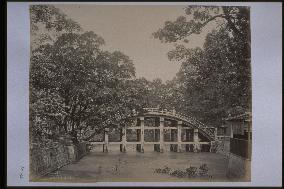
Soribashi Bridge at Sumiyoshi Shinto Shrine was also called the Drum Bridge (Taikobashi). This bridge was originally built for the symbolic crossing of Shinto deities, but eventually people were allowed to use it. Mikoshi, a portable shrine, is carried across the bridge during a summer festival. Mid-Meiji Period.==Date:unknown, Place:Osaka, Photo:R. Stillfried, (Credit:Nagasaki University Library/Kyodo News Images) [Cabinet Number78‐42‐0]

  •  
The central district of Nagasaki and Nagasaki Harbour

The central district of Nagasaki and Nagasaki Harbour

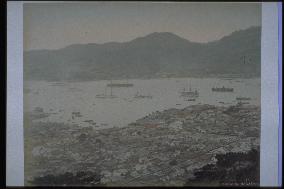
This photo was taken from the southern tip of Mt. Kazagashira around 1893 after the first Nagasaki port improvement project. Nakashima River had been redirected behind Dejima and Shin-Kawaguchi Bridge was constructed at the mouth of the river in 1890. Dozan river was redirected to flow north of Shinchi. There are big trading company buildings along the Shinchi coast. This photo shows the center of Nagasaki city around mid-Meiji when the city was growing rapidly.==Date:Middle Meiji (1883-1897), Place:Nagasaki, Photo:unknown, (Credit:Nagasaki University Library/Kyodo News Images) [Cabinet Number75‐9‐0]

  •  
Western-style buildings in the Oura foreign settlement

Western-style buildings in the Oura foreign settlement

This photo captures the back of trading company buildings and consulates along Oura coast street in the mid Meiji period. The street on the right is paved with stones and a rickshaw, a typical mode of transportation, is parked. A number of commercial ships and war vessels are anchored in the port illustrating Nagasaki Port’s golden trade period. This photo is a good example of the clear, high quality photo tinting techniques of the time.==Date:Late Meiji (1898-1912), Place:Nagasaki, Photo:unknown, (Credit:Nagasaki University Library/Kyodo News Images) [Cabinet Number75‐1‐0]

  •  
The Mogi Coast

The Mogi Coast

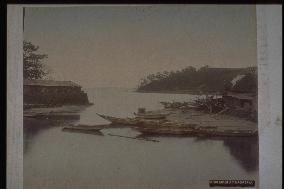
The mouth of the Wakana River at Mogi-Hongo in the mid-Meiji Period. Mogi was a popular resort among foreigners. The prefecture road to Mogi opened in 1885 and Mogi Hotel (later Beach Hotel) started service in 1906 and welcomed many visitors. This photograph evokes the rustic atmosphere of the fishing village.==Date:unknown, Place:Nagasaki, Photo:unknown, (Credit:Nagasaki University Library/Kyodo News Images) [Cabinet Number73‐7‐0]

  •  
A mother and a girl

A mother and a girl

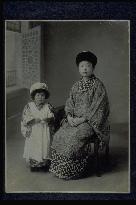
The mother wears her hair in modern hisashi-gami style, while her daughter wears a hat and apron. The costume is evocative of the mid-Meiji Period. This is a studio photograph. The hisashi-gami replaced the traditional nihon-gami and became a typical hairstyle for young women who wore maroon-coloured hakama skirts.==Date:unknown, Place:unknown, Photo:unknown, (Credit:Nagasaki University Library/Kyodo News Images) [Cabinet Number72‐190‐0]

  •  
A woman holding a folding fan

A woman holding a folding fan

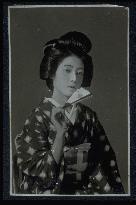
The photograph was taken after the mid-Meiji Period, perhaps as late as the Taisho or early Showa Period. The woman's posture suggests that she is posing for a portrait to be used as an advertisement for a geiko (female entertainer).==Date:unknown, Place:unknown, Photo:unknown, (Credit:Nagasaki University Library/Kyodo News Images) [Cabinet Number71‐67‐0]

  •  
Shintomi-za Theatre

Shintomi-za Theatre

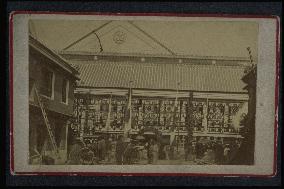
After Kabuki-za opened in 1889, Shintomi-za gradually lost its appeal. Renamed Fukaya-za in 1892 and Miyako-za in 1896, it again adopted the name of Shintomi-za in 1898. Although popular for many years with theatre aficionados, it was converted to a movie theatre of the same name after the Great Earthquake of Kanto of 1923. This is a business card-sized photograph taken in the mid-Meiji Period.==Date:unknown, Place:Tokyo, Photo:unknown, (Credit:Nagasaki University Library/Kyodo News Images) [Cabinet Number71‐20‐0]

  •  
Fujin-do,Mt. Maya

Fujin-do,Mt. Maya

Mayasan Toritenjoji Temple. The building in the centre is Bujin-do, which houses a statue of Mayabunin (the mother of Buddha) brought from Tang Dynasty China by the Japanese priest Kobodaishi in the early ninth century. The same photograph was carried in a Kobe guidebook published in 1897, and a lithograph apparently copied from it appeared in another guidebook published in 1893. Thus, it was probably taken in the mid-Meiji Period.==Date:unknown, Place:Kobe, Photo:unknown, (Credit:Nagasaki University Library/Kyodo News Images) [Cabinet Number71‐17‐0]

  •  
The temple at Amida Pond

The temple at Amida Pond

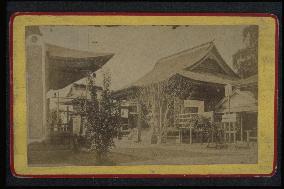
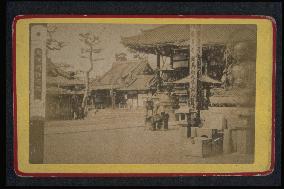
Wakoji Temple was established in 1698 at Kitahorie in Nishi Ward, Osaka. Legend has it that Honda Zenko saw an apparition of the Buddha at this pond in 600 and constructed Zenkoji Temple in Shinano (Nagano Prefecture) to worship this apparition. This temple is a popular tourist attraction in Osaka. Mid-Meiji Period.==Date:unknown, Place:Osaka, Photo:unknown, (Credit:Nagasaki University Library/Kyodo News Images) [Cabinet Number71‐10‐0]

  •  
A priest

A priest

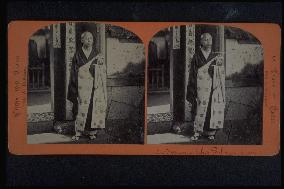
A priest standing in front of a temple gate. He is holding a long fan and wearing a priest's robe and long kesa. This is a stereograph taken in Nagasaki by Wilhelm Burger. A photograph depicting the same scene was taken by F. Beato. Probably taken in the mid-Meiji Period.==Date:unknown, Place:Nagasaki, Photo:Wilhelm Burger, (Credit:Nagasaki University Library/Kyodo News Images) [Cabinet Number70‐27‐0]

  •  
Nunobiki Falls

Nunobiki Falls

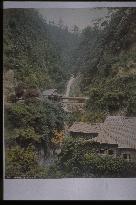
Medaki waterfall at Nunobiki Falls, taken around the same time as photograph #2271 (Shinkoji Temple), #4092 (Mt. Suwa), and #4094 (Arima Spa) in the mid-Meiji Period. Visitors normally took the path on the right side of the river and then proceeded along the road to the left to Medaki waterfall. After that, they crossed a wooden bridge and negotiated the winding mountain path to Odaki waterfall.==Date:unknown, Place:Kobe, Photo:Tamamura Kozaburo, (Credit:Nagasaki University Library/Kyodo News Images) [Cabinet Number68‐4‐2]

  •  
The five-story pagoda,Yanaka Tennoji Temple

The five-story pagoda,Yanaka Tennoji Temple

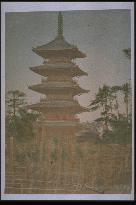
This pagoda was depicted in the famous novel The five-story Pagoda by Koda Rohan. Presently the site of Yanaka Cemetery, it was part of Tennoji Temple at the time. When the pagoda was built in 1644, the temple was called Kan'oji. The pagoda shown here was built in 1791 after the original burned down in 1772. It survived the Ueno War but was destroyed by arson in 1957. At present only the foundation stones remain. Mid-Meiji Period.==Date:unknown, Place:Tokyo, Photo:unknown, (Credit:Nagasaki University Library/Kyodo News Images) [Cabinet Number64‐26‐0]

  •  
Shinkoji Temple

Shinkoji Temple

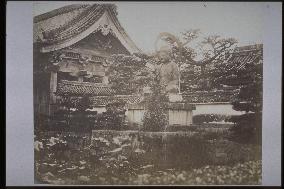
The Great Buddha in the lotus pond in front of Shinkoji Temple, probably taken in the mid-Meiji Period. The Omon (Great Gate) rebuilt in 1827 is to the left, and the bell tower, rebuilt in 1772, is on the far right. The mausoleum of Ippen Shonin is located to the south in the temple precincts. The five-story stone pagoda (Nanboku Dynasty), said to mark the grave of Ippen, is designated as a Prefectural Important Cultural Asset.==Date:unknown, Place:Kobe, Photo:R. Stillfried, (Credit:Nagasaki University Library/Kyodo News Images) [Cabinet Number63‐2‐0]

  •  
The outer moat of the Imperial Palace

The outer moat of the Imperial Palace

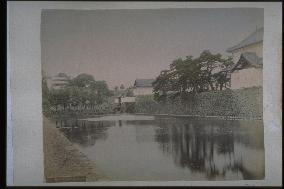
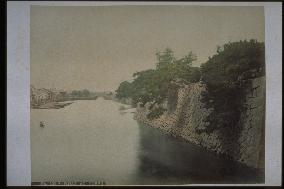
Southern view from the riverbank in Honmachi, near Tokiwa Bridge. Two waterways intersect here and, although not visible, a stone bridge called Ikkokubashi was located on the left spanning the canal which eventually becomes Nihonbashi River. The gap in the wall on the right is Dosan Moat, which originates from Ryunokuchi where the excess water from the inside moats is released. The moat was filled in around 1909. The outer moats beyond Nihonbashi River were filled in after World War II. Consequently, the waterway intersection can no longer be seen. Taken in the mid-Meiji Period. Same as photograph #2199.==Date:unknown, Place:Tokyo, Photo:unknown, (Credit:Nagasaki University Library/Kyodo News Images) [Cabinet Number59‐77‐0]

  •  
Ikegami Honmonji Temple

Ikegami Honmonji Temple

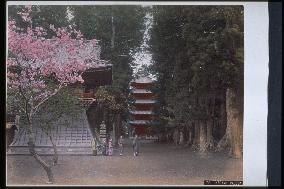
Visitors to the temple saw this scene after passing through the front gate (existent) built between 1688 and 1704, going up the stairs donated by Kato Kiyomasa and installed between 1596 and 1615, and then passing through the sanmon gate built along with the five-story pagoda by the second shogun Tokugawa Hidetada in 1608. The building on the left is the drum tower where ceremonial drums were stored. Both the gate and the drum tower were destroyed in World War II. The 29.5-meter pagoda however survived and still stands today as the oldest pagoda in the Kanto region and a National Important Cultural Asset. Mid-Meiji Period.==Date:unknown, Place:Tokyo, Photo:unknown, (Credit:Nagasaki University Library/Kyodo News Images) [Cabinet Number59‐19‐0]

  •  
Lake Ashi

Lake Ashi

Viewing northwest from Mt. Kurakake. This photo was taken after 1886, as Hakone Imperial Villa is visible on top of the mountain of Dogashima Island. It appears the date of the photo is later than mid-Meiji, as more houses are seen in Hakone than in catalogue #2972. The mountains at the back right are Momagadake and Kamiyama. The peninsula on the left is Mt. Hatabiki.==Date:unknown, Place:Hakone, Photo:unknown, (Credit:Nagasaki University Library/Kyodo News Images) [Cabinet Number59‐10‐2]

  •  
Fukiage Park,the Imperial Palace

Fukiage Park,the Imperial Palace

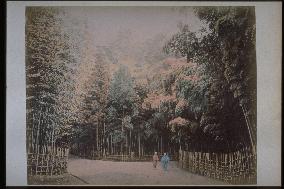
The bamboo grove stretched to the right inside Hanzo-mon (gate) on the west side of Fukiage Garden. The photograph may have been taken around the same time as photograph #3937, because the shape of the bamboo trees is similar. The two men, probably gardeners, may be two of the three men portrayed in photograph #3937. This photograph is thought to have been sold in the mid-Meiji Period.==Date:unknown, Place:Tokyo, Photo:unknown, (Credit:Nagasaki University Library/Kyodo News Images) [Cabinet Number59‐6‐0]

  •  
The entrance to the Belle Vue Hotel in Minamiyamate (Nagasaki)

The entrance to the Belle Vue Hotel in Minamiyamate (Nagasaki)

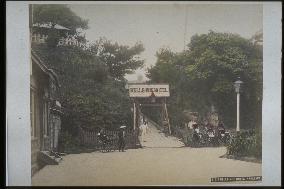
The entrance to the Belle Vue Hotel (site of present-ANA Hotel Gloverhill) in the Oura foreign settlement. This hotel, which opened in 1863, is one of the oldest in Japan. The photograph was taken in the mid-Meiji Period. Foreigners were the main guests because of its location. The rickshaws, street lamps, observation deck in the upper left, and the French-language hotel sign evoke the atmosphere of the time.==Date:unknown, Place:Nagasaki, Photo:unknown, (Credit:Nagasaki University Library/Kyodo News Images) [Cabinet Number58‐17‐0]

  •  
A cave on the coast of Fukuda,Nagasaki

A cave on the coast of Fukuda,Nagasaki

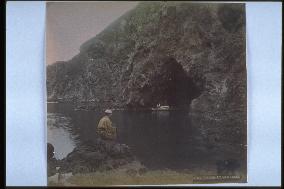
Mid-Meiji Period. This is the seashore cave at Fukuda near Nagasaki. It appears that tourists were visiting the spot at the time. A man, probably a tourist, is looking toward the cave. A boat possibly ferrying the tourists to the cave is visible.==Date:unknown, Place:Nagasaki, Photo:unknown, (Credit:Nagasaki University Library/Kyodo News Images) [Cabinet Number58‐16‐0]

  •  
Osaka Castle

Osaka Castle

Rokuban Yagura and Sanban Yagura (No.6 and No.3 watchtowers) on the southern outer moat of Osaka Castle. The castle was studded with watchtowers, such as Inui Yagura, Fushimi Yagura and the No.1 through No.7 corner watchtowers. However, only No. 6 and No. 1 exist today. Mid-Meiji Period.==Date:unknown, Place:Osaka, Photo:Uchida Kuichi, (Credit:Nagasaki University Library/Kyodo News Images) [Cabinet Number57‐14‐0]

  • Main
  • Top
  • Editorial
  • Creative
  • About Us
  • About ILG
  • Terms of use
  • Company
  • BEHIND
  • Price List
  • Single Plan
  • Monthly Plan
  • Services
  • Shooting
  • Rights Clearance
  • Support
  • FAQ
  • How To Buy
  • Contact Us
  • Become a Partner

© KYODO NEWS IMAGES INC

All Rights Reserved.

  • Editorial
  • Olympics
  • News
  • Sports
  • Japan
  • Tech
  • Royal
  • Disaster
  • NorthKorea
  • Old Japan
  • SNS
  • Creative
  • Food
  • Japan
  • Landscape
  • Animal
  • Popular
  • #Ukraine
  • #China
  • #coronavirus
  • #N. Korea
  • #Russia
  • #Thailand
  • #Ukraine
  • #China
  • #coronavirus
  • #N. Korea
  • #Russia
  • #Thailand
  • Food
  • Japan
  • Landscape
  • Animal
  • Olympics
  • News
  • Sports
  • Japan
  • Tech
  • Royal
  • Disaster
  • NorthKorea
  • Old Japan
  • SNS