•  
Women shoot arrows in Coming-of-Age Day ritual

Women shoot arrows in Coming-of-Age Day ritual

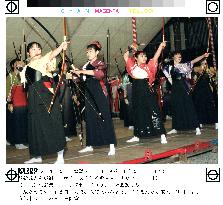
Women who will be turning 20 this year shoot arrows at a target in Sanjusangendo (the main hall of Rengeoin, a small Buddhist temple in Kyoto), on Coming-of-Age Day Jan. 15. This type of archery contest dates back to the times of Iemitsu Tokugawa (1604-1651), the third shogun of the Tokugawa shogunate, who forced his subordinate samurai warriors to compete in such contests.

  •  
Sensoji Temple

Sensoji Temple

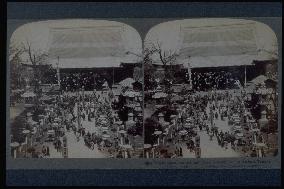
This Kannon-do was rebuilt by the third shogun Tokugawa Iemitsu in 1649. The style of construction is koran mitesaki-zukuri. The photograph captures a flock of pigeons flying from Niomon (gate). The building burned down in an air raid on March 10, 1945. The present-day Kannon-do was erected on October 17, 1958. Taken by Herbert George Ponting. Stereograph published in 1904.==Date:1904, Place:Tokyo, Photo:Underwood, (Credit:Nagasaki University Library/Kyodo News Images) [Cabinet Number97‐69‐0]

  •  
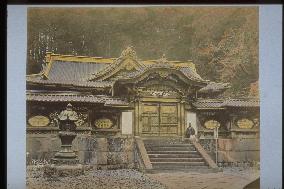
The Karamon Gate,Taiyuin Shrine,Nikko

The Karamon Gate,Taiyuin Shrine,Nikko

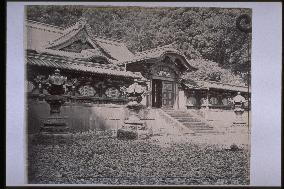
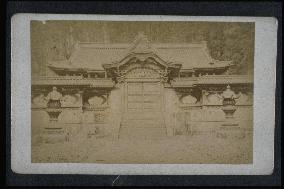
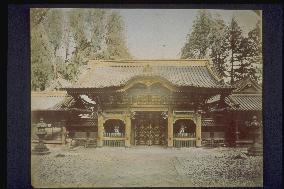
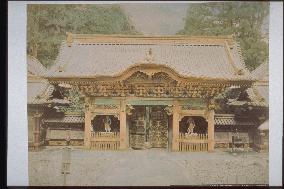
This is Karamon (Chinese Gate) at Taiyuin, the mausoleum of the third shogun Tokugawa Iemitsu. Taiyuin is the posthumous Buddhist name of Iemitsu conferred by Emperor Gokomyo. The gates at Taiyuin are Niomon, then Nitenmon, then Yashamon, and finally Karamon. Karamon is 3m tall and has a 1.8-meter wide facade. It is the smallest structure in the precinct. However, the gate is embellished with elaborate craftsmanship, creating a graceful and sophisticated atmosphere.==Date:unknown, Place:Nikko, Photo:unknown, (Credit:Nagasaki University Library/Kyodo News Images) [Cabinet Number96‐99‐0]

  •  
A teahouse at Oji

A teahouse at Oji

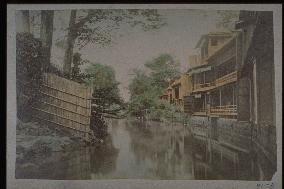
The building on the right is Ogiya Restaurant. A garden is on the left side of Otonashi River. According to the restaurant brochure, the history of the establishment goes back to 1648 when Yazaemon started a simple tea stand on the street. That was the time of the 3rd Shogun Tokugawa Iemitsu. Hayafune Takehiko is currently the 14th generation owner. The modern building is a five-story concrete structure, with Ogiya Restaurant on the second floor. The gates still remain at the first floor entrance. Taken in the middle of the Meiji Period.==Date:unknown, Place:Tokyo, Photo:unknown, (Credit:Nagasaki University Library/Kyodo News Images) [Cabinet Number91‐3‐0]

  •  
The Karamon Gate,Taiyuin Shrine,Nikko

The Karamon Gate,Taiyuin Shrine,Nikko

This is Karamon (Chinese Gate) at Taiyuin, the mausoleum of the third shogun Tokugawa Iemitsu. Taiyuin is the posthumous Buddhist name of Iemitsu conferred by Emperor Gokomyo. The gates at Taiyuin are Niomon, then Nitenmon, then Yashamon, and finally Karamon. Karamon is 3m tall and has a 1.8-meter wide facade. It is the smallest structure in the precinct. However, the gate is embellished with elaborate craftsmanship, creating a graceful and sophisticated atmosphere.==Date:unknown, Place:Nikko, Photo:unknown, (Credit:Nagasaki University Library/Kyodo News Images) [Cabinet Number90‐41‐0]

  •  
Near the Nino-torii (the second gate),Toshogu Shrine,Nikko

Near the Nino-torii (the second gate),Toshogu Shrine,Nikko

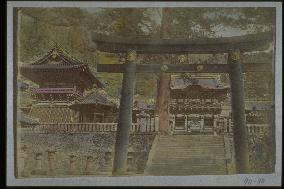
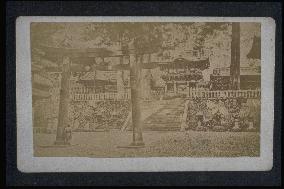
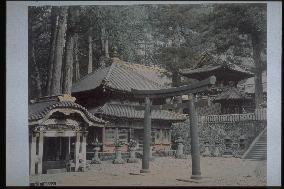
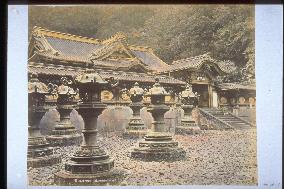
Yomei Gate is seen through Karagane Torii, next to Omizuya in the precincts of Toshogu. The first bronze torii gate in Japan, Karagane Torii was built by the third shogun Tokugawa Iemitsu. The building on the left is the Drum Tower, and to the right of it is the building where hanging lanterns are kept. Karamon is partially visible through Yomei Gate.==Date:unknown, Place:Nikko, Photo:unknown, (Credit:Nagasaki University Library/Kyodo News Images) [Cabinet Number90‐38‐0]

  •  
The Nitenmon Gate,Taiyuin Shrine,Nikko

The Nitenmon Gate,Taiyuin Shrine,Nikko

Nitenmon is located beyond Niomon in the precincts of Taiyuin, the mausoleum of third shogun Tokugawa Iemitsu. A plaque inscribed with the word Taiyuin by Emperor Gomizunoo is affixed to the upper part of the gate. Two of the four celestial guardians, Jikokuten and Komokuten, are enshrined at the front part of the gate while the other two, Fujin and Raijin, were placed on the back . This is the largest gate at Nikko-Sannai.==Date:unknown, Place:Nikko, Photo:unknown, (Credit:Nagasaki University Library/Kyodo News Images) [Cabinet Number88‐21‐0]

  •  
The Suibansha (sacred fountain),Toshogu Shrine,Nikko

The Suibansha (sacred fountain),Toshogu Shrine,Nikko

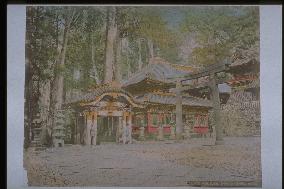
The white building in the centre is the Omizuya, which has a granite water basin donated by the Nabeshima Clan in 1618. To the right is the Rinzo (Kyozo) where sutras are stored. The Chinese-style bronze gate, Karagane Torii, which was built by Tokugawa Iemitsu, stands in the right foreground. This is the first bronze gate in Japan. Visitors pass through the gate, ascend the stone steps and arrive in front of Yomeimon.==Date:unknown, Place:Nikko, Photo:unknown, (Credit:Nagasaki University Library/Kyodo News Images) [Cabinet Number88‐10‐0]

  •  
The honden,Taiyuin Shrine,Nikko

The honden,Taiyuin Shrine,Nikko

This is the hall of worship at Taiyuin, the mausoleum of the third shogun Tokugawa Iemitsu. Taiyuin consists of a worship hall, middle room ( ainoma ), and main hall. The worship hall is a 64 tatami-mat space. Pictures of 140 dragons grace the ceiling, reportedly the work of the famous Kano School. The ainoma, where the shogun sat at the time of religious ceremonies, is visible on the right.==Date:unknown, Place:Nikko, Photo:unknown, (Credit:Nagasaki University Library/Kyodo News Images) [Cabinet Number87‐23‐0]

  •  
The Nitenmon Gate,Taiyuin Shrine,Nikko

The Nitenmon Gate,Taiyuin Shrine,Nikko

Nitenmon is located beyond Niomon in the precincts of Taiyuin, the mausoleum of third shogun Tokugawa Iemitsu. A plaque inscribed with the word Taiyuin by Emperor Gomizunoo is affixed to the upper part of the gate. Two of the four celestial guardians, Jikokuten and Komokuten, are enshrined at the front part of the gate while the other two, Fujin and Raijin, were placed on the back . This is the largest gate at Nikko-Sannai.==Date:unknown, Place:Nikko, Photo:unknown, (Credit:Nagasaki University Library/Kyodo News Images) [Cabinet Number87‐22‐0]

  •  
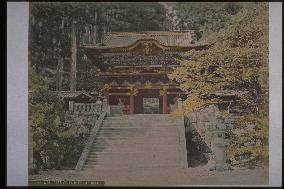
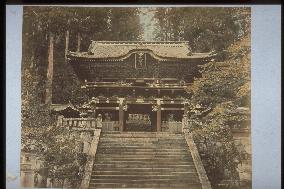
Niomon Gate,Taiyuin Shrine,Nikko

Niomon Gate,Taiyuin Shrine,Nikko

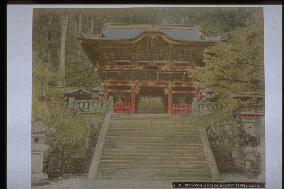
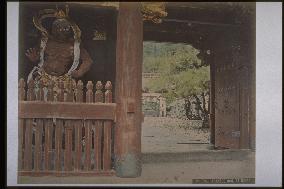
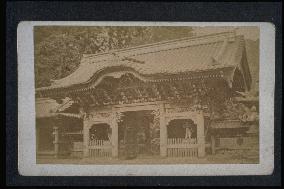
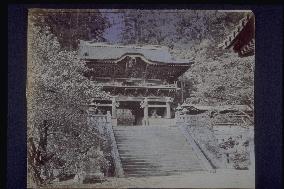
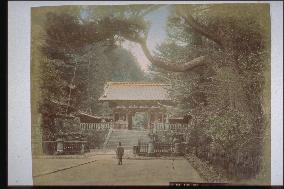
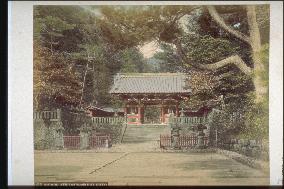
The Niomon stands at the entrance to Taiyuin, the mausoleum of third shogun Tokugawa Iemitsu. Taiyuin is the posthumous name bequeathed by Emperor Gokomyo after Iemitsu's death. The gate is 3.2m high and is protected by the two Nio statues Mitsushaku Kongo and Naraen Kongo, the latter being visible here.==Date:unknown, Place:Nikko, Photo:A. Farsari, (Credit:Nagasaki University Library/Kyodo News Images) [Cabinet Number82‐43‐0]

  •  
Niomon Gate,Taiyuin Shrine,Nikko

Niomon Gate,Taiyuin Shrine,Nikko

The Niomon stands at the entrance to Taiyuin, the mausoleum of third shogun Tokugawa Iemitsu. Taiyuin is the posthumous name bequeathed by Emperor Gokomyo after Iemitsu's death. The gate is 3.2m high and is protected by the two Nio statues Mitsushaku Kongo and Naraen Kongo, the latter being visible here.==Date:unknown, Place:Nikko, Photo:A. Farsari, (Credit:Nagasaki University Library/Kyodo News Images) [Cabinet Number82‐42‐0]

  •  
The Nitenmon Gate,Taiyuin Shrine,Nikko

The Nitenmon Gate,Taiyuin Shrine,Nikko

Nitenmon is located beyond Niomon in the precincts of Taiyuin, the mausoleum of third shogun Tokugawa Iemitsu. A plaque inscribed with the word Taiyuin by Emperor Gomizunoo is affixed to the upper part of the gate. Two of the four celestial guardians, Jikokuten and Komokuten, are enshrined at the front part of the gate while the other two, Fujin and Raijin, were placed on the back . This is the largest gate at Nikko-Sannai.==Date:unknown, Place:Nikko, Photo:Tamamura Kozaburo, (Credit:Nagasaki University Library/Kyodo News Images) [Cabinet Number80‐47‐0]

  •  
The god of wind at Niomon Gate,Taiyuin Shrine,Nikko

The god of wind at Niomon Gate,Taiyuin Shrine,Nikko

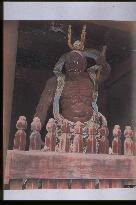
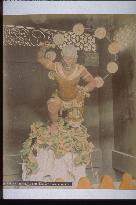
Naraen-Kongo is one of the two Nio (guardian deities) at Niomon, the entrance gate to Taiyuin. Taiyuin is both the posthumous name give to third shogun Tokugawa Iemitsu by Emperor Gokomyo and the name of his mausoleum. The other Nio statue is Mitsushaku-Kongo.==Date:unknown, Place:Nikko, Photo:Tamamura Kozaburo, (Credit:Nagasaki University Library/Kyodo News Images) [Cabinet Number80‐46‐0]

  •  
The Yashamon Gate,Taiyuin Shrine,Nikko

The Yashamon Gate,Taiyuin Shrine,Nikko

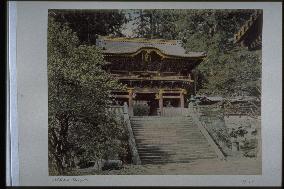
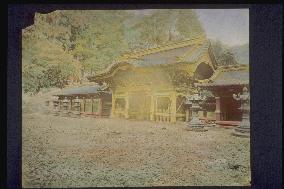
Visitors climbing the steep stairs from Nitenmon pass the mausoleum of the third shogun Tokugawa Iemitsu and come in front of Yashamon, where four yasha (female demons) are enshrined. Each yasha is painted in a different colour and represents north, south, east and west. Since the gate is decorated with peonies and arabesque patterns, it is also called the Botan-mon ( Peony Gate ).==Date:unknown, Place:Nikko, Photo:unknown, (Credit:Nagasaki University Library/Kyodo News Images) [Cabinet Number80‐48‐0]

  •  
The Sanjinko (three sacred stonehouses) and Nino-torii Gate,Toshogu Shrine,Nikko

The Sanjinko (three sacred stonehouses) and Nino-torii Gate,Toshogu Shrine,Nikko

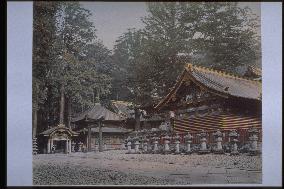
Kamijinko, built in azekurazukuri (wedge-log) style and visible on the right, stores the costumes and other accessories used in the 1,000 Samurai Procession Festival. The building on the left is the Omizuya (washing place) donated by the Nabeshima Clan. To the right of it stands the Karagane Torii, the first bronze gate in Japan built by the third shogun Tokugawa Iemitsu. The double-roofed building behind it is the Rinzo used to store sutras.==Date:unknown, Place:Nikko, Photo:R. Stillfried, (Credit:Nagasaki University Library/Kyodo News Images) [Cabinet Number77‐10‐0]

  •  
The Karamon Gate and the haiden (sanctuary),Toshogu Shrine,Nikko

The Karamon Gate and the haiden (sanctuary),Toshogu Shrine,Nikko

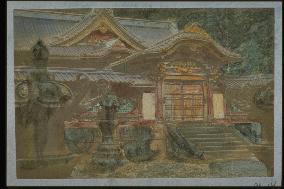
These structures are the Karamon Gate and the Hall of Worship at Taiyuin, the tomb of the third shogun Tokugawa Iemitsu. Taiyuin is Iemitsu's posthumous name conferred by Emperor Gokomyo. The gate is three meters tall and 1.8 meters wide. Although the smallest, it is the most delicate and elegant gate at Taiyuin. The Hall of Worship is 64 tatami mats in area.==Date:unknown, Place:Nikko, Photo:unknown, (Credit:Nagasaki University Library/Kyodo News Images) [Cabinet Number71‐34‐0]

  •  
The Yashamon Gate,Taiyuin Shrine,Nikko

The Yashamon Gate,Taiyuin Shrine,Nikko

Visitors climbing the steep stairs from Nitenmon pass the mausoleum of the third shogun Tokugawa Iemitsu and come in front of Yashamon, where four yasha (female demons) are enshrined. Each yasha is painted in a different colour and represents north, south, east and west. Since the gate is decorated with peonies and arabesque patterns, it is also called the Botan-mon ( Peony Gate ).==Date:unknown, Place:Otsu, Photo:unknown, (Credit:Nagasaki University Library/Kyodo News Images) [Cabinet Number71‐14‐0]

  •  
The Yomeimon Gate seen from the second gate,Toshogu Shrine,Nikko

The Yomeimon Gate seen from the second gate,Toshogu Shrine,Nikko

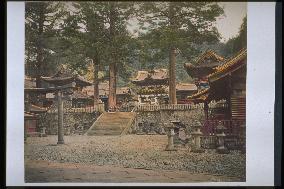
The six meter-tall Karagane Torii is in the right foreground. The first bronze torii gate in Japan, it was built by third shogun Tokugawa Iemitsu. The Todaihoya, where hanging lanterns are stored, is visible through the gate. At the top of the stairs stands Yomei Gate, the most famous structure at Nikko Toshogu. The main shrine is inside the gate.==Date:unknown, Place:Nikko, Photo:unknown, (Credit:Nagasaki University Library/Kyodo News Images) [Cabinet Number71‐8‐0]

  •  
Near the Nino-torii (the second gate),Toshogu Shrine,Nikko

Near the Nino-torii (the second gate),Toshogu Shrine,Nikko

Karagane Torii, built by third shogun Tokugawa Iemitsu, is on the left. Above it is the Drum Tower and a hanging lantern in between. Yomei Gate, the best-known building at Toshogu, is in the centre. The main shrine is behind the gate. The Bell Tower is visible to the right of the gate. Part of Kamijinko is visible on the far right.==Date:unknown, Place:Nikko, Photo:Usui Shuzaburo?, (Credit:Nagasaki University Library/Kyodo News Images) [Cabinet Number65‐12‐0]

  •  
The Sanjinko (three sacred stonehouses) and Nino-torii Gate,Toshogu Shrine,Nikko

The Sanjinko (three sacred stonehouses) and Nino-torii Gate,Toshogu Shrine,Nikko

Kamijinko, built in azekurazukuri (wedge-log) style and visible on the right, stores the costumes and other accessories used in the 1,000 Samurai Procession Festival. The building on the left is the Omizuya (washing place) donated by the Nabeshima Clan. To the right of it stands the Karagane Torii, the first bronze gate in Japan built by the third shogun Tokugawa Iemitsu. The double-roofed building behind it is the Rinzo used to store sutras.==Date:unknown, Place:Nikko, Photo:F. Beato, (Credit:Nagasaki University Library/Kyodo News Images) [Cabinet Number62‐6‐0]

  •  
The Nitenmon Gate,Taiyuin Shrine,Nikko

The Nitenmon Gate,Taiyuin Shrine,Nikko

Nitenmon is located beyond Niomon in the precincts of Taiyuin, the mausoleum of third shogun Tokugawa Iemitsu. A plaque inscribed with the word Taiyuin by Emperor Gomizunoo is affixed to the upper part of the gate. Two of the four celestial guardians, Jikokuten and Komokuten, are enshrined at the front part of the gate while the other two, Fujin and Raijin, were placed on the back . This is the largest gate at Nikko-Sannai.==Date:unknown, Place:Nikko, Photo:unknown, (Credit:Nagasaki University Library/Kyodo News Images) [Cabinet Number61‐22‐0]

  •  
The Yomeimon Gate seen from the second gate,Toshogu Shrine,Nikko

The Yomeimon Gate seen from the second gate,Toshogu Shrine,Nikko

Yomei Gate is seen through Karagane Torii Gate from around Omizuya at Toshogu. The first bronze gate built in Japan, Karagane Torii was built by the third shogun Tokugawa Iemitsu. The building on the left is the Koro (Drum Tower). To the right is a building used to store hanging lanterns. The building on the right is the Bell Tower. Behind Yomei Gate is the main shrine of Nikko Toshogu.==Date:unknown, Place:Nikko, Photo:unknown, (Credit:Nagasaki University Library/Kyodo News Images) [Cabinet Number54‐41‐0]

  •  
The Yashamon Gate,Taiyuin Shrine,Nikko

The Yashamon Gate,Taiyuin Shrine,Nikko

Visitors climbing the steep stairs from Nitenmon pass the mausoleum of the third shogun Tokugawa Iemitsu and come in front of Yashamon, where four yasha (female demons) are enshrined. Each yasha is painted in a different colour and represents north, south, east and west. Since the gate is decorated with peonies and arabesque patterns, it is also called the Botan-mon ( Peony Gate ).==Date:unknown, Place:Nikko, Photo:unknown, (Credit:Nagasaki University Library/Kyodo News Images) [Cabinet Number54‐36‐0]

  •  
Near the Nino-torii (the second gate),Toshogu Shrine,Nikko

Near the Nino-torii (the second gate),Toshogu Shrine,Nikko

The structure on the left is the Omizuya, with a granite basin donated by the Nabeshima Clan in 1619. The building to the right is the Rinzo, where Buddhist sutras are stored. The first bronze torii built in Japan, Karagane Torii (centre foreground) was built by third shogun Tokugawa Iemitsu. The building on the right back is the Drum Tower. A hanging lantern is visible to the right.==Date:unknown, Place:Nikko, Photo:unknown, (Credit:Nagasaki University Library/Kyodo News Images) [Cabinet Number54‐6‐2]

  •  
Kokamon Gate,Taiyuin Shrine,Nikko

Kokamon Gate,Taiyuin Shrine,Nikko

This is the entrance to the inner shrine at Taiyuin, the mausoleum of third shogun Tokugawa Iemitsu. Kokamon, named after one of the twelve gates surrounding the Imperial Palace, is designed in Chinese Ming Dynasty style and was also called Ryugumon (Dragon Palace Gate). Celestial nymphs are painted on the ceiling.==Date:unknown, Place:Nikko, Photo:unknown, (Credit:Nagasaki University Library/Kyodo News Images) [Cabinet Number54‐5‐0]

  •  
The five-story pagoda of Kaneiji Temple

The five-story pagoda of Kaneiji Temple

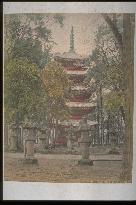
This five-storied pagoda was built in 1631by Doi Toshikatsu, a minister of the Shogunate, and was donated to Ueno Toshogu Shrine (the shrine dedicated to the first Shogun Tokugawa Iemitsu). The original pagoda was destroyed by a fire at Yakushi-do in 1636 and replaced with this pagoda by Doi Toshikatsu the same year. The stone lanterns of Toshogu visible in the foreground are still remain on the north side of the approach to Ueno Zoo. Ownership transferred to Kan'eiji Temple in 1868 and then the Metropolitan Tokyo Government after World War II. Today it is referred to as the former pagoda of Kan'eiji Temple. Only two pagodas from the Edo Period remain in Tokyo at present, this one and another at Honmonji Temple in Ikegami.==Date:unknown, Place:Tokyo, Photo:unknown, (Credit:Nagasaki University Library/Kyodo News Images) [Cabinet Number53‐16‐2]

  •  
Five-tiered pagoda at Toji Temple

Five-tiered pagoda at Toji Temple

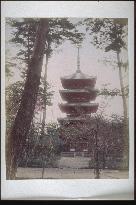
The five-story pagoda of Nin'naji Temple is seen from the west. Tall pine and cherry trees reach into the sky. The road in the foreground connects Niohmon Gate and Kondo Hall. The pagoda was built in 1637 by the third shogun Tokugawa Iemitsu. Each side is approximately 5.5m wide. The pagoda is 33m tall and is painted red.==Date:unknown, Place:Kyoto, Photo:unknown, (Credit:Nagasaki University Library/Kyodo News Images) [Cabinet Number42‐14‐0]

  •  
Graveyard

Graveyard

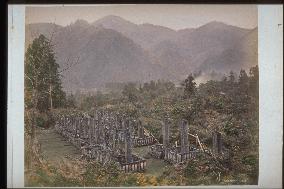
The tombs of the warriors who died for the Shogun Tokugawa Iemitsu, seen from Mt. Mido of Nikko. There are tombs of Fudai Lords (relatives of the Tokugawa family).==Date:unknown, Place:Nikko, Photo:Suzuki Shin-ichi, (Credit:Nagasaki University Library/Kyodo News Images) [Cabinet Number41‐5‐0]

  •  
The Nitenmon Gate,Taiyuin Shrine,Nikko

The Nitenmon Gate,Taiyuin Shrine,Nikko

Up the left steps of the Daiyuin, which is the tomb place of the Shogun Iemitsu Tokugawa is the Nitenmon. A panel with an autograph of the Emperor Gosuio hangs to the upper part in the front, and the two Gods of Jikokuten and Komokuten are placed on both sides in the shelves.==Date:unknown, Place:Nikko, Photo:unknown, (Credit:Nagasaki University Library/Kyodo News Images) [Cabinet Number37‐62‐0]

  •  
Nitenmon gate of nikko daishuin's burial ground

Nitenmon gate of nikko daishuin's burial ground

The Yashamon Gate stands in front of the Karamon Gate, the entrance to the main hall of the Taiyuan Mausoleum where Tokugawa Iemitsu was buried. There are statues of demons (yasha) on both sides of the gate covered with peony flower carvings. This photo captures the back view of the gate as seen from the worship hall.==Date:unknown, Place:Nikko, Photo:unknown, (Credit:Nagasaki University Library/Kyodo News Images) [Cabinet Number37‐40‐0]

  •  
The Yashamon Gate,Taiyuin Shrine,Nikko

The Yashamon Gate,Taiyuin Shrine,Nikko

The Yasha gate of the Daiyuin which is the tomb place of the Shogun Tokugawa Iemitsu is located in front of the Kara gate which is the entrance to the main building. It is flanked by statues of Yasha, and covered with carvings of peony in brilliant colors, and is also called the peony gate. The back of the Yasha gate from the side of the hall of worship.==Date:unknown, Place:Nikko, Photo:unknown, (Credit:Nagasaki University Library/Kyodo News Images) [Cabinet Number37‐39‐0]

  •  
The Nitenmon Gate,Taiyuin Shrine,Nikko

The Nitenmon Gate,Taiyuin Shrine,Nikko

View through the front gate of the Daiyuin, which is the tomb of Tokugawa Iemitsu, wiht the Niten Gate above the steps to the left. A panel board with calligraphy by Emperor Gosuio hangs in the front, and Jikokufu and Komokuten are enshrined in the fence to the right and left.==Date:unknown, Place:Nikko, Photo:unknown, (Credit:Nagasaki University Library/Kyodo News Images) [Cabinet Number26‐41‐0]

  •  
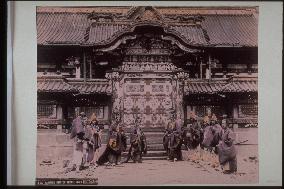
The Karamon Gate,Taiyuin Shrine,Nikko

The Karamon Gate,Taiyuin Shrine,Nikko

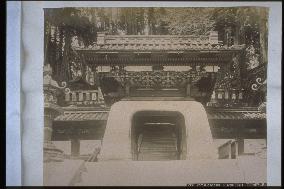
The Kara Gate of the Daiyuin, which is the tomb of Tokugawa Iemitsu, is the entrance to the main building. Under the barge are a male and a female cranes carved with a white dragon carved on the girders. The golden door opens to the hall of worship. Lanterns donated by the three Tokugawa families and other lords stand in front of the fence by the Kara Gate.==Date:unknown, Place:Nikko, Photo:unknown, (Credit:Nagasaki University Library/Kyodo News Images) [Cabinet Number26‐37‐0]

  •  
Kokamon Gate,Taiyuin Shrine,Nikko

Kokamon Gate,Taiyuin Shrine,Nikko

The Koki Gate stands at the rear building of the Daiyuin which is the tomb of Shogun Iemitsu. The walls of the tower are white and angels are painted on the ceiling, it is also called Ryugumon. At the rear is the Inuki Gate and the Hoto where the body of the Shogun Iemitsu is entombed.==Date:unknown, Place:Nikko, Photo:unknown, (Credit:Nagasaki University Library/Kyodo News Images) [Cabinet Number26‐16‐0]

  •  
The Karamon Gate,Taiyuin Shrine,Nikko

The Karamon Gate,Taiyuin Shrine,Nikko

The Kara Gate is the entrance gate of the main building of tomb of Tokugawa Iemitsu, the Daiyuin. A male crane and a female crane are seen under the barge, and a white dragon is carved in the girders. In front of the fence from the Kara Gate are lanterns donated by the three Tokugawa families, and other lords.==Date:unknown, Place:Nikko, Photo:unknown, (Credit:Nagasaki University Library/Kyodo News Images) [Cabinet Number26‐3‐0]

  •  
The Yashamon Gate,Taiyuin Shrine,Nikko

The Yashamon Gate,Taiyuin Shrine,Nikko

The Yasha Gate of Daiyuin, the tomb of Tokugawa Iemitsu, is in front of the Kara Gate at the entrance of the main building. Statues of Yasha are placed on both sides and covered with carvings in full colour. It is also called the Peony Gate. The photo, which shows the front side of the Yasha Gate, is the same as the picture numbered 41-4.==Date:unknown, Place:Nikko, Photo:unknown, (Credit:Nagasaki University Library/Kyodo News Images) [Cabinet Number26‐1‐0]

  •  
The Karamon Gate,Toshogu Shrine,Nikko

The Karamon Gate,Toshogu Shrine,Nikko

The Kara gate stands when going through the Yomei Gate of the Toshogu. Toshogu Gakujin in full dress stand in front of the Kara gate. The English inscription of Iemitsu temple is wrong.==Date:unknown, Place:Nikko, Photo:unknown, (Credit:Nagasaki University Library/Kyodo News Images) [Cabinet Number24‐12‐0]

  •  
Statue of yasha,a demon,at yashamon gate of nikko daishuin temple

Statue of yasha,a demon,at yashamon gate of nikko daishuin temple

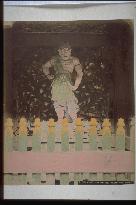
There are four statues of Yasha in the Yasha Gate at the tomb of Shogun Tokugawa Iemitsu in Daiyuin. This is the green and blue statue of Bidara to the right. The fence is colored red, and the veranda and boards are covered with carvings of peonies.==Date:unknown, Place:Nikko, Photo:A. Farsari, (Credit:Nagasaki University Library/Kyodo News Images) [Cabinet Number20‐9‐0]

  •  
The Sorinto, Rinnoji Temple, Nikko

The Sorinto, Rinnoji Temple, Nikko

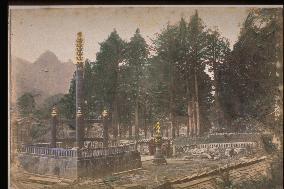
The Sorin tower of Rinnoji Temple in Nikko was located at Futarasan Shrine together with the Sanbutsudo, but it was moved in 1875, and the Sanbutsudo in 1881, to Rinnoji in accordance with the Buddhism and Shintoism separation order. The Sorin tower is a memorial tower with many scriptures stored in it, construction initiated by Shogun Iemitsu. This is a picture taken from the side of Gohotendo. To the left is a scaffold, and in front lumber is piled up, showing that restoration is taking place.==Date:unknown, Place:Nikko, Photo:unknown, (Credit:Nagasaki University Library/Kyodo News Images) [Cabinet Number14‐11‐0]

  •  
The Sorinto and Sanbutsudo, Rinnoji Temple, Nikko

The Sorinto and Sanbutsudo, Rinnoji Temple, Nikko

The Sorin tower of Rinnoji Temple in Nikko used to stand with the Sanbutsudo in Futarasan Shrine, but due to the order for separation of Buddhism and Shintoism, the Sorin tower was moved in 1875, and the Sanbutsudo in 1881, to Rinnoji Temple. The Sorin tower is a memorial tower built by order of Shogun Iemitsu where many scriptures were stored. The Sanbutsudo is seen in the back of the Sorin tower. The two lanterns in front of the Sorin tower were donated by the thread tally union (itowappu nakama).==Date:After 14th year of Meiji, Place:Nikko, Photo:Ogawa Kazumasa, (Credit:Nagasaki University Library/Kyodo News Images) [Cabinet Number9‐14‐0]

  •  
The Yashamon Gate,Taiyuin Shrine,Nikko

The Yashamon Gate,Taiyuin Shrine,Nikko

The Yasha Gate of the Daiyuin enshrining the tomb of Shogun Tokugawa Iemitsu is located in front of the Kara Gate, which is the entrance to the main temple. It faces in the direction of the Toshogu. It has statues of Yasha on both sides, and since it is covered by carvings of peonies done in brilliant colors, it is also called Peony Gate . The back of the Yasha Gate seen from the hall of worship.==Date:unknown, Place:Nikko, Photo:Ogawa Kazumasa, (Credit:Nagasaki University Library/Kyodo News Images) [Cabinet Number8‐43‐0]

  •  
Thunder god of nitenmon gate at nikko daishuin temple

Thunder god of nitenmon gate at nikko daishuin temple

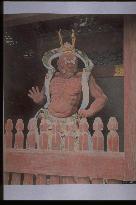
The Niten Gate of Daiyuin enshrining the tomb of the Shogun Tokugawa Iemitsu has a Jikokuten and a Komokuten to the right and left in the front and deities of the wind and thunder at the back. The deity of thunder is painted red, and the deity of wind green.The two are guardians against disaster and misfortune. The expression of the thunder deity boiling with rage is impressive.==Date:unknown, Place:Nikko, Photo:Ogawa Kazumasa, (Credit:Nagasaki University Library/Kyodo News Images) [Cabinet Number8‐25‐0]

  •  
The Niomon Gate,Taiyuin Shrine,Nikko

The Niomon Gate,Taiyuin Shrine,Nikko

The front gate of Daiyuin, which enshrines the tomb of the Shogun Iemitsu, is called Niomon because a pair of Kongo Rikishi statues are placed in it. It resembles the front gate of Toshogu, with an eight-legged and red-painted gate, but it is done in Buddhist style rather than in a mixture of Shinto and Buddhist styles as in Toshogu. Daiyuin is solemn with its red, black and gold colouring.==Date:unknown, Place:Nikko, Photo:Ogawa Kazumasa, (Credit:Nagasaki University Library/Kyodo News Images) [Cabinet Number8‐8‐0]

  •  
The Niomon Gate,Taiyuin Shrine,Nikko

The Niomon Gate,Taiyuin Shrine,Nikko

The front gate of the Daiyuin which enshrines the tomb of the Shogun Tokugawa Iemitsu has a pair of Kongorikishi statues, and is called Niomon. It is very similar to the front gate of Toshogu and is painted red with 8 legs, but it is done in Buddhist style, contrary to the Toshogu which is done in a mixed style of Shintoism and Buddhism. Daiyuin has a solemn appearance with red, black and gold used.==Date:unknown, Place:Nikko, Photo:Ogawa Kazumasa, (Credit:Nagasaki University Library/Kyodo News Images) [Cabinet Number7‐5‐0]

  •  
Room of nikko daishuin's burial ground

Room of nikko daishuin's burial ground

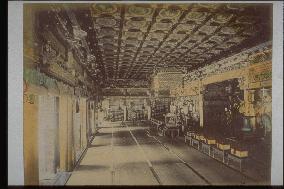
Hall of countenance within the Daikenin shrine dedicated to Tokunaga Iemitsu. This photo is a view of the main hall from the hall of worship. To the right and left of the main hall are dragons climbing up and down the water. The Mitsugusoku (three-legged figurines) were dedicated by the Marquis Maeda Toshitsune, brother-in-law of the Shogun.The door to the main hall is closed. The interior of this hall of countenance is covered with gold.==Date:unknown, Place:Nikko, Photo:Kusakabe Kinbei, (Credit:Nagasaki University Library/Kyodo News Images) [Cabinet Number1‐32‐0]

  •  
The Sorinto, Rinnoji Temple, Nikko

The Sorinto, Rinnoji Temple, Nikko

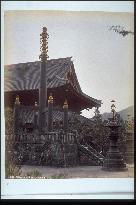
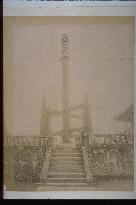
The Sorin tower at Rinnoji Temple in Nikko was built with the Sanbutsudo at Nikosan Shinto Shrine, but in accordance with the Buddhism and Shintoism Separation Order, the Sorin tower was removed in 1875 and the Sanbutsudo was moved to Rinnoji in of 1881. The Sorin tower is a monument erected to play for the repose of souls, housing many scriptures and built upon orders from Shogun Iemitsu. The roof of the Sanbutsudo is seen at the right of the photo.==Date:After 14th year of Meiji, Place:Nikko, Photo:Kusakabe Kinbei, (Credit:Nagasaki University Library/Kyodo News Images) [Cabinet Number1‐31‐0]

  •  
The honden,Taiyuin Shrine,Nikko

The honden,Taiyuin Shrine,Nikko

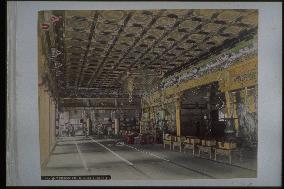
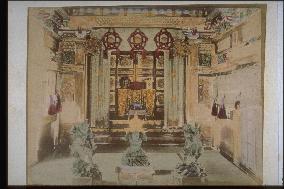
The hall of worship in the shrine dedicated to Tokugawa Iemitsu. Dragons are portrayed in each section in the ceiling and in the centre is the canopy donated by his younger sister, the Marquise of Maeda. To the right and left of the altar, a guardian dog and a Chinese-style figure of a lion are drawn. On the right is a drawing by Kano Tanyu. The three Tokugawa families donated the lotus flower vase, the drooping cherry tree vase and the candle stand with a crane and a turtle.==Date:unknown, Place:Nikko, Photo:Kusakabe Kinbei, (Credit:Nagasaki University Library/Kyodo News Images) [Cabinet Number1‐29‐0]

  •  
Women shoot arrows in Coming-of-Age Day ritual

Women shoot arrows in Coming-of-Age Day ritual

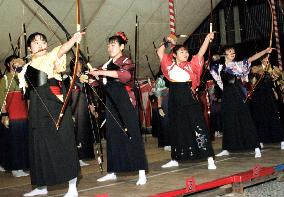
Women who will be turning 20 this year shoot arrows at a target in Sanjusangendo (the main hall of Rengeoin, a small Buddhist temple in Kyoto), on Coming-of-Age Day Jan. 15. This type of archery contest dates back to the times of Iemitsu Tokugawa (1604-1651), the third shogun of the Tokugawa shogunate, who forced his subordinate samurai warriors to compete in such contests. ==Kyodo

  • Main
  • Top
  • Editorial
  • Creative
  • About Us
  • About ILG
  • Terms of use
  • Company
  • BEHIND
  • Price List
  • Single Plan
  • Monthly Plan
  • Services
  • Shooting
  • Rights Clearance
  • Support
  • FAQ
  • How To Buy
  • Contact Us
  • Become a Partner

© KYODO NEWS IMAGES INC

All Rights Reserved.

  • Editorial
  • Olympics
  • News
  • Sports
  • Japan
  • Tech
  • Royal
  • Disaster
  • NorthKorea
  • Old Japan
  • SNS
  • Creative
  • Food
  • Japan
  • Landscape
  • Animal
  • Popular
  • #Ukraine
  • #Thailand
  • #coronavirus
  • #N. Korea
  • #China
  • #Russia
  • #Ukraine
  • #Thailand
  • #coronavirus
  • #N. Korea
  • #China
  • #Russia
  • Food
  • Japan
  • Landscape
  • Animal
  • Olympics
  • News
  • Sports
  • Japan
  • Tech
  • Royal
  • Disaster
  • NorthKorea
  • Old Japan
  • SNS