•  
Japan to export beef to Canada for first time

Japan to export beef to Canada for first time

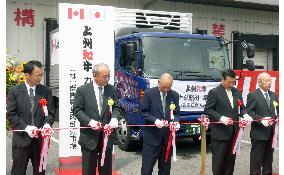
MAEBASHI, Japan - Japan will begin exporting beef to Canada next week for the first time, Ministry of Health, Labor and Welfare officials said Aug. 8. Photo shows a ceremony held at a meat processing center in the town of Tamamura, Gunma Prefecture, to mark the first shipment of Japanese beef to Canada. The beef will be shipped by air from Narita airport Aug. 13.

  •  
Ceremony held for 1st export to EU of 'Joshu wagyu' beef

Ceremony held for 1st export to EU of 'Joshu wagyu' beef

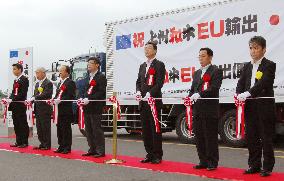
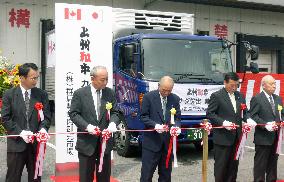
MAEBASHI, Japan - A ceremony is held at the Gunma Meat Wholesale Market in Tamamura, Gunma Prefecture, eastern Japan, on June 9, 2014, to commemorate the first shipment of "Joshu wagyu" beef for export to the European Union.

  •  
2 men acquitted of murder 43 years after arrests

2 men acquitted of murder 43 years after arrests

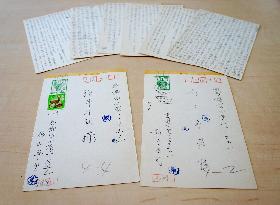
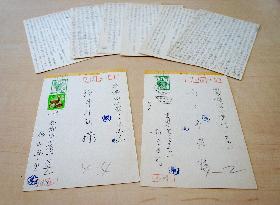
MITO, Japan - This file photo shows postcards that Shoji Sakurai and Takao Sugiyama, both 64, sent to each other while they were detained in isolation cells at the Tokyo Detention House. On May 24, 2011, the Tsuchiura branch of the Mito District Court acquitted them of murder in a retrial, clearing their names more than 43 years after their arrests. The two men had been sentenced to life imprisonment in 1970 for the August 1967 robbery and murder of Shoten Tamamura, a 62-year-old carpenter, and were freed on parole in 1996.

  •  
2 men acquitted of murder 43 years after arrests

2 men acquitted of murder 43 years after arrests

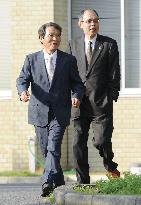
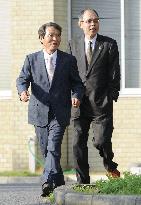
TSUCHIURA, Japan - Shoji Sakurai (L) and Takao Sugiyama, both 64, emerge from the Tsuchiura branch of the Mito District Court in Ibaraki Prefecture after the branch court acquitted them in a retrial of the murder of a man in the prefecture, clearing their names more than 43 years after their arrests. The two men had been sentenced to life imprisonment in 1970 for the August 1967 robbery and murder of Shoten Tamamura, a 62-year-old carpenter. They were freed on parole in 1996.

  •  
Baby boomers look back at '70, '05 expositions in Osaka, Aichi

Baby boomers look back at '70, '05 expositions in Osaka, Aichi

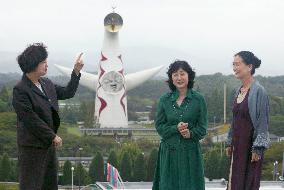
TOKYO, Japan - Yasuko Tamamura (R), 59, and her friends, all who worked as a companion in the Japanese government pavilion of Osaka Expo '70, remember the first expo in Japan at the former exhibition site in Suita city, Osaka Prefecture.

  •  
U.S., Japanese experts inspect meat market

U.S., Japanese experts inspect meat market

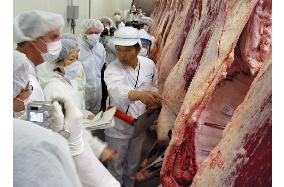
TAMAMURA, Japan - Japanese and U.S. officials and experts inspect a wholesale meat market in Tamamura, Gunma Prefecture, on May 18 ahead of their joint technical working group meeting later in Tokyo to discuss Japan's ban on U.S. beef imports over mad cow disease.

  •  
Japan to export beef to Canada for first time

Japan to export beef to Canada for first time

MAEBASHI, Japan - Japan will begin exporting beef to Canada next week for the first time, Ministry of Health, Labor and Welfare officials said Aug. 8. Photo shows a ceremony held at a meat processing center in the town of Tamamura, Gunma Prefecture, to mark the first shipment of Japanese beef to Canada. The beef will be shipped by air from Narita airport Aug. 13. (Kyodo)

  •  
The Togetsukyo Bridge,Arashiyama

The Togetsukyo Bridge,Arashiyama

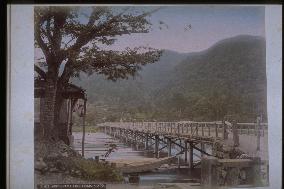
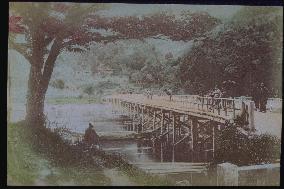
Togetsu Bridge at Arashiyama is viewed from the northern end, facing south. Horinji Temple is visible on the hillside. A sign at the northern end of the bridge informs people that cows and horses are not allowed to cross the bridge. A teahouse with hanging lanterns stands under a cherry tree. A maruko boat is docked nearby. The bridge was destroyed by a flood in 1892. The stone bridge to the right, Kinmonkyo, was later moved to Kurumazaki Shrine. Taken by Tamamura Kozaburo.==Date:unknown, Place:Kyoto, Photo:unknown, (Credit:Nagasaki University Library/Kyodo News Images) [Cabinet Number88‐6‐0]

  •  
Enjoying a cool evening on yuka platforms along the Kamo River

Enjoying a cool evening on yuka platforms along the Kamo River

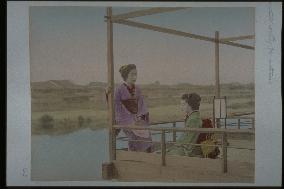
A geisha and maiko relax on a terrace at Shijo Ohashi, looking over Kamogawa River. One stares across the river, while the other sits on the railing looking toward the interior. Houses are reflected on the river in the background. This photograph may have been used in picture postcards for tourists. It was taken by Tamamura Kozaburo.==Date:unknown, Place:Kyoto, Photo:Tamamura Kozaburo, (Credit:Nagasaki University Library/Kyodo News Images) [Cabinet Number83‐18‐0]

  •  
Images of Buddha in the inner sanctuary at Chion-in Temple

Images of Buddha in the inner sanctuary at Chion-in Temple

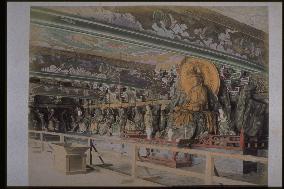
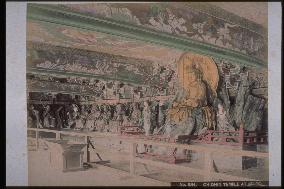
Buddhist statues on the Sanmon Gate of Chion-in Temple. The Buddha is seated in the middle, flanked by Zenzai-doji, Shudatsu-choja, and the 16 Buddhist Saints. Unryu (dragons in clouds) and other motifs are painted on the ceiling. Taken by Tamamura Kozaburo.==Date:unknown, Place:Kyoto, Photo:unknown, (Credit:Nagasaki University Library/Kyodo News Images) [Cabinet Number80‐7‐0]

  •  
The Katsura River

The Katsura River

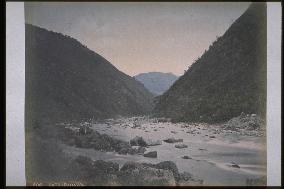
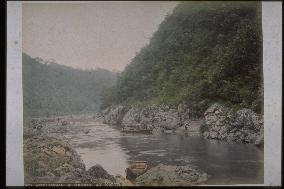
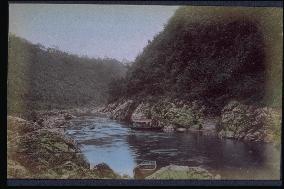
Hozugawa Valley looking upstream. The topography suggests that this was taken from the valley at the west entrance of Asahi Tunnel on the former Japan National Railroad San'in Line, facing northwest. Mt. Ushimatsu is visible in the centre. Since no railroad tracks are visible, the photograph was probably taken before the opening of Sagano-Sonobe Line of Kyoto Railway in August 1899. Taken by Tamamura Kozaburo.==Date:unknown, Place:Kyoto, Photo:Tamamura Kozaburo, (Credit:Nagasaki University Library/Kyodo News Images) [Cabinet Number68‐13‐0]

  •  
Priests

Priests

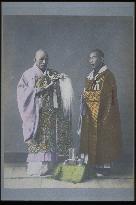
This is a collotype photograph by Tamamura Kozaburo from a Yokohama album. The English title is written in pen and says, Priests. The photograph shows priests praying with prayer beads. The models appear to be women.==Date:unknown, Place:unknown, Photo:Tamamura Kozaburo, (Credit:Nagasaki University Library/Kyodo News Images) [Cabinet Number68‐8‐0]

  •  
Priests

Priests

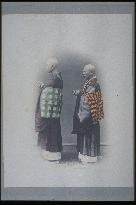
This is a collotype photograph by Tamamura Kozaburo from a Yokohama album. The English title is written in pen and says, Priests. This photograph was staged at a photograph studio. The older priest is holding juzu beads and a hossu brush, while the younger one is holding a fan and a juzu.==Date:unknown, Place:unknown, Photo:Tamamura Kozaburo, (Credit:Nagasaki University Library/Kyodo News Images) [Cabinet Number68‐2‐0]

  •  
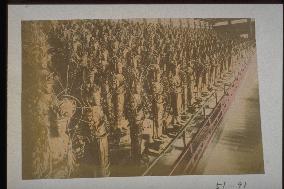
The thousand Kannon images in Sanjusangendo Temple

The thousand Kannon images in Sanjusangendo Temple

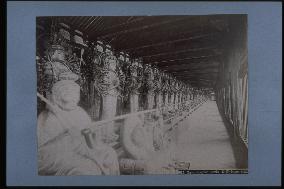
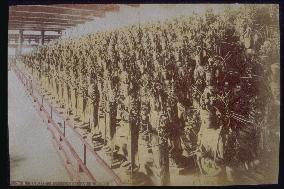
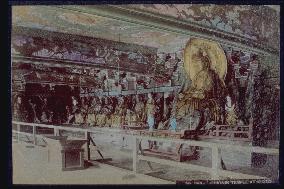
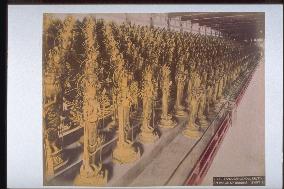
This seems to be a southern view of the Senju Kannon sculptures facing south at Rengeo-in (Sanjusangendo). The main hall was rebuilt in 1266. A total of 1001 Senju Kannon (thousand-armed deity of mercy statues) surround, in rows of 10 by 50, the statue of seated Kannon in the centre. Taken by Tamamura Kozaburo. The wooden statue in the left foreground is probably one of the Nijuhachi-bushu (28 Followers).==Date:unknown, Place:Kyoto, Photo:unknown, (Credit:Nagasaki University Library/Kyodo News Images) [Cabinet Number52‐38‐0]

  •  
Images of Buddha in the inner sanctuary at Chion-in Temple

Images of Buddha in the inner sanctuary at Chion-in Temple

Buddhist statues on the Sanmon Gate of Chion-in Temple. The Buddha is seated in the middle, flanked by Zenzai-doji, Shudatsu-choja, and the 16 Buddhist Saints. Unryu (dragons in clouds) and other motifs are painted on the ceiling. Taken by Tamamura Kozaburo.==Date:unknown, Place:Kyoto, Photo:unknown, (Credit:Nagasaki University Library/Kyodo News Images) [Cabinet Number52‐17‐2]

  •  
Going down the Hozu River

Going down the Hozu River

A yakata boat shooting the rapids of Hozu River is seen from the south bank. A small boat is docked in the foreground. People took the approximately 16km boat ride from Hozu Town in Kameoka to Togetsu Bridge in Arashiyama. The river boats that carried lumber and goods from Tanba Kameoka to Kyoto were converted to leisure boats at the end of the Meiji Period when the Kyoto Railway was established. Taken by Tamamura Kozaburo.==Date:unknown, Place:Kyoto, Photo:unknown, (Credit:Nagasaki University Library/Kyodo News Images) [Cabinet Number52‐5‐0]

  •  
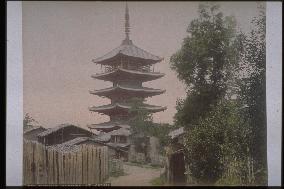
Five-story pagoda at Hokanji Temple

Five-story pagoda at Hokanji Temple

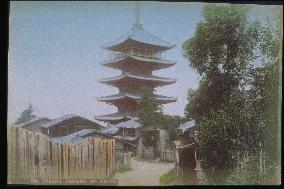
The five-story pagoda of Hokanji Temple is viewed from a path stretching southeast, facing northwest. The pagoda, also called Yasaka Tower, was built in 1440 by Ashikaga Yoshinori and underwent major repair work in 1618. Featuring a tiled roof, it is 40m tall and 5.5m wide. The photograph must have been taken before 1908, when the fence on the fifth story was removed during major repair work. The houses around the pagoda are brothels, and the area is currently called Tatsumi-Shinchi. Taken by Tamamura Kozaburo.==Date:unknown, Place:Kyoto, Photo:unknown, (Credit:Nagasaki University Library/Kyodo News Images) [Cabinet Number52‐1‐0]

  •  
The thousand Kannon images in Sanjusangendo Temple

The thousand Kannon images in Sanjusangendo Temple

This seems to be a southern view of the Senju Kannon sculptures facing south at Rengeo-in (Sanjusangendo). The main hall was rebuilt in 1266. A total of 1001 Senju Kannon (thousand-armed deity of mercy statues) surround, in rows of 10 by 50, the statue of seated Kannon in the centre. Taken by Tamamura Kozaburo.==Date:unknown, Place:Kyoto, Photo:unknown, (Credit:Nagasaki University Library/Kyodo News Images) [Cabinet Number51‐91‐0]

  •  
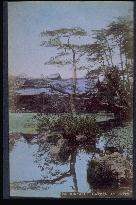
The garden of Kinkakuji Temple

The garden of Kinkakuji Temple

The kuri (priests' quarters) at Rokuonji Temple seen from the southwestern edge of Kyoko Pond, facing east-northeast. The huge kirizuma style roof of the kuri is visible behind the pine trees in the middle of the pond. The pond surface is covered with water weeds, and the green is striking. Taken by Tamamura Kozaburo.==Date:unknown, Place:Kyoto, Photo:Tamamura Kozaburo, (Credit:Nagasaki University Library/Kyodo News Images) [Cabinet Number48‐136‐0]

  •  
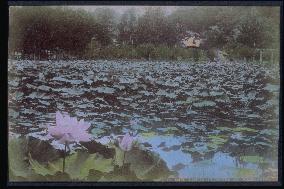
A lotus pond at Tsurugaoka Hachimangu Shrine

A lotus pond at Tsurugaoka Hachimangu Shrine

This is the same as photograph #2253. Date unknown. It is said to be the work of Tamamura Kozaburo (1856-?), a resident of Yokohama during the Meiji Period who identified himself as a photographer and retailer of photographic prints. His shop was located at Benten-dori 1-chome (present-day Naka Ward, Yokohama City). The dates of his visits and association with Kamakura are not known.==Date:unknown, Place:Kamakura, Photo:Tamamura Kozaburo, (Credit:Nagasaki University Library/Kyodo News Images) [Cabinet Number48‐132‐0]

  •  
Mt. Fuji seen from Numakawa,Tagonoura

Mt. Fuji seen from Numakawa,Tagonoura

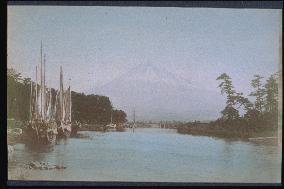
Northern view of Mt. Fuji from Tagonoura (formerly Yoshiwara Minato) harbour in Fuji City. Since the stone dam has already been built, this photograph was taken after 1886. Only part of the foundation of former bridge remains. Many boats are docked in the harbour. Taken by Hanbei Mizuno, the photograph may have been sold by Tamamura.==Date:unknown, Place:Shizuoka, Photo:Mizuno Hanbei, (Credit:Nagasaki University Library/Kyodo News Images) [Cabinet Number48‐131‐0]

  •  
Going down the Hozu River

Going down the Hozu River

A yakata boat shooting the rapids of Hozu River is seen from the south bank. A small boat is docked in the foreground. People took the approximately 16km boat ride from Hozu Town in Kameoka to Togetsu Bridge in Arashiyama. The river boats that carried lumber and goods from Tanba Kameoka to Kyoto were converted to leisure boats at the end of the Meiji Period when the Kyoto Railway was established. Taken by Tamamura Kozaburo.==Date:unknown, Place:Kyoto, Photo:Tamamura Kozaburo, (Credit:Nagasaki University Library/Kyodo News Images) [Cabinet Number48‐120‐0]

  •  
Shijo Kawara

Shijo Kawara

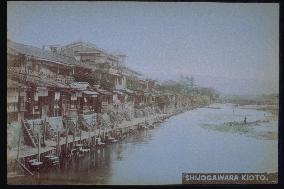
Northern view of Kamogawa River. These are restaurants and inns built on the stone reinforced riverbanks. Stairs and ladders are placed for easy access to the river. Wooden poles for summer balconies are also visible. The sandbank in the middle of the river where a person is standing was used to dry dyed fabrics in the sun. The bridge visible in the background is probably Nijo Bridge. Taken by Tamamura Kozaburo.==Date:unknown, Place:Kyoto, Photo:Tamamura Kozaburo, (Credit:Nagasaki University Library/Kyodo News Images) [Cabinet Number48‐114‐0]

  •  
The thousand Kannon images in Sanjusangendo Temple

The thousand Kannon images in Sanjusangendo Temple

This seems to be a southern view of the Senju Kannon sculptures facing south at Rengeo-in (Sanjusangendo). The main hall was rebuilt in 1266. A total of 1001 Senju Kannon (thousand-armed deity of mercy statues) surround, in rows of 10 by 50, the statue of seated Kannon in the centre. Taken by Tamamura Kozaburo.==Date:unknown, Place:Kyoto, Photo:Tamamura Kozaburo, (Credit:Nagasaki University Library/Kyodo News Images) [Cabinet Number48‐111‐0]

  •  
Five-story pagoda at Hokanji Temple

Five-story pagoda at Hokanji Temple

The five-story pagoda of Hokanji Temple is viewed from a path stretching southeast, facing northwest. The pagoda, also called Yasaka Tower, was built in 1440 by Ashikaga Yoshinori and underwent major repair work in 1618. Featuring a tiled roof, it is 40m tall and 5.5m wide. The photograph must have been taken before 1908, when the fence on the fifth story was removed during major repair work. The houses around the pagoda are brothels, and the area is currently called Tatsumi-Shinchi. Taken by Tamamura Kozaburo.==Date:unknown, Place:Kyoto, Photo:Tamamura Kozaburo, (Credit:Nagasaki University Library/Kyodo News Images) [Cabinet Number48‐110‐0]

  •  
The Togetsukyo Bridge,Arashiyama

The Togetsukyo Bridge,Arashiyama

Togetsu Bridge at Arashiyama is viewed from the northern end, facing south. Horinji Temple is visible on the hillside. Kimono-clad women look toward the camera from the bridge. A man is fishing under the cherry tree. The bridge was destroyed by a flood in 1892. The stone bridge in the foreground is Kinmonkyo, which was later moved to Kurumazaki Shrine. Taken by Tamamura Kozaburo.==Date:unknown, Place:Kyoto, Photo:Tamamura Kozaburo, (Credit:Nagasaki University Library/Kyodo News Images) [Cabinet Number48‐113‐0]

  •  
A lotus pond at Tsurugaoka Hachimangu Shrine

A lotus pond at Tsurugaoka Hachimangu Shrine

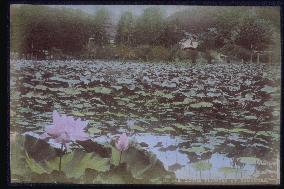
The photograph is labeled No.53B. LOTUS FLOWERS AT KAMAKURA. A wooden torii gate is visible on the right. The red building on the left is Wakamiya, indicating that the building above it is the Jogu cloister. The riding trail said to have surrounded the pond during the Meiji Period is not evident in this photograph. This photograph is included in the Tamamura Kozaburo Collection. The date of the photograph is not known.==Date:unknown, Place:Kamakura, Photo:Tamamura Kozaburo, (Credit:Nagasaki University Library/Kyodo News Images) [Cabinet Number48‐106‐0]

  •  
The naiden of Chion-in Temple

The naiden of Chion-in Temple

Buddhist statues on the Sanmon Gate of Chion-in Temple. The Buddha is seated in the middle, flanked by Zenzai-doji, Shudatsu-choja, and the 16 Buddhist Saints. Unryu (dragons in clouds) and other motifs are painted on the ceiling. Taken by Tamamura Kozaburo.==Date:unknown, Place:Kyoto, Photo:Tamamura Kozaburo, (Credit:Nagasaki University Library/Kyodo News Images) [Cabinet Number48‐112‐0]

  •  
Bamboo groove at Gojozaka Slope

Bamboo groove at Gojozaka Slope

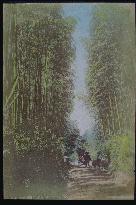
A man pulling a rickshaw and a woman with goods to be sold, carried in baskets suspended from a yoke, stand at Gojo-zaka slope which is surrounded by bamboo brush. Bamboo grass grows thickly on both sides of the road. The broken bamboo on both sides in the foreground was probably cut to prevent the bamboo grass from spreading to the road. The path is narrow and rickshaws can barely pass each other. Taken by Tamamura Kozaburo prior to 1909 when the slope was expanded to a width of 7.2 meters.==Date:unknown, Place:Kyoto, Photo:Tamamura Kozaburo, (Credit:Nagasaki University Library/Kyodo News Images) [Cabinet Number48‐109‐0]

  •  
Daibutsu (the Great Buddha) of Kamakura

Daibutsu (the Great Buddha) of Kamakura

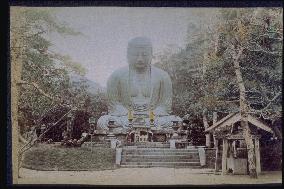
The stone cleansing basin in the foreground was donated in 1749. At present it is situated at the entrance of the temple grounds along with its roof. There are two flat rocks placed in front of the statue. The symmetrical position of these rocks suggests that they were used as foundation stones for the former Great Buddha Hall. This photograph is included in the Tamamura Kozaburo (1856-?) Photograph Collection. The date of the photograph is not known.==Date:unknown, Place:Kamakura, Photo:Tamamura Kozaburo, (Credit:Nagasaki University Library/Kyodo News Images) [Cabinet Number48‐105‐0]

  •  
Kinkakuji Temple

Kinkakuji Temple

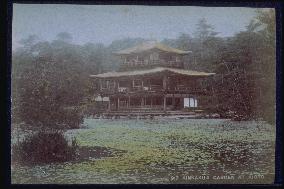
The Golden Pavilion at Rokuon-ji Temple seen from the eastern edge of Kyoko Pond, facing west-northwest. The rock on the left is Hosokawa-ishi, and Ashihara Island is visible behind. The temple was built in 1398 but destroyed by arson in 1950. Unlike the reconstructed building of today, the original roof was supported by many columns at each level. Water weeds fill the surface of the pond. Pine forest surrounds the area. The background is unclear due to the poor colouration. Taken by Tamamura Kozaburo.==Date:unknown, Place:Kyoto, Photo:Tamamura Kozaburo, (Credit:Nagasaki University Library/Kyodo News Images) [Cabinet Number48‐108‐0]

  •  
The garden of Kinkakuji Temple

The garden of Kinkakuji Temple

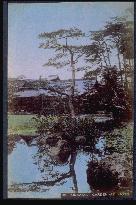
The kuri (priests' quarters) at Rokuonji Temple seen from the southwestern edge of Kyoko Pond, facing east-northeast. The huge kirizuma style roof of the kuri is visible behind the pine trees in the middle of the pond. The pond surface is covered with water weeds, and the green is striking. Taken by Tamamura Kozaburo.==Date:unknown, Place:Kyoto, Photo:Tamamura Kozaburo, (Credit:Nagasaki University Library/Kyodo News Images) [Cabinet Number48‐107‐0]

  •  
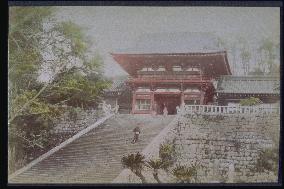
Tsurugaoka Hachimangu Shrine

Tsurugaoka Hachimangu Shrine

Two artillery monuments are visible at the base of the stone wall. Although absent in the 1893 collection of the Abe family (lords of the former Fukuyama Clan), these monuments appear in a copper-plate print of Kamakura made in 1896, indicating that they were installed to commemorate victory in the Sino-Japanese War. The photograph was probably taken, therefore, sometime after 1893. This photograph is included in the Collection of Tamamura Kozaburo (1856-?).==Date:unknown, Place:Kamakura, Photo:Tamamura Kozaburo, (Credit:Nagasaki University Library/Kyodo News Images) [Cabinet Number48‐93‐0]

  •  
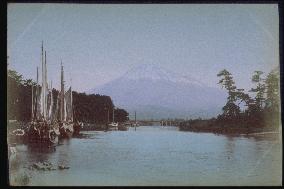
Mt. Fuji seen from Numakawa,Tokaido Road

Mt. Fuji seen from Numakawa,Tokaido Road

Northern view of Mt. Fuji from Tagonoura (formerly Yoshiwara Minato) harbour in Fuji City. Since the stone dam has already been built, this photograph was taken after 1886. Only part of the foundation of former bridge remains. Many boats are docked in the harbour. Taken by Mizuno Hanbei Mizuno, the photograph may have been sold by Tamamura.==Date:unknown, Place:Shizuoka, Photo:Mizuno Hanbei, (Credit:Nagasaki University Library/Kyodo News Images) [Cabinet Number48‐100‐0]

  •  
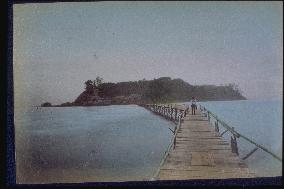
Enoshima Island and Benten Bridge

Enoshima Island and Benten Bridge

Taken by Kozaburo Tamamura (1856-?). Same as #2148. The first time the bridge appeared in a photograph was the article in Japan Day by Day by E. S. Morse (1838-1925), who spent a summer here. An American zoologist, Morse is known for his discovery of the ancient shell site at Ohmori. At the time, he had opened a small marine biology station on the island to conduct research.==Date:unknown, Place:Enoshima, Photo:Tamamura Kozaburo, (Credit:Nagasaki University Library/Kyodo News Images) [Cabinet Number48‐96‐0]

  •  
The cave on Enoshima Island

The cave on Enoshima Island

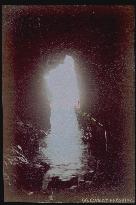
Taken by Tamamura Kozaburo (1856-?). Entitled 96, Cave at Enoshima. This eroded sea cave was called Okunomiya. A passageway is visible on the right. Until the end of the Edo Period, this was the site of both Buddhist and Shinto worship. However, at the beginning of the Meiji Period, Buddhist structures were demolished. Since then, the shrine consists mainly of the Okunomiya and Enoshima shrine buildings.==Date:unknown, Place:Enoshima, Photo:Tamamura Kozaburo, (Credit:Nagasaki University Library/Kyodo News Images) [Cabinet Number48‐95‐0]

  •  
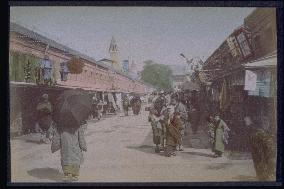
Nakamise-dori Street,Asakusa

Nakamise-dori Street,Asakusa

Nakamise-dori Street,Asakusa==Date:unknown, Place:Tokyo, Photo:Tamamura Kozaburo, (Credit:Nagasaki University Library/Kyodo News Images)

  •  
Sumo wrestling

Sumo wrestling

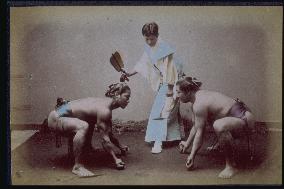
This staged photograph of the mid-Meiji Period depicting sumo is included in the small Yokohama album (Tamamura Kozaburo). It appears to be the same improvised sumo ring as that in #2144. This photograph shows the shikiri (warm-up before a bout). It is odd that the umpire isn't wearing an eboshi hat.==Date:unknown, Place:unknown, Photo:Tamamura Kozaburo, (Credit:Nagasaki University Library/Kyodo News Images) [Cabinet Number48‐32‐0]

  •  
Enjoying a cool evening on yuka platforms along the Kamo River

Enjoying a cool evening on yuka platforms along the Kamo River

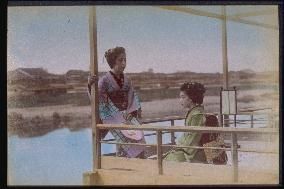
A geisha and maiko relax on a terrace at Shijo Ohashi, looking over Kamogawa River. One stares across the river, while the other sits on the railing looking toward the interior. Houses are reflected on the river in the background. This photograph may have been used in picture postcards for tourists. It was taken by Tamamura Kozaburo.==Date:unknown, Place:Kyoto, Photo:Tamamura Kozaburo, (Credit:Nagasaki University Library/Kyodo News Images) [Cabinet Number48‐14‐0]

  •  
Enjoying a cool evening on yuka platforms along the Kamo River

Enjoying a cool evening on yuka platforms along the Kamo River

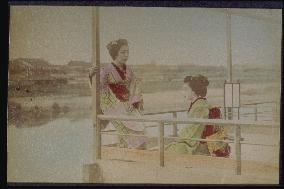
A geisha and maiko relax on a terrace at Shijo Ohashi, looking over Kamogawa River. One stares across the river, while the other sits on the railing looking toward the interior. Houses are reflected on the river in the background. This photograph may have been used in picture postcards for tourists. It was taken by Tamamura Kozaburo.==Date:unknown, Place:Kyoto, Photo:Tamamura Kozaburo, (Credit:Nagasaki University Library/Kyodo News Images) [Cabinet Number48‐7‐0]

  •  
Enoshima Island and Benten Bridge

Enoshima Island and Benten Bridge

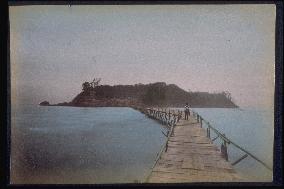
Taken by Tamamura Kozaburo (1856-?). It appears to be high tide, and the wooden bridge leads to the centre of Enoshima Island. The bridge is said not to existed during the Edo Period, nor does it appear in the photograph in the April 1st issue of The Far East (February 24th, 1872). Therefore, this photo must have been taken after that date.==Date:unknown, Place:Enoshima, Photo:Tamamura Kozaburo, (Credit:Nagasaki University Library/Kyodo News Images) [Cabinet Number48‐1‐0]

  •  
The thousand Kannon images in Sanjusangendo Temple

The thousand Kannon images in Sanjusangendo Temple

This seems to be a southern view of the Senju Kannon sculptures facing south at Rengeo-in (Sanjusangendo). The main hall was rebuilt in 1266. A total of 1001 Senju Kannon (thousand-armed deity of mercy statues) surround, in rows of 10 by 50, the statue of seated Kannon in the centre. Taken by Tamamura Kozaburo. A small wooden offering stand is visible in front of the statues. Three of the statues are missing.==Date:unknown, Place:Kyoto, Photo:unknown, (Credit:Nagasaki University Library/Kyodo News Images) [Cabinet Number42‐17‐0]

  •  
A woman holding a battledore

A woman holding a battledore

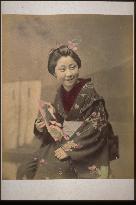
A young woman clutches a hagoita (battledore) with both hands and sits slightly sideways with only her face towards the camera. Her smile is natural, which shows the ability of the portrait photographer Tamamura.==Date:unknown, Place:unknown, Photo:unknown, (Credit:Nagasaki University Library/Kyodo News Images) [Cabinet Number29‐7‐0]

  •  
Irises and women

Irises and women

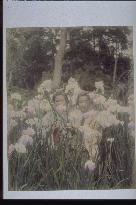
Two women look out from iris flowers with only their faces showing. This is a daring photograph. The photographer, Tamamura Kihei, can be said to have created a work of art with the flowers and women as a motif, not just a picture of two beautiful women.==Date:unknown, Place:unknown, Photo:unknown, (Credit:Nagasaki University Library/Kyodo News Images) [Cabinet Number11‐56‐0]

  •  
2 men acquitted of murder 43 years after arrests

2 men acquitted of murder 43 years after arrests

TSUCHIURA, Japan - Shoji Sakurai (L) and Takao Sugiyama, both 64, emerge from the Tsuchiura branch of the Mito District Court in Ibaraki Prefecture after the branch court acquitted them in a retrial of the murder of a man in the prefecture, clearing their names more than 43 years after their arrests. The two men had been sentenced to life imprisonment in 1970 for the August 1967 robbery and murder of Shoten Tamamura, a 62-year-old carpenter. They were freed on parole in 1996. (Kyodo)

  •  
2 men acquitted of murder 43 years after arrests

2 men acquitted of murder 43 years after arrests

MITO, Japan - This file photo shows postcards that Shoji Sakurai and Takao Sugiyama, both 64, sent to each other while they were detained in isolation cells at the Tokyo Detention House. On May 24, 2011, the Tsuchiura branch of the Mito District Court acquitted them of murder in a retrial, clearing their names more than 43 years after their arrests. The two men had been sentenced to life imprisonment in 1970 for the August 1967 robbery and murder of Shoten Tamamura, a 62-year-old carpenter, and were freed on parole in 1996. (Kyodo)

  •  
Nakashima River and Amida-bashi Bridge

Nakashima River and Amida-bashi Bridge

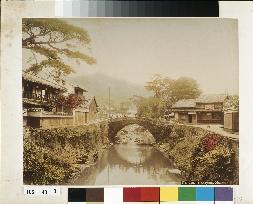
Ichinose River (main stream) and Domon River (also called Nishiyama River) merge near Uma-machi to form Nakashima River. Korai Bridge and Amida Bridge can be seen looking upstream from this point. This photograph shows Amida Bridge over Nakashima River around 1895. The Chinese characters on the wall of the house to the right mean watchmaker. Watches are displayed inside. The water faucet for common use indicates that this photograph was taken after the water duct was constructed.==Date:unknown, Place:Nagasaki, Photo:Tamamura Kozaburo, (Credit:Nagasaki University Library/Kyodo News Images) [Cabinet Number106‐40‐0]

  •  
The north part of the city of Nagasaki and Nagasaki Harbour

The north part of the city of Nagasaki and Nagasaki Harbour

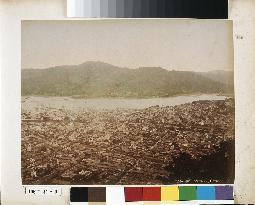
This photograph taken from Mt. Kazagashira captures the central part of Nagasaki and the elevated area where the Nagasaki Prefecture Office, Nagasaki City Hall and Daikoku-machi are situated, with Urakami Shinden on the right. The date is around 1887. Nakashima River is visible in the centre. This provides a view of the densely populated downtown area of Nagasaki city in the mid-Meiji Period.==Date:unknown, Place:Nagasaki, Photo:Tamamura Kozaburo, (Credit:Nagasaki University Library/Kyodo News Images) [Cabinet Number106‐41‐0]

  •  
Soryu Gate and Osugataiwa Rock at Haruna Shinto Shrine

Soryu Gate and Osugataiwa Rock at Haruna Shinto Shrine

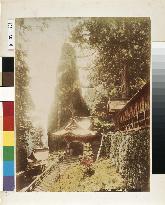
Soryu Gate and Osugataiwa Rock at Haruna Shinto Shrine==Date:unknown, Place:Gunma, Photo:Tamamura Kozaburo, (Credit:Nagasaki University Library/Kyodo News Images)

  •  
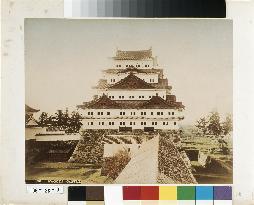
Nagoya Castle

Nagoya Castle

Nagoya Castle==Date:unknown, Place:Nagoya, Photo:Tamamura Kozaburo, (Credit:Nagasaki University Library/Kyodo News Images)

  • Main
  • Top
  • Editorial
  • Creative
  • About Us
  • About ILG
  • Terms of use
  • Company
  • BEHIND
  • Price List
  • Single Plan
  • Monthly Plan
  • Services
  • Shooting
  • Rights Clearance
  • Support
  • FAQ
  • How To Buy
  • Contact Us
  • Become a Partner

© KYODO NEWS IMAGES INC

All Rights Reserved.

  • Editorial
  • Olympics
  • News
  • Sports
  • Japan
  • Tech
  • Royal
  • Disaster
  • NorthKorea
  • Old Japan
  • SNS
  • Creative
  • Food
  • Japan
  • Landscape
  • Animal
  • Popular
  • #Ukraine
  • #Thailand
  • #coronavirus
  • #N. Korea
  • #China
  • #Russia
  • #Ukraine
  • #Thailand
  • #coronavirus
  • #N. Korea
  • #China
  • #Russia
  • Food
  • Japan
  • Landscape
  • Animal
  • Olympics
  • News
  • Sports
  • Japan
  • Tech
  • Royal
  • Disaster
  • NorthKorea
  • Old Japan
  • SNS