•  
Sake Making At Jozan Brewery In Fukui - Japan

Sake Making At Jozan Brewery In Fukui - Japan

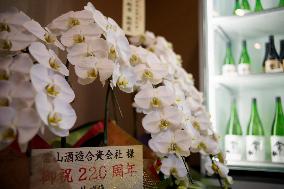
A flower basket marking the 220th anniversary of the establishment at Jozan Brewery in Fukui. Japanese alcoholic beverages, including sake (nihonshu), shochu and awamori, are made from grains and water. Craftspeople use koji mold to convert the starch in the ingredients into sugar, and oversee the process to make sure the mold grows in optimal conditions. Jozan, a brewery located in Fukui Prefecture, a region renowned for its high-quality rice, has upheld traditional sake-making for over 220 years. Led by Shinpei Tokoyama, the brewery exemplifies its ongoing efforts in coping with challenges in modern era while preserving traditional craftsmanship. With modern techniques, Jozan has realized a meticulous control over the brewing process, ensuring the consistency of product quality without compromising the essence of traditional making methods. In 2017, Jozan also renovated its brewing space, combining functionality with modern design to accommodate both production needs and visitors from around the world. The

  •  
Sake Making At Jozan Brewery In Fukui - Japan

Sake Making At Jozan Brewery In Fukui - Japan

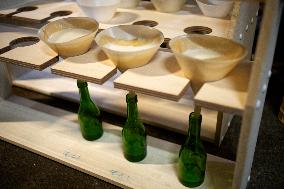
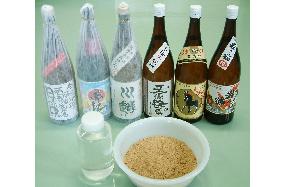
Samples of fresh sake are pictured at Jozan Brewery in Fukui. Japanese alcoholic beverages, including sake (nihonshu), shochu and awamori, are made from grains and water. Craftspeople use koji mold to convert the starch in the ingredients into sugar, and oversee the process to make sure the mold grows in optimal conditions. Jozan, a brewery located in Fukui Prefecture, a region renowned for its high-quality rice, has upheld traditional sake-making for over 220 years. Led by Shinpei Tokoyama, the brewery exemplifies its ongoing efforts in coping with challenges in modern era while preserving traditional craftsmanship. With modern techniques, Jozan has realized a meticulous control over the brewing process, ensuring the consistency of product quality without compromising the essence of traditional making methods. In 2017, Jozan also renovated its brewing space, combining functionality with modern design to accommodate both production needs and visitors from around the world. The United Nations Educational, Scie

  •  
Sake Making At Jozan Brewery In Fukui - Japan

Sake Making At Jozan Brewery In Fukui - Japan

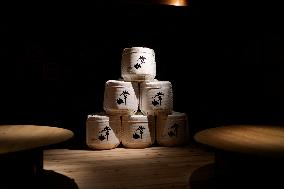
Trademarks of Jozan Brewery are pictured at the reception area of the brewery in Fukui. Japanese alcoholic beverages, including sake (nihonshu), shochu and awamori, are made from grains and water. Craftspeople use koji mold to convert the starch in the ingredients into sugar, and oversee the process to make sure the mold grows in optimal conditions. Jozan, a brewery located in Fukui Prefecture, a region renowned for its high-quality rice, has upheld traditional sake-making for over 220 years. Led by Shinpei Tokoyama, the brewery exemplifies its ongoing efforts in coping with challenges in modern era while preserving traditional craftsmanship. With modern techniques, Jozan has realized a meticulous control over the brewing process, ensuring the consistency of product quality without compromising the essence of traditional making methods. In 2017, Jozan also renovated its brewing space, combining functionality with modern design to accommodate both production needs and visitors from around the world. The United

  •  
Sake Making At Jozan Brewery In Fukui - Japan

Sake Making At Jozan Brewery In Fukui - Japan

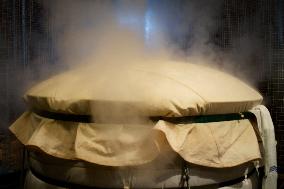
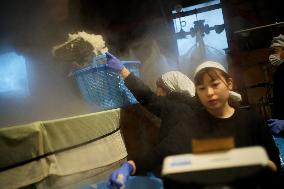
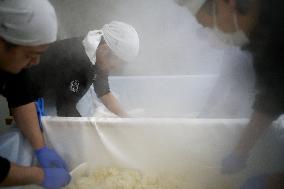
Cleaned rice is steamed at Jozan Brewery in Fukui. Japanese alcoholic beverages, including sake (nihonshu), shochu and awamori, are made from grains and water. Craftspeople use koji mold to convert the starch in the ingredients into sugar, and oversee the process to make sure the mold grows in optimal conditions. Jozan, a brewery located in Fukui Prefecture, a region renowned for its high-quality rice, has upheld traditional sake-making for over 220 years. Led by Shinpei Tokoyama, the brewery exemplifies its ongoing efforts in coping with challenges in modern era while preserving traditional craftsmanship. With modern techniques, Jozan has realized a meticulous control over the brewing process, ensuring the consistency of product quality without compromising the essence of traditional making methods. In 2017, Jozan also renovated its brewing space, combining functionality with modern design to accommodate both production needs and visitors from around the world. The United Nations Educational, Scientific and

  •  
Sake Making At Jozan Brewery In Fukui - Japan

Sake Making At Jozan Brewery In Fukui - Japan

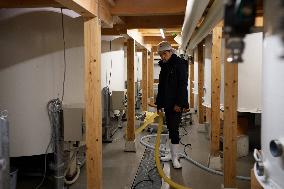
Shinpei Tokoyama waits for moromi to flow into the filter at Jozan Brewery in Fukui. Japanese alcoholic beverages, including sake (nihonshu), shochu and awamori, are made from grains and water. Craftspeople use koji mold to convert the starch in the ingredients into sugar, and oversee the process to make sure the mold grows in optimal conditions. Jozan, a brewery located in Fukui Prefecture, a region renowned for its high-quality rice, has upheld traditional sake-making for over 220 years. Led by Shinpei Tokoyama, the brewery exemplifies its ongoing efforts in coping with challenges in modern era while preserving traditional craftsmanship. With modern techniques, Jozan has realized a meticulous control over the brewing process, ensuring the consistency of product quality without compromising the essence of traditional making methods. In 2017, Jozan also renovated its brewing space, combining functionality with modern design to accommodate both production needs and visitors from around the world. The United Na

  •  
Sake Making At Jozan Brewery In Fukui - Japan

Sake Making At Jozan Brewery In Fukui - Japan

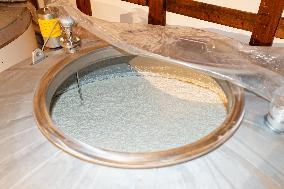
Fermenting moromi is pictured at Jozan Brewery in Fukui. Japanese alcoholic beverages, including sake (nihonshu), shochu and awamori, are made from grains and water. Craftspeople use koji mold to convert the starch in the ingredients into sugar, and oversee the process to make sure the mold grows in optimal conditions. Jozan, a brewery located in Fukui Prefecture, a region renowned for its high-quality rice, has upheld traditional sake-making for over 220 years. Led by Shinpei Tokoyama, the brewery exemplifies its ongoing efforts in coping with challenges in modern era while preserving traditional craftsmanship. With modern techniques, Jozan has realized a meticulous control over the brewing process, ensuring the consistency of product quality without compromising the essence of traditional making methods. In 2017, Jozan also renovated its brewing space, combining functionality with modern design to accommodate both production needs and visitors from around the world. The United Nations Educational, Scientifi

  •  
Sake Making At Jozan Brewery In Fukui - Japan

Sake Making At Jozan Brewery In Fukui - Japan

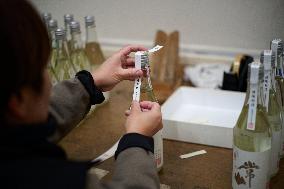
A worker seals a bottle of sake at Jozan Brewery in Fukui. Japanese alcoholic beverages, including sake (nihonshu), shochu and awamori, are made from grains and water. Craftspeople use koji mold to convert the starch in the ingredients into sugar, and oversee the process to make sure the mold grows in optimal conditions. Jozan, a brewery located in Fukui Prefecture, a region renowned for its high-quality rice, has upheld traditional sake-making for over 220 years. Led by Shinpei Tokoyama, the brewery exemplifies its ongoing efforts in coping with challenges in modern era while preserving traditional craftsmanship. With modern techniques, Jozan has realized a meticulous control over the brewing process, ensuring the consistency of product quality without compromising the essence of traditional making methods. In 2017, Jozan also renovated its brewing space, combining functionality with modern design to accommodate both production needs and visitors from around the world. The United Nations Educational, Scienti

  •  
Sake Making At Jozan Brewery In Fukui - Japan

Sake Making At Jozan Brewery In Fukui - Japan

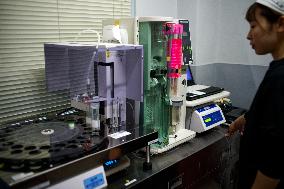
A worker examines samples of fresh sake at Jozan Brewery in Fukui. Japanese alcoholic beverages, including sake (nihonshu), shochu and awamori, are made from grains and water. Craftspeople use koji mold to convert the starch in the ingredients into sugar, and oversee the process to make sure the mold grows in optimal conditions. Jozan, a brewery located in Fukui Prefecture, a region renowned for its high-quality rice, has upheld traditional sake-making for over 220 years. Led by Shinpei Tokoyama, the brewery exemplifies its ongoing efforts in coping with challenges in modern era while preserving traditional craftsmanship. With modern techniques, Jozan has realized a meticulous control over the brewing process, ensuring the consistency of product quality without compromising the essence of traditional making methods. In 2017, Jozan also renovated its brewing space, combining functionality with modern design to accommodate both production needs and visitors from around the world. The United Nations Educational,

  •  
Sake Making At Jozan Brewery In Fukui - Japan

Sake Making At Jozan Brewery In Fukui - Japan

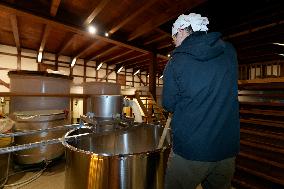
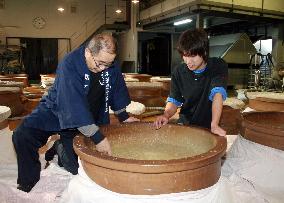
A worker stirs the mixture of steamed rice, koji, water and Shubo at Jozan Brewery in Fukui. Japanese alcoholic beverages, including sake (nihonshu), shochu and awamori, are made from grains and water. Craftspeople use koji mold to convert the starch in the ingredients into sugar, and oversee the process to make sure the mold grows in optimal conditions. Jozan, a brewery located in Fukui Prefecture, a region renowned for its high-quality rice, has upheld traditional sake-making for over 220 years. Led by Shinpei Tokoyama, the brewery exemplifies its ongoing efforts in coping with challenges in modern era while preserving traditional craftsmanship. With modern techniques, Jozan has realized a meticulous control over the brewing process, ensuring the consistency of product quality without compromising the essence of traditional making methods. In 2017, Jozan also renovated its brewing space, combining functionality with modern design to accommodate both production needs and visitors from around the world. The U

  •  
Sake Making At Jozan Brewery In Fukui - Japan

Sake Making At Jozan Brewery In Fukui - Japan

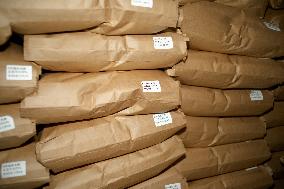
Bags of locally produced rice, a raw material for sake-making, is seen at Jozan Brewery in Fukui. Japanese alcoholic beverages, including sake (nihonshu), shochu and awamori, are made from grains and water. Craftspeople use koji mold to convert the starch in the ingredients into sugar, and oversee the process to make sure the mold grows in optimal conditions. Jozan, a brewery located in Fukui Prefecture, a region renowned for its high-quality rice, has upheld traditional sake-making for over 220 years. Led by Shinpei Tokoyama, the brewery exemplifies its ongoing efforts in coping with challenges in modern era while preserving traditional craftsmanship. With modern techniques, Jozan has realized a meticulous control over the brewing process, ensuring the consistency of product quality without compromising the essence of traditional making methods. In 2017, Jozan also renovated its brewing space, combining functionality with modern design to accommodate both production needs and visitors from around the world.

  •  
Sake Making At Jozan Brewery In Fukui - Japan

Sake Making At Jozan Brewery In Fukui - Japan

Workers weigh steamed rice at Jozan Brewery in Fukui. Japanese alcoholic beverages, including sake (nihonshu), shochu and awamori, are made from grains and water. Craftspeople use koji mold to convert the starch in the ingredients into sugar, and oversee the process to make sure the mold grows in optimal conditions. Jozan, a brewery located in Fukui Prefecture, a region renowned for its high-quality rice, has upheld traditional sake-making for over 220 years. Led by Shinpei Tokoyama, the brewery exemplifies its ongoing efforts in coping with challenges in modern era while preserving traditional craftsmanship. With modern techniques, Jozan has realized a meticulous control over the brewing process, ensuring the consistency of product quality without compromising the essence of traditional making methods. In 2017, Jozan also renovated its brewing space, combining functionality with modern design to accommodate both production needs and visitors from around the world. The United Nations Educational, Scientific a

  •  
Sake Making At Jozan Brewery In Fukui - Japan

Sake Making At Jozan Brewery In Fukui - Japan

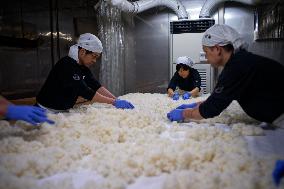
Shinpei Tokoyama (L) and workers spread steamed rice mixed with koji mold at Jozan Brewery in Fukui. Japanese alcoholic beverages, including sake (nihonshu), shochu and awamori, are made from grains and water. Craftspeople use koji mold to convert the starch in the ingredients into sugar, and oversee the process to make sure the mold grows in optimal conditions. Jozan, a brewery located in Fukui Prefecture, a region renowned for its high-quality rice, has upheld traditional sake-making for over 220 years. Led by Shinpei Tokoyama, the brewery exemplifies its ongoing efforts in coping with challenges in modern era while preserving traditional craftsmanship. With modern techniques, Jozan has realized a meticulous control over the brewing process, ensuring the consistency of product quality without compromising the essence of traditional making methods. In 2017, Jozan also renovated its brewing space, combining functionality with modern design to accommodate both production needs and visitors from around the worl

  •  
Sake Making At Jozan Brewery In Fukui - Japan

Sake Making At Jozan Brewery In Fukui - Japan

Shinpei Tokoyama (2nd L) and workers spread koji mold over steamed rice at Jozan Brewery in Fukui. Japanese alcoholic beverages, including sake (nihonshu), shochu and awamori, are made from grains and water. Craftspeople use koji mold to convert the starch in the ingredients into sugar, and oversee the process to make sure the mold grows in optimal conditions. Jozan, a brewery located in Fukui Prefecture, a region renowned for its high-quality rice, has upheld traditional sake-making for over 220 years. Led by Shinpei Tokoyama, the brewery exemplifies its ongoing efforts in coping with challenges in modern era while preserving traditional craftsmanship. With modern techniques, Jozan has realized a meticulous control over the brewing process, ensuring the consistency of product quality without compromising the essence of traditional making methods. In 2017, Jozan also renovated its brewing space, combining functionality with modern design to accommodate both production needs and visitors from around the world.

  •  
Yokozuna Hakuho to advertise new 'shochu' liquor

Yokozuna Hakuho to advertise new 'shochu' liquor

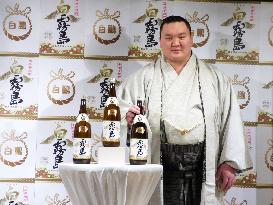
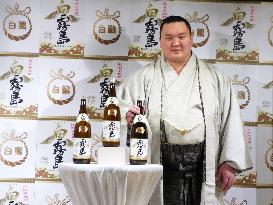
TOKYO, Japan - Yokozuna Hakuho attends a press conference held by Kirishima Shuzo Co. in Tokyo on Dec. 9, 2014, to announce the release of a new "shochu" liquor product set for Jan. 21, 2015. The top sumo wrestler is set to appear in the advertisement of the new product for the distilled beverage maker.

  •  
Distilling shochu spirit in Hawaii

Distilling shochu spirit in Hawaii

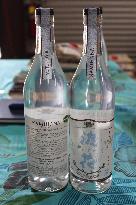
HAWAII, United States - Ken Hirata's third batch of "Namihana" shochu, made in the spring of 2014 and released in September that year, is 82 percent Big Island and North Shore sweet potatoes and 18 percent black koji. Photo was taken in Hawaii on Nov. 3, 2014.

  •  
Event to promote Kagoshima Pref.'s food held in Berlin

Event to promote Kagoshima Pref.'s food held in Berlin

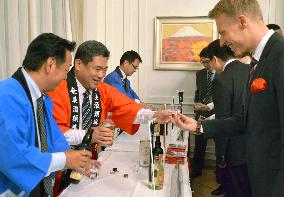
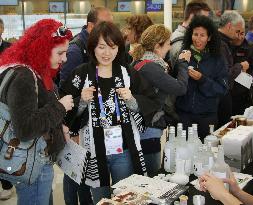
BERLIN, Germany - A brewer (2nd from L) serves a glass of brown sugar shochu to a guest during an event at the Japanese ambassador's residence in Berlin on Oct. 6, 2014, to promote "wagyu" beef and other food produced in Kagoshima Prefecture and the prefecture's Amami Islands, southwestern Japan.

  •  
Kagoshima gov. gives toast with shochu in Berlin event

Kagoshima gov. gives toast with shochu in Berlin event

BERLIN, Germany - Kagoshima Gov. Yuichiro Ito (4th from L) gives a toast with brown sugar shochu from the prefecture's Amami Islands, during an event to promote the southwestern Japan Prefecture's food on Oct. 6, 2014, at the Japanese ambassador's residence in Berlin.

  •  
Kagoshima brown sugar 'shochu' promoted in Berlin

Kagoshima brown sugar 'shochu' promoted in Berlin

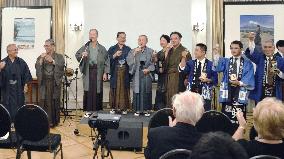
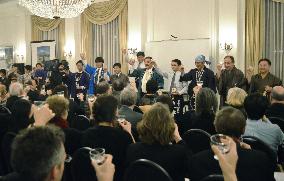
BERLIN, Germany - "Shochu" distilled spirits makers from Kagoshima Prefecture make a toast at an event held at the official residence of the Japanese ambassador to Germany in Berlin on Jan. 20, 2014, to promote brown sugar shochu from the southwestern Japanese prefecture.

  •  
Malt, yeast from space station used for 'shochu' spirit

Malt, yeast from space station used for 'shochu' spirit

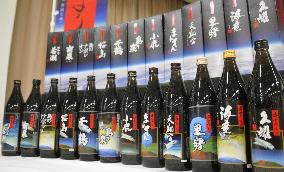
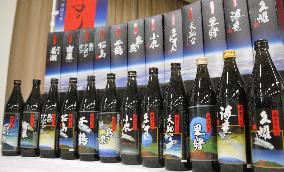
KAGOSHIMA, Japan - A line of bottled ''shochu'' distilled spirit made using rice malt and yeast kept on the International Space Station is displayed at Kagoshima University in Kagoshima, western Japan, on Jan. 13, 2012. The university and an association of distillers in Kagoshima Prefecture said they have jointly developed the shochu named Uchu Dayori.

  •  
N. Korea begins 'shochu' production

N. Korea begins 'shochu' production

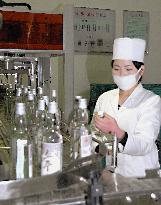
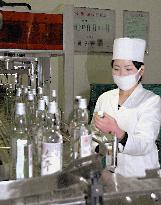
PYONGYANG, North Korea - A worker checks a bottle of special ''shochu'' distilled spirits at the Taedonggang Foodstuff Factory in Pyongyang on Jan. 23, 2010. The factory began operation in 2009 to produce shochu and sake rice wine with advanced technology.

  •  
N. Korea begins 'shochu' production

N. Korea begins 'shochu' production

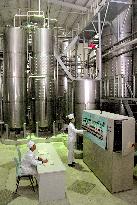
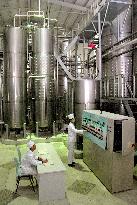
PYONGYANG, North Korea - Workers check equipment at a plant producing ''shochu'' distilled spirits and sake rice wine at the Taedonggang Foodstuff Factory in Pyongyang on Jan. 23, 2010. The factory began operation in 2009 to produce the alcoholic beverages with advanced technology.

  •  
Shochu master brewers eager to hand down techniques

Shochu master brewers eager to hand down techniques

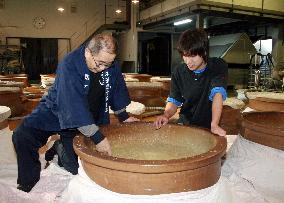
KAGOSHIMA, Japan - Master shochu brewer Masami Yoke (L) teaches Daijiro Yagi at Yagi Shuzou Co. in Tarumizu, Kagoshima Prefecture.

  •  
Facilities recycling 'shochu' dregs into bioethanol increasing

Facilities recycling 'shochu' dregs into bioethanol increasing

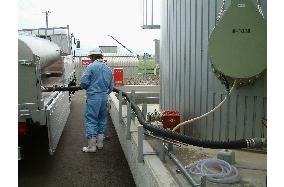
TOKYO, Japan - Workers pump from a tanker truck dregs from distilling Japanese ''shochu'' liquor into a storage facility in Saito, Miyazaki Prefecture.

  •  
Facilities recycling 'shochu' dregs into bioethanol increasing

Facilities recycling 'shochu' dregs into bioethanol increasing

TOKYO, Japan - Bottles of shochu are made by member firms of Saito recycling cooperative in Saito, Miyazaki Prefecture.

  •  
High-end 'honkaku shochu' makes its debut in New York

High-end 'honkaku shochu' makes its debut in New York

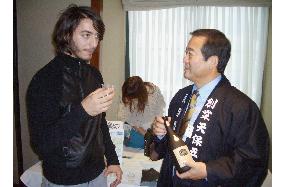
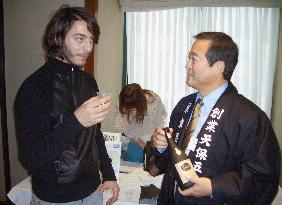
NEW YORK, United States - A man (L) tries ''honkaku shochu,'' or ''authentic'' shochu, a spirit with over 500 years of history in Japan since its initial introduction from Thailand, as it makes its debut in New York City on Nov. 21 as importer Mitsui & Co. announced the receipt of its official U.S. import license.

  •  
Asahi Kasei to recall 'shochu' distilled spirits

Asahi Kasei to recall 'shochu' distilled spirits

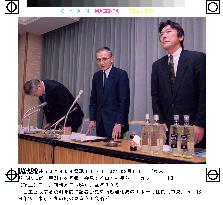
TOKYO, Japan - Asahi Kasei Corp. President (C) speaks at a news conference in Tokyo on Sept. 13, saying the company will recall two of its ''shochu'' distilled spirit products due to mislabeling. Asahi Kasei said these products should have been shipped as spirits because they included caramel as an additive that is not allowed for ''shochu'' distilled spirits.

  •  
M-5.8 quake hits southwestern Japan island

M-5.8 quake hits southwestern Japan island

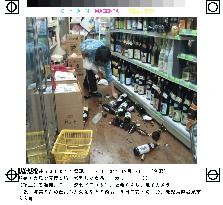
TOKYO, Japan - A shop owner on the island of Amami-Oshima in Kagoshima Prefecture clears broken bottles of shochu (distilled spirit) off the floor on Dec. 9 after an earthquake with an estimated magnitude of 5.8 hit the island. There were no reports of casualties or damage from the quake.

  •  
M-5.8 quake hits southwestern Japan island

M-5.8 quake hits southwestern Japan island

TOKYO, Japan - A shop owner on the island of Amami-Oshima in Kagoshima Prefecture clears broken bottles of shochu (distilled spirit) off the floor on Dec. 9 after an earthquake with an estimated magnitude of 5.8 hit the island. There were no reports of casualties or damage from the quake.

  •  
New York chefs appointed to promote Japanese liquor

New York chefs appointed to promote Japanese liquor

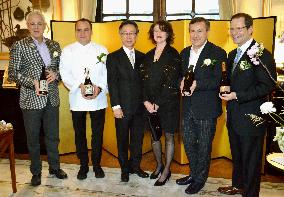
Renowned chefs, appointed as Sake Ambassadors, are seen with Japanese Ambassador to the United Nations Motohide Yoshikawa (3rd from L) and his wife (3rd from R) at the ambassador's official residence in New York on March 16, 2016. The chefs were chosen by sake breweries from Japan's Niigata, Fukui and Kagoshima prefectures, to promote the charms of Japanese sake and shochu. (Kyodo) ==Kyodo

  •  
New York chefs appointed to promote Japanese liquor

New York chefs appointed to promote Japanese liquor

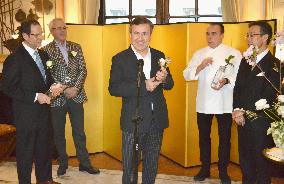
Daniel Boulud, chef-owner of the restaurant DANIEL, makes a speech at the official residence of Japan's United Nations Ambassador Motohide Yoshikawa in New York on March 16, 2016, after being appointed as Sake Ambassador. The title was given to four renowned chefs, chosen by sake breweries from Japan's Niigata, Fukui and Kagoshima prefectures, to promote the charms of sake and shochu. (Kyodo) ==Kyodo

  •  
Japan opens "salon" in Milan to showcase food, agriculture

Japan opens "salon" in Milan to showcase food, agriculture

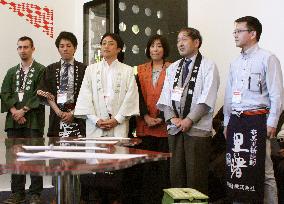
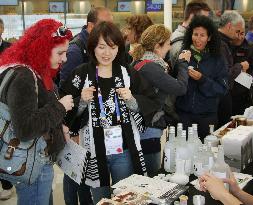
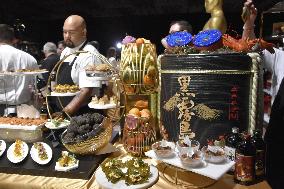
Photo taken June 25, 2015, shows producers of Japanese sake rice wine and "shochu" distilled spirits at the "Japan Salone" (Salone del Giappone) of the food-themed Expo Milano. Japanese public- and private-sector entities jointly opened the venue in central Milan to showcase the country's culinary culture and farming technology. (Kyodo) ==Kyodo

  •  
Japanese "rice shochu" introduced at Expo Milano 2015

Japanese "rice shochu" introduced at Expo Milano 2015

visitors to the Japan Pavilion of Expo Milano 2015 on May 21 taste "rice shochu," spirit distilled from rice, developed by Takahashi Shuzo Co. based in Japan's southwestern prefecture of Kumamoto. More than 400 people tried the beverage in five hours. (Kyodo) ==Kyodo

  •  
Distillers in Kyushu seek to build fan base abroad for "shochu"

Distillers in Kyushu seek to build fan base abroad for "shochu"

Shinichiro Watanabe, president of Kyoya Distiller & Brewer Co. in Nichinan of southwestern Japan's Miyazaki Prefecture, explains on Aug. 10, 2017, about its product Yuzu Gin, a gin made from sweet potatoes and added local citrus fruit flavors. The maker of Japanese "shochu" distilled liquor has developed the gin product to broaden its market overseas. (Kyodo) ==Kyodo

  •  
"Shochu" spirit flavored by lobster shell lures tourists in south Japan

"Shochu" spirit flavored by lobster shell lures tourists in south Japan

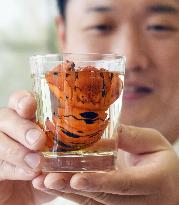
Hot "shochu" distilled spirit with a grilled spiny lobster shell inside, pictured on Sept. 27, 2015, has become popular with tourists in Nichinan in the southwestern Japanese prefecture of Miyazaki. (Kyodo) ==Kyodo

  •  
Man in news: American author of book on Japan's "shochu" spirit

Man in news: American author of book on Japan's "shochu" spirit

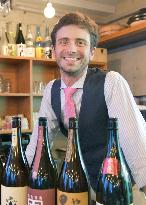
Christopher Pellegrini, an American expert on Japan's "shochu" distilled beverage, is pictured on July 17, 2015. He has published "The Shochu Handbook," an introductory book in English on the Japanese spirit. (Kyodo) ==Kyodo

  •  
American publishes Shochu Handbook

American publishes Shochu Handbook

Christopher Pellegrini, an American who is a certified shochu sommelier, is seen in July 2015. He has published the English-language Shochu Handbook to introduce the charms of the traditional Japanese distilled drink, which is lesser known abroad compared with sake but very popular in Japan. (Kyodo) ==Kyodo

  •  
Japanese "rice shochu" introduced at Expo Milano 2015

Japanese "rice shochu" introduced at Expo Milano 2015

visitors to the Japan Pavilion of Expo Milano 2015 on May 21 taste "rice shochu," spirit distilled from rice, developed by Takahashi Shuzo Co. based in Japan's southwestern prefecture of Kumamoto. More than 400 people tried the beverage in five hours. (Kyodo) ==Kyodo

  •  
N. Korea begins 'shochu' production

N. Korea begins 'shochu' production

PYONGYANG, North Korea - Workers check equipment at a plant producing ''shochu'' distilled spirits and sake rice wine at the Taedonggang Foodstuff Factory in Pyongyang on Jan. 23, 2010. The factory began operation in 2009 to produce the alcoholic beverages with advanced technology. (Kyodo)

  •  
N. Korea begins 'shochu' production

N. Korea begins 'shochu' production

PYONGYANG, North Korea - A worker checks a bottle of special ''shochu'' distilled spirits at the Taedonggang Foodstuff Factory in Pyongyang on Jan. 23, 2010. The factory began operation in 2009 to produce shochu and sake rice wine with advanced technology. (Kyodo)

  •  
High-end 'honkaku shochu' makes its debut in New York

High-end 'honkaku shochu' makes its debut in New York

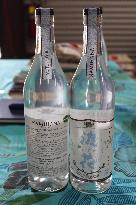
NEW YORK, United States - A man (L) tries ''honkaku shochu,'' or ''authentic'' shochu, a spirit with over 500 years of history in Japan since its initial introduction from Thailand, as it makes its debut in New York City on Nov. 21 as importer Mitsui & Co. announced the receipt of its official U.S. import license. (Kyodo)

  •  
Shochu master brewers eager to hand down techniques

Shochu master brewers eager to hand down techniques

KAGOSHIMA, Japan - Master shochu brewer Masami Yoke (L) teaches Daijiro Yagi at Yagi Shuzou Co. in Tarumizu, Kagoshima Prefecture. (Kyodo)

  •  
Distilling shochu spirit in Hawaii

Distilling shochu spirit in Hawaii

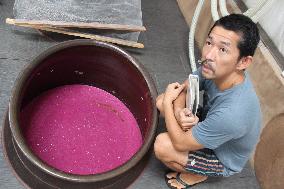
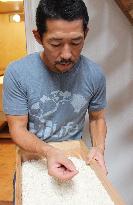
HAWAII, United States - Sweet potato mash ferments in a vat gifted to Ken Hirata by his master, Toshihiro Manzen, in Hirata's North Shore facility in Hawaii. Photo was taken Nov. 3, 2014. (Kyodo)

  •  
Distilling shochu spirit in Hawaii

Distilling shochu spirit in Hawaii

HAWAII, United States - Ken Hirata's third batch of "Namihana" shochu, made in the spring of 2014 and released in September that year, is 82 percent Big Island and North Shore sweet potatoes and 18 percent black koji. Photo was taken in Hawaii on Nov. 3, 2014. (Kyodo)

  •  
Distilling shochu spirit in Hawaii

Distilling shochu spirit in Hawaii

HAWAII, United States - In his North Shore facility in Hawaii, Ken Hirata makes his own koji rice using koji spores from Japan and premium California-grown short-grain rice from Koda Farms. Photo was taken Nov. 3, 2014. (Kyodo)

  •  
Yokozuna Hakuho to advertise new 'shochu' liquor

Yokozuna Hakuho to advertise new 'shochu' liquor

TOKYO, Japan - Yokozuna Hakuho attends a press conference held by Kirishima Shuzo Co. in Tokyo on Dec. 9, 2014, to announce the release of a new "shochu" liquor product set for Jan. 21, 2015. The top sumo wrestler is set to appear in the advertisement of the new product for the distilled beverage maker. (Kyodo)

  •  
Malt, yeast from space station used for 'shochu' spirit

Malt, yeast from space station used for 'shochu' spirit

KAGOSHIMA, Japan - A line of bottled ''shochu'' distilled spirit made using rice malt and yeast kept on the International Space Station is displayed at Kagoshima University in Kagoshima, western Japan, on Jan. 13, 2012. The university and an association of distillers in Kagoshima Prefecture said they have jointly developed the shochu named Uchu Dayori. (Kyodo)

  •  
Canned "chuhai" alcoholic beverage in Japan

Canned "chuhai" alcoholic beverage in Japan

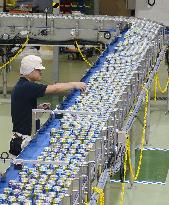
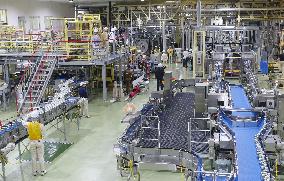
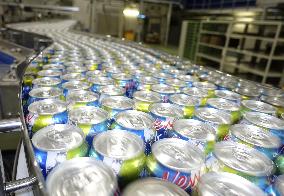
Photo taken on June 12, 2019, shows a newly installed assembly line for canned "chuhai" alcoholic beverages at Kirin Brewery Co.'s factory in Kiyosu in Aichi Prefecture, central Japan. Japanese brewers, including Kirin, are increasing production of canned "chuhai," made with "shochu" distilled beverage and carbonated water flavored with lemon, in response to growing demand. (Kyodo) ==Kyodo

  •  
Canned "chuhai" alcoholic beverage in Japan

Canned "chuhai" alcoholic beverage in Japan

Photo taken on June 12, 2019, shows a newly installed assembly line for canned "chuhai" alcoholic beverages at Kirin Brewery Co.'s factory in Kiyosu in Aichi Prefecture, central Japan. Japanese brewers, including Kirin, are increasing production of canned "chuhai," made with "shochu" distilled beverage and carbonated water flavored with lemon, in response to growing demand. (Kyodo) ==Kyodo

  •  
Canned "chuhai" alcoholic beverage in Japan

Canned "chuhai" alcoholic beverage in Japan

Photo taken on June 12, 2019, shows a newly installed assembly line for canned "chuhai" alcoholic beverages at Kirin Brewery Co.'s factory in Kiyosu in Aichi Prefecture, central Japan. Japanese brewers, including Kirin, are increasing production of canned "chuhai," made with "shochu" distilled beverage and carbonated water flavored with lemon, in response to growing demand. (Kyodo) ==Kyodo

  •  
Oscars afterparty

Oscars afterparty

Photo taken in Hollywood, Los Angeles, on Feb. 15, 2019, shows a barrel of made-in-Miyazaki "shochu" spirit at a preview event for the 91st Academy Awards ceremony. The liquor will be served at the official Oscars afterparty, the Governors Ball, following the ceremony on Feb. 24. (Kyodo) ==Kyodo

  • Main
  • Top
  • Editorial
  • Creative
  • About Us
  • About ILG
  • Terms of use
  • Company
  • BEHIND
  • Price List
  • Single Plan
  • Monthly Plan
  • Services
  • Shooting
  • Rights Clearance
  • Support
  • FAQ
  • How To Buy
  • Contact Us
  • Become a Partner

© KYODO NEWS IMAGES INC

All Rights Reserved.

  • Editorial
  • Olympics
  • News
  • Sports
  • Japan
  • Tech
  • Royal
  • Disaster
  • NorthKorea
  • Old Japan
  • SNS
  • Creative
  • Food
  • Japan
  • Landscape
  • Animal
  • Popular
  • #Ukraine
  • #China
  • #coronavirus
  • #N. Korea
  • #Thailand
  • #Russia
  • #Ukraine
  • #China
  • #coronavirus
  • #N. Korea
  • #Thailand
  • #Russia
  • Food
  • Japan
  • Landscape
  • Animal
  • Olympics
  • News
  • Sports
  • Japan
  • Tech
  • Royal
  • Disaster
  • NorthKorea
  • Old Japan
  • SNS